


Silver Market Shows Signs of Recovery Despite Recent Volatility
A Bumpy Week for Precious Metals
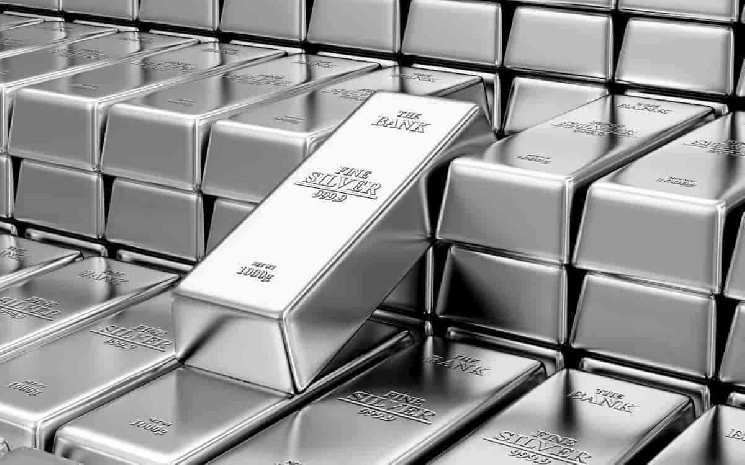
The silver market has experienced quite a rollercoaster ride recently, with investors watching nervously as prices swing dramatically from one day to the next. Despite nursing substantial weekly losses that have left many traders concerned, silver managed to stage an impressive comeback on Friday, February 6, climbing more than 8% within a single trading day. This kind of sharp movement is becoming increasingly characteristic of the precious metals market, where fortunes can change rapidly and investor sentiment shifts like sand beneath their feet. At the time of reporting, silver was changing hands at approximately $76 per ounce, a price point that reflects both the metal’s recent struggles and its resilience in the face of challenging market conditions. The patterns we’ve observed throughout this particular week paint a clear picture of a market grappling with uncertainty, where heightened volatility has become the new normal rather than an exception. However, despite these short-term turbulent conditions that have kept traders on their toes, there’s an interesting perspective emerging from an unlikely source that suggests we shouldn’t lose hope just yet.
What Artificial Intelligence Sees in Silver’s Future
In an era where technology increasingly influences financial decision-making, market analysts are turning to artificial intelligence for insights into future price movements. Finbold recently consulted ChatGPT, OpenAI’s sophisticated language model, to get its perspective on where silver prices might land by the end of February 2026. The AI’s analysis, while necessarily cautious given the unpredictable nature of commodity markets, leans decidedly toward a bullish outlook for the precious metal over the coming weeks. It’s worth noting that this represents a fascinating intersection between cutting-edge technology and traditional commodity trading, where algorithms trained on vast amounts of market data attempt to identify patterns that human analysts might miss. The chatbot’s forecast wasn’t presented as a guarantee—far from it—but rather as a probability-weighted scenario that takes into account multiple possible futures. This approach to market prediction represents a new frontier in financial analysis, where machine learning models process countless variables simultaneously to generate forecasts that, while imperfect, offer another data point for investors to consider alongside traditional technical and fundamental analysis.
Breaking Down the AI’s Price Predictions
ChatGPT’s analysis presented three distinct scenarios for silver’s price trajectory through the end of February, each dependent on different market conditions and economic factors. The base-case scenario, which the AI considers most probable under current circumstances, suggests silver could be trading in a range between $75 and $90 per ounce by month’s end. This relatively wide range reflects the genuine uncertainty that exists in the market and acknowledges that multiple factors could push prices in either direction. In a more optimistic scenario, which the AI describes as decidedly bullish, silver could climb even higher to trade between $90 and $100 per ounce, or potentially breach the $100 mark entirely. This upside scenario depends on several favorable conditions aligning simultaneously: a softer U.S. dollar that makes dollar-denominated commodities more attractive to international buyers, easing interest rate expectations that reduce the opportunity cost of holding non-yielding assets like precious metals, and robust industrial demand from manufacturing sectors that rely heavily on silver for various applications. On the flip side, the bearish scenario paints a less rosy picture, with prices potentially sinking below the $75 level if momentum fades or if renewed risk-off sentiment causes investors to flee from commodities toward perceived safe havens like government bonds. When pressed to provide a more specific target rather than these broad ranges, the AI settled on approximately $86 per ounce as its central forecast, a figure that sits comfortably in the middle of its base-case range and suggests modest upside from current levels.
The Road Ahead Won’t Be Smooth
While the AI’s overall outlook tilts toward higher prices, it came with an important caveat that investors would be wise to heed: the journey toward any potential gains is unlikely to be a smooth, steady climb. Instead, ChatGPT emphasized that volatility spikes will continue to characterize the market, meaning traders should brace themselves for a choppy ride with sharp movements in both directions. This prediction aligns perfectly with what we’re already observing in real-time price action, where dramatic intraday swings have become commonplace rather than exceptional events. Earlier in the same session that saw silver gain more than 8%, the metal had plunged nearly 10%, demonstrating just how quickly sentiment can reverse. Even more dramatically, the previous trading day witnessed a staggering 19% decline, the kind of move that can devastate unprepared traders using leverage or tight stop-loss orders. These wild fluctuations aren’t random noise but rather reflect deeper structural factors affecting the silver market, including the metal’s dual nature as both an industrial commodity and a monetary asset, its relatively smaller market size compared to gold (which makes it more susceptible to large trades), and its appeal to speculative traders who amplify price movements through leveraged positions and options strategies.
Understanding Silver’s Unique Vulnerabilities
The extreme volatility we’re witnessing in silver prices stems from the metal’s unique position in the commodities complex, where it serves multiple roles that can sometimes pull in different directions. Unlike gold, which functions primarily as a store of value and inflation hedge, silver straddles two worlds: it’s both a precious metal with monetary characteristics and an industrial commodity with practical applications in electronics, solar panels, medical equipment, and countless other products. This dual nature means silver prices respond to a broader and more complex set of factors than many other commodities. When industrial demand strengthens because manufacturing activity is picking up, silver can rally on fundamentals. Conversely, when factory output slows, silver can suffer despite strong investment demand. The metal is also particularly vulnerable to speculative positioning, where large institutional traders and hedge funds take leveraged bets that can move prices dramatically regardless of underlying supply and demand fundamentals. When these speculative positions unwind—whether due to margin calls, profit-taking, or shifts in market sentiment—the resulting price movements can be violent and seemingly disconnected from the metal’s intrinsic value. This explains why analysts remain appropriately cautious when discussing the near-term outlook, even as they acknowledge the potential for gains. The uncertainty isn’t about whether silver has value or whether it might rise; it’s about the path it will take to get there and whether investors can stomach the volatility along the way.
Long-Term Prospects Remain Bright
Despite the stomach-churning short-term volatility that has tested the nerves of even experienced precious metals traders, the longer-term outlook for silver appears considerably more positive. Commodities experts and precious metals analysts are increasingly bullish about the prospects for gold, silver, and related assets throughout 2026 and beyond. Several fundamental factors support this optimistic view. First, the ongoing energy transition toward renewable sources is dramatically increasing industrial demand for silver, which plays a crucial role in solar panel production and electrical applications. As governments worldwide push toward decarbonization and renewable energy targets, this source of demand should continue strengthening for years to come. Second, persistent concerns about inflation, currency debasement, and mounting sovereign debt levels are driving investors toward hard assets that can’t be created at will by central banks. Third, geopolitical tensions and economic uncertainty are encouraging portfolio diversification into commodities that have maintained value across centuries. These structural tailwinds suggest that while the next few weeks might be turbulent, patient investors with appropriate risk tolerance and time horizons could be rewarded for riding out the volatility. As always with commodity investments, position sizing matters enormously—silver’s dramatic price swings make it unsuitable for money you can’t afford to lose or might need in the short term, but as part of a diversified portfolio, it continues to offer potential both as an inflation hedge and a speculation on industrial demand growth.