
Jim Cramer’s Bold Bitcoin Claims: What Really Happened During BTC’s Recent Price Plunge?
A Controversial Statement Rocks the Crypto World
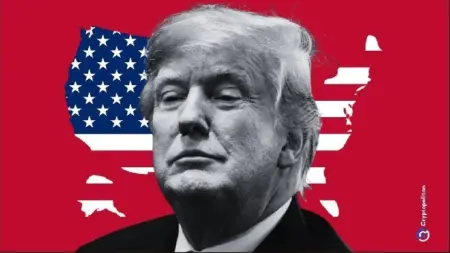
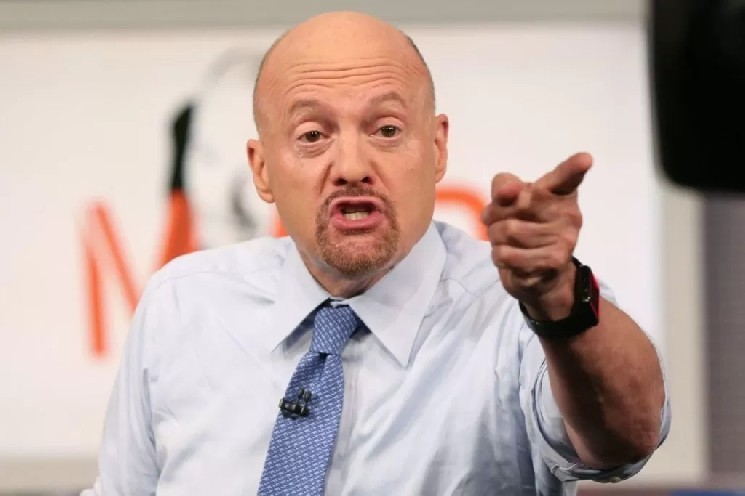
The cryptocurrency market recently experienced one of its characteristic roller-coaster moments, and as usual, it didn’t take long for prominent financial voices to weigh in with their interpretations. Jim Cramer, the well-known CNBC personality and host of “Mad Money,” made waves across both traditional finance and crypto circles with a particularly eyebrow-raising claim. During an appearance on CNBC’s Market Alert program, Cramer suggested something that immediately captured the attention of traders, investors, and policy watchers alike: he claimed that President Donald Trump’s administration had seized the opportunity to purchase Bitcoin for the United States Strategic Bitcoin Reserve when prices plummeted below the $60,000 threshold. This assertion came at a particularly volatile moment for the world’s largest cryptocurrency, which had just experienced a sharp correction that sent shockwaves through the market. Cramer’s comments, whether accurate or speculative, highlight the growing intersection between cryptocurrency markets and national policy, a relationship that becomes more complex and consequential with each passing month.
The Market Turmoil That Started It All
To understand the context of Cramer’s statement, we need to look at what actually happened in the Bitcoin market during this tumultuous week. Bitcoin, which had been trading at relatively elevated levels, suddenly experienced a significant downturn that caught many investors off guard. The digital asset’s price dropped precipitously, falling to approximately $60,000—a level that represented a substantial correction from its recent highs. For those following the cryptocurrency markets, such volatility isn’t entirely unusual; Bitcoin has historically been known for its dramatic price swings, with both rapid ascents and steep declines characterizing its trading history. However, each major price movement brings renewed attention and speculation about what might be driving the changes. In this case, the drop was severe enough to trigger widespread discussion about whether this represented a buying opportunity, a sign of deeper problems in the crypto market, or simply another chapter in Bitcoin’s ongoing story of volatility. The speed and magnitude of the decline certainly created conditions ripe for speculation about who might be taking advantage of lower prices to accumulate the digital asset.
The Strategic Bitcoin Reserve: What We Actually Know
The concept of a United States Strategic Bitcoin Reserve has been a topic of considerable discussion in recent months, representing a potential watershed moment in the government’s approach to cryptocurrency. However, it’s crucial to separate fact from speculation when discussing this initiative. According to official statements from US government officials and President Trump himself, the approach to this reserve was clearly outlined: the government would not be actively purchasing cryptocurrencies on the open market. Instead, the plan was to accumulate Bitcoin through other means—potentially through seizures from criminal enterprises, forfeitures, or other non-market mechanisms—and then hold these assets without selling them. This “hodling” strategy, as it’s known in crypto parlance, would theoretically allow the government to build a strategic reserve without directly influencing market prices through large-scale purchases. This official position makes Cramer’s claim all the more surprising and controversial, as it would represent a significant departure from the stated policy. The absence of any official statement confirming such purchases, combined with the lack of verifiable on-chain evidence (blockchain transactions are publicly visible and can be tracked by analysts), leaves Cramer’s assertion in the realm of speculation rather than confirmed fact.
Cramer’s Track Record and the “Hearsay” Admission
What makes this situation particularly interesting is Jim Cramer’s own acknowledgment of the source of his information. Notably, Cramer himself admitted that his statement was based on hearsay rather than confirmed intelligence or official sources. This admission is significant and speaks to the broader challenge of information quality in the fast-moving worlds of both traditional finance and cryptocurrency. Cramer, who has built a career on market analysis and has access to extensive networks within the financial industry, is known for his bold predictions and sometimes controversial takes on market movements. His track record includes both prescient calls and notable misses, making him a polarizing figure among investors. Some view him as an entertaining personality whose advice should be taken with a grain of salt, while others see him as a valuable source of market insight. In the cryptocurrency community specifically, Cramer has developed something of a contrarian reputation, with some traders joking about doing the opposite of whatever he suggests. This context is important when evaluating his claim about government Bitcoin purchases, as it reminds us that even prominent financial commentators can spread unverified information, especially in the heat of market volatility when everyone is searching for explanations for dramatic price movements.
The Remarkable Recovery That Fueled Speculation
Perhaps the most intriguing aspect of this entire episode is what happened to Bitcoin’s price after it touched those $60,000 lows. In a development that certainly didn’t help to quell speculation about potential government intervention, Bitcoin staged a remarkable recovery. The cryptocurrency didn’t just stabilize or show modest gains; it surged powerfully back above the $70,000 level, representing a gain of more than 15% from its lows. This kind of rapid V-shaped recovery naturally invites questions about what might have caused such a swift reversal of fortune. In traditional markets, such recoveries following sharp declines sometimes indicate that a large, well-capitalized buyer has stepped in to absorb selling pressure—exactly the kind of scenario that Cramer’s claim suggests. However, in the cryptocurrency market, rapid recoveries can also be explained by other factors: short squeeze dynamics where traders betting on further declines are forced to buy to close their positions, automated trading algorithms detecting support levels, or simply the collective decision of many individual investors that the lower price represented an attractive entry point. The timing of the recovery, coming so quickly after the decline, certainly provides circumstantial support for the idea that some significant buying force entered the market, though this alone doesn’t prove government involvement.
The Bigger Picture: Crypto, Government, and Market Speculation
This entire episode, regardless of whether Cramer’s specific claim proves accurate, illuminates several important themes in the evolving relationship between cryptocurrency and governmental institutions. First, it demonstrates how far the conversation has shifted: just a few years ago, the idea of the US government holding a strategic Bitcoin reserve would have seemed far-fetched to many observers. Today, it’s being discussed seriously by policymakers, and claims about government purchases—even unverified ones—are considered plausible enough to generate significant discussion. Second, it highlights the ongoing challenge of information quality and verification in cryptocurrency markets, where rumors can spread quickly and impact trading decisions before facts can be established. The transparency of blockchain technology theoretically makes it possible to verify large purchases, but connecting specific wallet addresses to government entities isn’t always straightforward. Third, this situation underscores the continued volatility and speculation that characterizes the cryptocurrency market, where major price swings can happen rapidly and explanations are often sought after the fact. For individual investors navigating this landscape, the key takeaway is the importance of distinguishing between verified information and speculation, even when that speculation comes from prominent sources. As the standard disclaimer reminds us, such commentary should never be construed as investment advice. Whether or not the US government bought Bitcoin at $60,000, the crypto market will undoubtedly continue to provide plenty of drama, volatility, and conflicting narratives for observers to parse in the months and years ahead.