


Vitalik Buterin Backs Zcash Privacy Development with Strategic Donation
Ethereum Founder Renews Support for Privacy-Focused Cryptocurrency
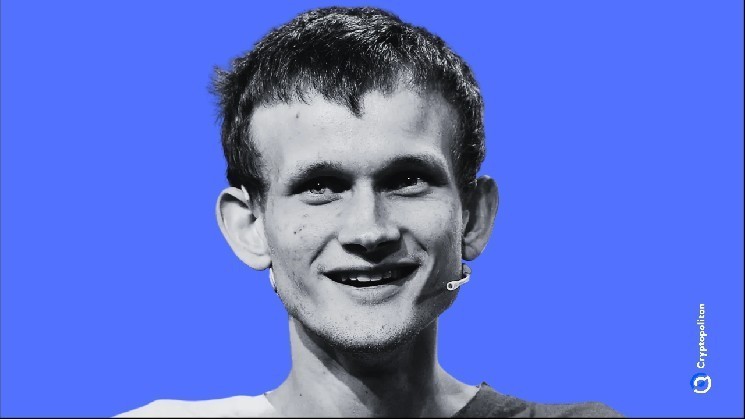
In a move that highlights the growing importance of privacy infrastructure in cryptocurrency, Vitalik Buterin, the visionary co-founder of Ethereum, has once again stepped forward to support Zcash development. The latest donation, made to Shielded Labs—a Swiss-based organization dedicated to advancing Zcash technology—marks Buterin’s second financial contribution to the privacy-focused cryptocurrency project. This time, his support specifically targets Crosslink, an innovative security upgrade designed to strengthen Zcash’s consensus architecture. While the exact dollar amount remains undisclosed, the donation follows a previous contribution in 2023 that helped establish a dedicated team to work on Crosslink development. Buterin’s continued involvement sends a powerful message about the value of privacy-preserving technologies in the broader cryptocurrency ecosystem. In his statement accompanying the donation, Buterin praised Zcash as “one of the most honorable crypto projects with a steadfast focus on privacy,” emphasizing that the Crosslink upgrade will enhance Zcash’s security while reducing operational costs, ultimately supporting the network’s long-term viability. This endorsement from one of crypto’s most respected figures underscores the technical merit of Zcash’s privacy-preserving approach and the importance of continued innovation in this space.
Understanding Crosslink: A Technical Leap Forward for Zcash Security
The Crosslink upgrade represents a sophisticated evolution in Zcash’s security model, one that addresses critical vulnerabilities without abandoning the network’s proven foundation. At its core, Crosslink enhances Zcash’s existing proof-of-work consensus mechanism by introducing a parallel finality layer—essentially adding an extra security blanket that protects the network against chain reorganizations and rollback attacks, which have historically plagued blockchain networks. The beauty of this design lies in its complementary nature: all block production and economic activity continue to happen on the familiar proof-of-work chain, while the new finality gadget works behind the scenes to anchor blocks and provide stronger settlement guarantees. Think of it like reinforcing a building’s foundation while keeping the structure fully operational—the everyday functions continue normally, but the underlying stability dramatically improves. By ensuring that confirmed transactions cannot be reversed, Crosslink significantly reduces the risk of double-spending, a fundamental concern in any payment system. This increased certainty means exchanges can feel confident reducing their confirmation requirements, making Zcash transactions faster and more practical for everyday use. The upgrade also promises to improve reliability for cross-chain integrations, making it easier for Zcash to interact with other blockchain networks, and provides the consistency that applications need when they depend on predictable settlement times. According to Jason McGee, executive director of Shielded Labs, these improvements will make Zcash considerably easier to integrate throughout the cryptocurrency ecosystem while preserving all the security properties that have made it trusted.
How Buterin’s Donation Will Accelerate Development
The financial support from Vitalik Buterin comes at a crucial juncture in Crosslink’s development journey, providing the resources needed to transform the technology from an experimental prototype into production-ready infrastructure. The donation will directly support several critical development phases, starting with the launch of a persistent, incentivized testnet where participants can actually earn ZEC tokens for helping test the new system. This approach creates a real-world testing environment that more accurately simulates how Crosslink will function when deployed across the entire network. Beyond the testnet, Buterin’s contribution will fund the productionization phase—the detailed, meticulous work of preparing any major technological upgrade for launch. According to Shielded Labs, this phase encompasses design specifications that document exactly how the system will work, comprehensive security analysis to identify and address potential vulnerabilities before they can be exploited, and rigorous audits by independent security experts who will scrutinize every line of code. The funding will also support crucial coordination efforts with wallet providers and infrastructure operators who will need to update their systems to support Crosslink, as well as proactive engagement with the broader Zcash community to ensure everyone understands and supports the changes. This methodical, well-funded approach reflects lessons learned from previous blockchain upgrades across the industry, where rushing to deployment or cutting corners on testing has sometimes resulted in costly vulnerabilities or community splits.
Growing Institutional Support for Privacy Technology
Buterin’s donation doesn’t exist in isolation—it’s part of a broader trend of increasing institutional support for Zcash and privacy-preserving cryptocurrency infrastructure. The timing is particularly notable, coming after Zcash’s native token, ZEC, experienced significant appreciation toward the end of 2024, driven largely by growing recognition of the value of privacy features in cryptocurrency. This price movement wasn’t unique to Zcash; Monero, another privacy-focused cryptocurrency, enjoyed similar gains during what some have called an “institutional awakening” to the importance of financial privacy. Just one month before Buterin’s latest contribution, in January 2025, Cameron and Tyler Winklevoss—the twin entrepreneurs behind the Gemini cryptocurrency exchange—donated 3,221 ZEC tokens to Shielded Labs, worth approximately $1.2 million at the time. This marked the Winklevoss twins’ second donation to the organization, following an earlier contribution in 2023 that, like Buterin’s first donation, supported the formation of the Crosslink development team. Tyler Winklevoss articulated the philosophical motivation behind their support in a post on X (formerly Twitter), writing: “Privacy is normal and crucial for a free and open society. That’s why @cameron and I are supporting @ShieldedLabs and their important work and contributions to Zcash.” This framing—positioning privacy not as something suspicious or unusual but as a fundamental right essential to freedom—reflects a maturation in how privacy technology is perceived. The pattern of repeated donations from high-profile figures suggests they view Zcash not as a speculative investment but as important infrastructure worth sustaining for its own sake.
Shielded Labs’ Independent Development Model
What makes these donations particularly significant is Shielded Labs’ unique position within the Zcash ecosystem. Unlike many cryptocurrency development organizations that draw funding from protocol-level mechanisms, Shielded Labs operates completely independently of Zcash’s block reward-based development fund. This means the organization relies entirely on voluntary contributions from ZEC token holders and supporters who believe in the mission—a model that offers both advantages and challenges. On one hand, this independence provides freedom from potential conflicts of interest and allows Shielded Labs to pursue development priorities based purely on technical merit and community benefit rather than political considerations. On the other hand, it creates funding uncertainty that makes donations like those from Buterin and the Winklevosses absolutely critical to maintaining development momentum. The organization has assembled an impressive team despite this funding model, including Zooko Wilcox—Zcash’s original founder and former CEO of the Electric Coin Company—who now serves as Shielded Labs’ head of product. Wilcox’s involvement lends enormous credibility and technical expertise to the Crosslink project, given his deep understanding of Zcash’s architecture and vision. This independent organizational structure represents an interesting experiment in cryptocurrency development funding, testing whether community-supported, donation-based models can sustain serious technical work over the long term.
Navigating Challenges: Zcash’s Path Through Regulatory Scrutiny
While the recent support from prominent cryptocurrency figures represents positive momentum, it’s important to understand the challenging context Zcash has navigated in recent years. The project has faced significant regulatory pressure, most notably from the U.S. Securities and Exchange Commission, which subpoenaed Zcash in August 2023 as part of an investigation. This regulatory attention had real commercial consequences—several major centralized exchanges delisted ZEC throughout 2023, citing compliance concerns and the difficulties of supporting privacy-preserving cryptocurrencies in an increasingly regulated environment. These delistings reduced Zcash’s accessibility and liquidity, making it harder for ordinary users to acquire and trade the token. The regulatory cloud also coincided with internal challenges within the Zcash development community. At the beginning of 2025, the entire development team at the Electric Coin Company—the for-profit organization that had been central to Zcash development—departed following a significant disagreement with the non-profit board that oversees the company. This mass exodus created uncertainty about Zcash’s development trajectory and highlighted governance challenges that many cryptocurrency projects face. However, there’s been a positive resolution to at least the regulatory concerns: in January 2025, the Zcash Foundation announced that the SEC had closed its investigation after nearly three years, stating that it did not intend to recommend any enforcement action or other charges. This closure removes a significant cloud of uncertainty that had hung over the project, potentially opening the door for exchanges to reconsider their listings and for institutional participants to engage more confidently with Zcash. Against this backdrop of challenges overcome and obstacles navigated, the donations from Buterin and the Winklevosses represent not just financial support but votes of confidence in Zcash’s future—a future where privacy-preserving technology plays an essential role in a healthy, free cryptocurrency ecosystem.