

Bad Bunny’s Super Bowl Halftime Show: A Cultural Milestone Driven by Authenticity
A Historic Moment Rooted in Personal Connection
Bad Bunny is standing on the precipice of one of the biggest performances of his career, yet the Puerto Rican superstar remains remarkably grounded about what the Super Bowl halftime show means to him. Speaking at a press event hosted by Apple Music on Thursday, the artist born Benito Antonio Martínez Ocasio opened up about his emotional state heading into Sunday’s performance with refreshing honesty. “To be honest, I don’t know how I’m feeling. There’s a lot,” he admitted in English, acknowledging the whirlwind of activity surrounding him. He’s currently juggling his ongoing tour while still riding the high of his recent Grammy win, where his album “Debí Tirar Más Fotos” made history as the first all Spanish-language album to win Album of the Year. For Bad Bunny, though, the excitement isn’t really about him—it’s about the people who’ve supported him throughout his journey. “I’m excited, but at the same time, I feel more excited about the people than even me — my family, my friends, the people who have always believed in me,” he explained. “This moment, the culture — that’s what makes these shows special.” This perspective reveals an artist who, despite becoming one of the most-streamed musicians on the planet, hasn’t lost sight of what matters most: connection, community, and cultural representation.
Unprecedented Interest and Cultural Significance
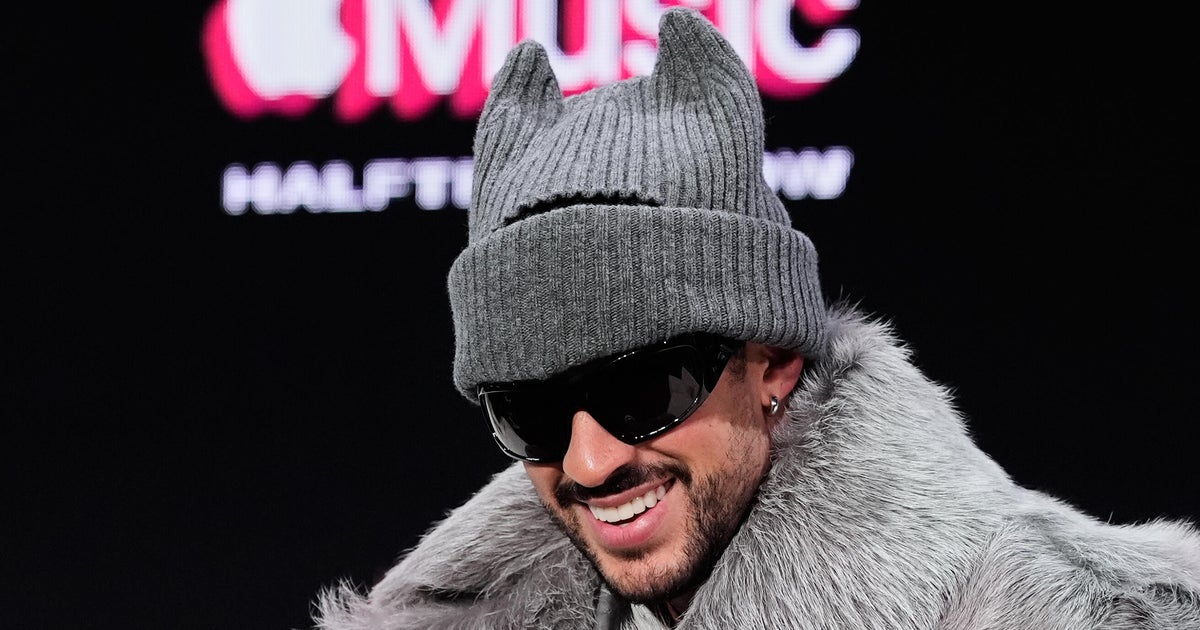
The anticipation for Bad Bunny’s halftime performance is palpable, and Thursday’s press conference proved just how significant this moment is for the Latino community and beyond. Long before the doors opened, a substantial line had formed outside the conference room, with credentialed media—including a notably strong presence of Spanish-language and Latin American outlets—eager to hear from the superstar. The room was packed nearly an hour before the event even began, a stark contrast to Kendrick Lamar’s 2025 news conference, which didn’t fill up until about 15 minutes beforehand. This heightened interest signals something deeper than celebrity fascination; it represents a cultural moment where Latino representation on one of America’s biggest stages feels both historic and overdue. Bad Bunny walked into the press event to the sounds of “Chambea,” his 2017 single, a choice that subtly reminded everyone of his journey from rising artist to global phenomenon. The conversation was hosted by Apple Music’s Zane Lowe and Ebro Darden, who helped guide the discussion through Bad Bunny’s thoughts on this monumental opportunity, though the artist himself remained characteristically tight-lipped about specific details of what viewers can expect on Sunday.
Staying True to Roots While Reaching New Heights
What makes Bad Bunny’s approach to the Super Bowl particularly compelling is his consistent refusal to chase accolades or change who he is for broader acceptance. He was refreshingly candid about his intentions when creating “Debí Tirar Más Fotos,” explaining that awards and massive platforms weren’t his goal. “I wasn’t looking for album of the year. I wasn’t looking to perform at the Super Bowl halftime show,” he said. “I was just trying to connect with my roots, connect with my people, connect with myself.” This authentic approach—focusing on cultural connection rather than commercial success—paradoxically opened doors to the highest levels of recognition. His message to others is simple but powerful: “You always have to be proud of who you are and where you’re from. But don’t let that limit where you can go.” This philosophy has clearly served him well, allowing him to bring deeply personal expressions of Puerto Rican culture to mainstream American audiences without compromise. During the press conference, he playfully referenced his “Saturday Night Live” monologue from October, joking that fans don’t need to learn Spanish to enjoy his set—they just need to be ready to dance. This comment encapsulates his entire approach: accessibility through joy and rhythm, not through dilution of his cultural identity.
A Party with Purpose and Few Spoilers
Despite the media’s eagerness for concrete details about Sunday’s performance, Bad Bunny kept his cards close to his chest, offering only tantalizing hints about what the halftime show will entail. “It’s going to be a huge party,” he promised, adding, “What people can expect from me … I want to bring to the stage, of course, a lot of my culture. But I really don’t, I don’t want to give any spoilers. It’s going to be fun.” When pressed about whether he’ll have surprise guests during the performance—a common feature of Super Bowl halftime shows—he playfully deflected: “That’s something I’m not going to tell you.” Then, in a characteristically warm pivot, he reframed the question entirely: “I will actually have a lot of guests watching—my friends, family, the Latino community, and people around the world who love my music.” This isn’t Bad Bunny’s first Super Bowl appearance; he previously performed during the halftime show at Super Bowl LIV in 2020 alongside Jennifer Lopez and Shakira. However, his focus hasn’t changed since that supporting role. “My biggest pleasure is just to create, have fun doing it and connect with the people,” he explained. “That’s what I’m always looking for every time I’m in the studio.” This Sunday represents something different, though—a chance to headline, to center his vision, and to bring Puerto Rican culture to the forefront of American popular culture on its biggest sports stage.
The Foundation: Family, Belief, and Authenticity
Perhaps the most touching moment of the press conference came when Bad Bunny fielded questions from student journalists, one of whom asked him to name an early supporter who believed in him. Without hesitation, he answered: “My mom.” But his explanation went deeper than simple maternal pride. “Before everything, she believed in me as a person, as a human. She believed in me, in my decisions, in my opinions,” he reflected. “I think that’s what got me here, you know? Not because she believed that I was a great artist but that she believed that I am a great person.” This insight reveals the foundation of Bad Bunny’s success—it’s not just talent or timing, but the confidence that comes from being seen and valued as a whole person, not just for what you can produce or achieve. That early validation allowed him to develop the self-assurance necessary to stay true to himself even as he navigated the pressures of global stardom. It’s a reminder that behind every successful artist is often someone who believed in them before the world did, who saw their potential not in commercial terms but in human ones. This grounding influence likely contributes to Bad Bunny’s ability to remain connected to his roots and community even as his career has reached stratospheric heights.
A Super Bowl Sunday Celebrating Diversity and Inclusion
Sunday’s Super Bowl at Levi’s Stadium in Santa Clara, where the Seattle Seahawks will face the New England Patriots, promises to be a celebration of diversity that extends well beyond Bad Bunny’s halftime performance. The pregame show will feature several standout performers representing different facets of American music: Charlie Puth will sing the national anthem, Brandi Carlile will perform “America the Beautiful,” and Coco Jones will deliver “Lift Every Voice and Sing.” Jones captured the magnitude of the opportunity with characteristic enthusiasm: “This is pretty much the top of the top. This is the bee’s knees. … It’s hard to compete. Maybe my wedding will be up there.” Before the game, Bay Area legends Green Day will play a set celebrating the Super Bowl’s 60th anniversary, with lead singer Billie Joe Armstrong promising they’ll “Get loud!” In a historic first, the halftime show will include a multilingual signing program featuring Puerto Rican Sign Language, led by interpreter Celimar Rivera Cosme, who also served as interpreter for Bad Bunny’s landmark residency in Puerto Rico last year that drew over half a million fans. The national anthem and “Lift Every Voice and Sing” will be performed in American Sign Language by deaf performing artist Fred Beam, while Julian Ortiz will sign “America the Beautiful.” All signed performances for pregame and halftime shows were developed in collaboration with Alexis Kashar of LOVE SIGN and Howard Rosenblum of Deaf Equality, ensuring that accessibility and inclusion are woven throughout the day’s events. This comprehensive approach to representation—linguistic, cultural, and in terms of accessibility—sets a new standard for how major sporting events can celebrate the diversity of their audiences while creating moments of genuine connection across different communities.