

A Tragic Night in Friendswood: The Connor Hilton Case
The Shooting That Shattered Lives
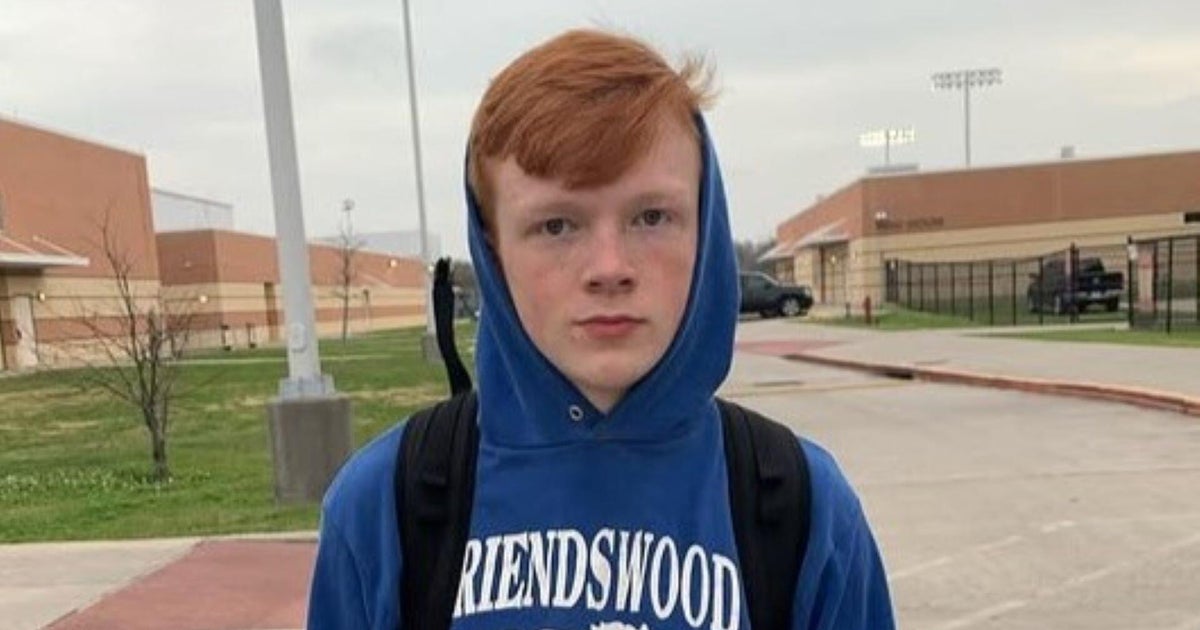
On the evening of December 23, 2023, police officers arrived at a quiet home in Friendswood, Texas, just before 9 p.m. to find a scene that would haunt everyone involved. Seventeen-year-old Connor Hilton sat on the curb outside his house, visibly distraught, holding up two fingers when asked if anyone was hurt. Inside the home, officers discovered two teenagers—18-year-old Ethan Riley and 19-year-old Benjamin Bliek—lying on the floor, each with a devastating gunshot wound to the head. A third friend, a 15-year-old boy on crutches, had locked himself in the bathroom after hearing the shots and frantically called 911. He described hearing two loud gunshots, followed by eerie silence broken only by what he thought might have been laughing but was probably labored breathing, and Connor crying out, “What have I done?”
The scene was chaotic and heartbreaking. Paramedics worked desperately on both victims, finding faint signs of life. Police bagged Connor’s hands to preserve evidence and placed him in a squad car, where he made the disturbing statement that he needed to be placed in a mental hospital. His mother, Johnece Hilton, arrived home to find her house surrounded by yellow police tape and emergency vehicles. She had been there just 45 minutes earlier, and Connor had seemed perfectly fine. At the hospital, Ben’s mother Shannon Bliek fell to her knees when a detective told her what had happened, then spent the night praying while her son underwent emergency brain surgery. Ethan and Ben were both fighting for their lives, while Connor was taken to the police station for questioning, where his story would change multiple times throughout the night.
Changing Stories and Dark Confessions
During his interrogation, Connor Hilton initially claimed self-defense, saying Ethan had come at him and tried to grab his throat during an argument. But as detectives pressed him, his story evolved dramatically. Detective Nick McCanless, who conducted the interview, noted that Connor was unusually polite—saying “yes, sir” and “no, sir”—not the typical demeanor of someone just involved in a shooting. When confronted about how both victims could have been accidentally shot in the head, Connor’s entire personality seemed to shift. He broke down and confessed that he had been experiencing suicidal and homicidal thoughts “for so long” and that he had planned the shooting. What made his confession particularly chilling was his admission that he had convinced his mother to buy the gun specifically so he could “either shoot myself or shoot somebody.”
Connor told detectives that the idea of murder was “super interesting” to him, though he couldn’t explain why. He said he had invited a group of friends over that night with no specific target in mind—Ethan and Ben just happened to be the ones who showed up. The 15-year-old who went immediately to the bathroom upon arrival simply got lucky; Connor said he thought it was too risky to shoot through the locked door. Detective McCanless later described it as one of the most honest interviews he’d ever conducted with a suspect, noting that Connor seemed to experience a visible “sigh of relief” after confessing everything. Connor acknowledged that what he did was wrong and that he needed punishment, but he also repeatedly said he needed mental health help. He was initially arrested on two counts of aggravated assault with serious bodily injury and allowed to make a phone call to his mother from jail, where he cried and told her he needed mental help and had done “a very bad thing.”
Christmas Tragedy and Aftermath
Connor was released on bond the next day—Christmas Eve—and his parents described him collapsing on the floor at home, crying uncontrollably. His mother couldn’t bring herself to hear the details of what happened. Meanwhile, the Riley family spent their Christmas Eve at the hospital with Ethan, who tragically died on Christmas Day. That night, officers returned to Connor’s home with a SWAT team to arrest him on a murder charge. Body camera footage shows Connor with his hands raised in the back of the house as armed officers entered, his parents desperately asking for permission to hug him before he was taken away. “We love you, Connor,” his father called out as officers led him away in handcuffs.
Ben Bliek, miraculously, survived, though the road ahead would be extraordinarily difficult. Both sides of his skull had to be removed, he required a tracheotomy to breathe and a feeding tube to eat, and he was paralyzed on his right side. His mother Shannon shielded him from the details initially—Ben didn’t remember anything from that night. When he eventually discovered through an article on his mother’s phone that his friend Connor had shot him and that his best friend Ethan had been killed, he was devastated. He described Ethan as “an outstanding guy” who always looked at things with a positive light. Despite his fury at Connor, Ben forced himself to focus on his recovery with remarkable determination, working through intensive rehabilitation to learn to walk, swallow, and function again.
The Accutane Defense
As Connor’s parents struggled to understand how their “sweetest, loving boy” could have done something so horrific, his father Neal began researching a prescription acne medication Connor had been taking called Accutane (isotretinoin). The drug carries warnings about risks of depression, psychosis, suicide, and aggressive or violent behaviors. Connor’s defense team—attorneys Adam Brown, J.L. Carpenter, and Rick DeToto—hired Dr. Doug Bremner, a psychiatry and radiology professor at Emory University who has extensively researched isotretinoin and testified in related cases. According to Connor’s account, he had started taking Accutane in July 2022 for severe cystic acne that caused extremely painful bumps, sometimes so bad he couldn’t walk. About a month after starting the medication, he reported feeling depressed and stopped taking it. But he later told Dr. Bremner that he hadn’t been completely honest—he had also begun experiencing homicidal thoughts while on the drug.
Connor claimed that when he stopped the medication, both the depression and the violent thoughts subsided, but his painful acne returned. In January 2023, desperate for relief from the physical pain, he went back on Accutane at a lower dose. He said the suicidal and homicidal thoughts slowly returned and intensified the longer he stayed on the medication, but he never reported these symptoms to his dermatologist. On the day of the shooting, Connor said he took double his prescribed dose because he had missed the previous day. Dr. Bremner concluded that Connor had become psychotic due to Accutane and experienced uncontrollable homicidal ideation. Bremner pointed to his research showing the drug decreases activity in parts of the brain that regulate emotion and impulsivity. The defense argued that because Connor couldn’t control his behavior due to medication-induced psychosis, he couldn’t have acted “intentionally and knowingly”—a required element for murder under Texas law.
The Prosecution’s Case: Evil, Not Illness
Lead prosecutor Kayla Allen found the Accutane defense ridiculous and believed Connor simply wanted to see what it felt like to kill someone. She argued that Connor’s actions on the night of the shooting demonstrated he was in his right mind. His initial attempt to claim self-defense showed he was “working a defense” from the beginning—something an insane person couldn’t do, she contended. Furthermore, Connor had explicitly told police he had been planning the shooting and knew right from wrong, even stating he deserved punishment. The prosecution highlighted disturbing evidence discovered during the investigation: Connor’s friends reported he would say things like “one day I wanna be important” and “I wanna leave a legacy,” and he made comments about killing people. Detectives found that Connor had downloaded numerous YouTube videos about murder, and his social media posts referenced killing. Just hours before the shooting, he posted lyrics saying “Murder one, better run… Killing plenty is so fun.”
While the defense attributed this obsession with murder to being “chemically induced” by Accutane, prosecutors pointed out that Connor had been prescribed the antidepressant Prozac months before starting Accutane, suggesting pre-existing mental health issues. Allen argued there are simply evil people who do evil things, regardless of medication. At a pre-trial hearing to determine whether Dr. Bremner could testify, the judge dealt the defense a significant blow by ruling Bremner could only testify during the punishment phase of the trial, not during the guilt/innocence phase. This meant the defense would have little to present if the case went to trial, essentially forcing them to “sit there and take it” during the first phase and hope for a chance to make their case during sentencing.
Resolution and Lasting Impact
Two weeks before trial, prosecutors offered Connor a plea deal: 50 years in prison in exchange for pleading guilty to murder and aggravated assault with a deadly weapon, waiving his right to appeal. Connor’s parents didn’t want him to take the deal—they believed their son would never have committed these acts without Accutane’s influence—but Connor made the decision himself. He told his parents he didn’t want the victims’ families to suffer through a trial, and he also feared the possibility of receiving a life sentence. His defense attorneys believed he made the right choice, acknowledging that the disturbing body camera footage from the crime scene would have been very difficult for a jury to watch, and there was a strong possibility he would have received life in prison.
On September 2, 2025, Connor pleaded guilty in court. At the hearing, Ben Bliek delivered a powerful victim impact statement, telling Connor to “stop sniveling” and declaring “I will never forgive you.” Ben’s mother Shannon addressed Connor’s mother directly, saying “Shame on you” for buying a gun for a child who shouldn’t have had it. The question of who the gun was really for remained contentious—Connor initially told police his mother bought it for him, and Johnece confirmed this in her police interview, but both later claimed she bought it for herself and couldn’t explain why they had said otherwise. Johnece has not been charged with any crime but expressed deep regret, saying she wished she could go back and not purchase the firearm or have Connor take the acne medication.
Matthew Riley, Ethan’s father, gave an emotional tribute to his son, describing him as “a beautiful soul, full of love and light.” Today, Ben Bliek continues his remarkable recovery, playing pickleball and basketball to restore his mobility, with his mother Shannon by his side every step of the way. Though his journey is extraordinarily difficult—he had to relearn basic functions like swallowing—Ben refuses to give up, knowing that “pouting about it is not going to get Ethan back.” Connor Hilton now sits in prison, where he will be eligible for parole in August 2050 at age 43. The case raises troubling questions about prescription drug side effects, parental responsibility, mental health awareness, and how we understand the capacity for violence in seemingly ordinary teenagers. While Connor and his family maintain that Accutane transformed him into someone capable of murder, Ben, his mother, and the prosecution believe Connor made a conscious choice driven by evil curiosity rather than chemical imbalance—a debate that will likely continue long after Connor’s prison door closed behind him.