


Massive Security Operation Protects Super Bowl LX in Santa Clara
Eyes in the Sky: Aerial Surveillance Takes Center Stage
High above Levi’s Stadium in Santa Clara, California, a scene of extraordinary vigilance unfolded as the nation prepared for one of its biggest sporting events. A U.S. Customs and Border Protection helicopter circled the massive venue at 500 feet, its sophisticated cameras capturing every detail of the landscape below. The pilot, tasked with one of the most critical assignments in sports security, explained their straightforward but vital mission to CBS News reporters: keeping everyone safe. From their vantage point in the sky, the flight crew maintains constant watch for anything out of the ordinary—whether it’s potential threats, violent incidents, or simply suspicious behavior that might indicate trouble brewing. What makes this aerial surveillance particularly valuable is the real-time video streaming capability that connects the helicopter crew directly to command centers on the ground. This technological link means that security personnel stationed throughout the stadium complex can instantly see what’s happening from a bird’s eye perspective, allowing them to coordinate responses with unprecedented speed and precision. It’s a level of coordination that transforms security from reactive to proactive, giving responders the information they need before situations escalate.
Ground-Level Security: Multiple Layers of Protection
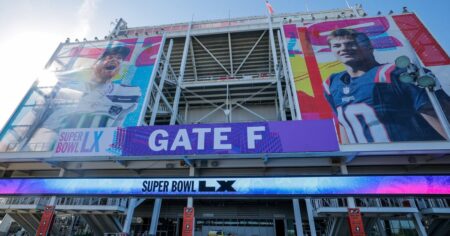
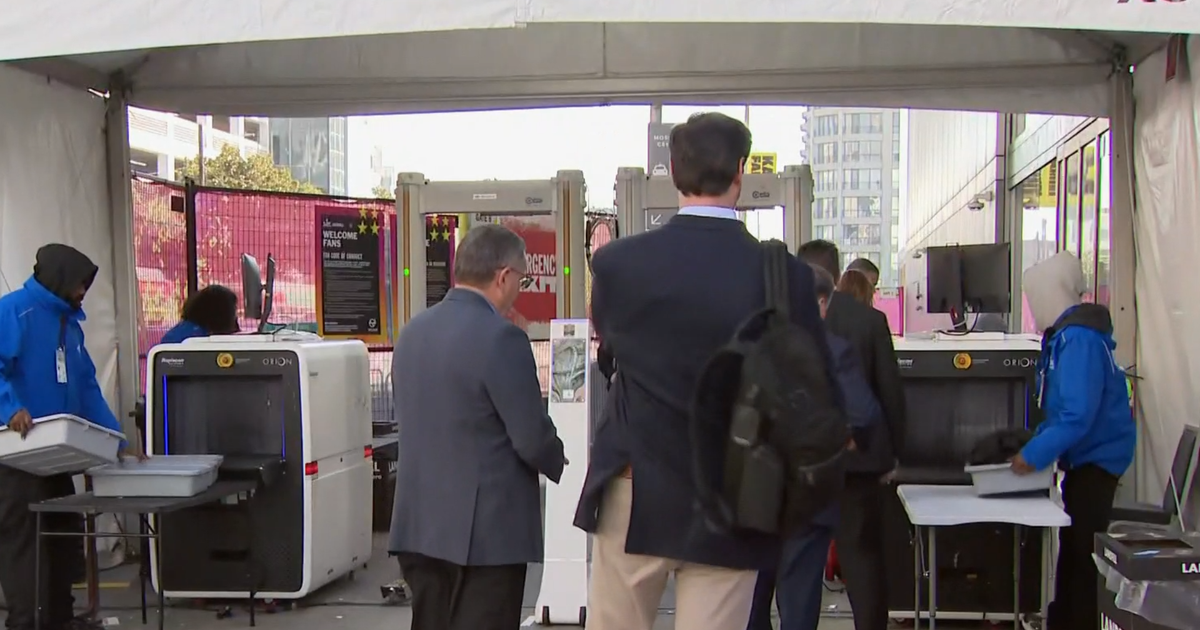
While the helicopter provides oversight from above, an intricate web of security measures blankets the ground around Levi’s Stadium. The scene resembles a carefully orchestrated operation where nothing is left to chance. Steel barricades have been strategically positioned throughout the perimeter, creating controlled access points that funnel all visitors through mandatory checkpoints. These aren’t just cursory glances at bags—every single person entering the stadium area undergoes thorough screening procedures designed to catch potential threats before they can enter the venue. Adding another sophisticated layer to this security blanket, specially trained bomb-sniffing dogs patrol the grounds with their handlers, their sensitive noses capable of detecting explosives that might evade electronic detection systems. The Federal Aviation Administration has contributed to the protective measures by implementing a complete ban on drone flights over the Super Bowl area, eliminating the risk of unauthorized aerial devices that could potentially pose threats or simply interfere with official security operations. This combination of physical barriers, human screening, canine detection, and airspace control creates what security experts call “defense in depth”—multiple overlapping layers that ensure if one system somehow fails, others are in place to catch what slipped through.
Eighteen Months of Planning: A Collaborative Effort
The security apparatus surrounding Super Bowl LX didn’t materialize overnight. What spectators see on game day represents the culmination of a year and a half of intensive planning, coordination, and preparation. More than 35 different agencies spanning local, state, and federal jurisdictions have been working in concert since long before the first ticket was sold. This collaborative approach brings together the diverse expertise and resources of municipal police departments, county sheriffs, state law enforcement agencies, and federal organizations ranging from the FBI to the Department of Homeland Security. The complexity of coordinating so many different agencies, each with its own protocols, chains of command, and areas of specialization, cannot be overstated. It requires countless meetings, joint training exercises, communication system integration, and the development of unified response protocols that everyone understands and can execute seamlessly. This multi-agency task force has spent months conducting threat assessments, running through various emergency scenarios, identifying potential vulnerabilities in the venue and surrounding areas, and developing contingency plans for everything from medical emergencies to terrorist attacks. The goal is ensuring that regardless of what happens, there’s a practiced, coordinated response ready to deploy immediately.
No Credible Threats: Official Reassurances
In a news conference held the day before the big game, Cathy Lanier, who serves as the NFL’s chief security officer, provided reassuring news to fans and the general public. When asked directly about potential security threats, Lanier was unequivocal in her response: there are absolutely no known, credible, or specific threats whatsoever to the Super Bowl. This assessment comes from intelligence gathering and analysis conducted across multiple agencies and represents the collective judgment of the nation’s security apparatus. For fans planning to attend the game or participate in related festivities, this represents important information that allows them to enjoy the experience without undue fear. However, Lanier’s reassurance doesn’t mean security is being taken lightly—quite the opposite. The absence of specific threats doesn’t reduce the comprehensive security measures in place; it simply means that while extensive precautions are being taken, they’re preventive rather than responsive to known dangers. This proactive security posture has become standard for major sporting events in the post-9/11 era, where preventing incidents before they occur has become the primary objective rather than simply responding after something happens.
Immigration Enforcement Clarification: Addressing Community Concerns
In what has become a sensitive topic given the current political climate around immigration enforcement, Lanier made a point of specifically addressing whether U.S. Immigration and Customs Enforcement (ICE) agents would be conducting operations at the Super Bowl. Her statement was clear and direct: there are no planned ICE or immigration enforcement operations scheduled around the Super Bowl or any related events. This clarification appears designed to reassure community members, particularly those from immigrant communities who might otherwise avoid the event or related activities out of fear of encountering immigration enforcement. Jeff Brannigan, a supervisory special agent with Homeland Security Investigations—which, like ICE and Customs and Border Protection, falls under the Department of Homeland Security umbrella—elaborated on the federal role at the event. He explained that the federal law enforcement presence at Super Bowl 60 remains consistent with previous years, suggesting continuity rather than any unusual expansion or change in approach. When pressed further about DHS involvement, Brannigan acknowledged that DHS law enforcement agencies are indeed participating in supporting the Super Bowl, but emphasized that their focus is exclusively on safety and security matters, not immigration enforcement. This distinction matters significantly to communities where concerns about immigration enforcement might otherwise discourage attendance or participation in public events.
The Balance Between Security and Experience
What these extensive security measures ultimately represent is the complex challenge facing modern sporting events: how to provide an experience that feels celebratory and enjoyable while simultaneously implementing security protocols that, by their very nature, remind attendees of potential dangers. The thousands of security personnel, the screening checkpoints, the barricades, the surveillance helicopters—all of these create an atmosphere that can feel simultaneously reassuring and slightly unsettling. Event organizers and security officials walk a fine line, trying to make their presence visible enough to deter potential threats and reassure the public, but not so overwhelming that it transforms what should be a fun sporting event into something that feels like entering a military installation. The goal is allowing fans to focus on the game, the halftime show, the commercials, and the camaraderie of fellow fans, rather than constantly thinking about security concerns. Modern technology helps achieve this balance—sophisticated surveillance systems, intelligence gathering, and communication networks do much of the heavy security work invisibly, while the visible security presence can be calibrated to provide reassurance without creating anxiety. As Super Bowl LX kicks off, the thousands of security personnel from dozens of agencies will be working largely behind the scenes, hoping for what they consider the perfect outcome: a day where nothing happens that requires their intervention, where fans enjoy the spectacle safely, and where the most dramatic moments occur on the field rather than in the security operations center.