



The CIA’s Cold War Relic: Preserving a Legendary Spy Plane
A Monument to Innovation Standing Guard at Langley
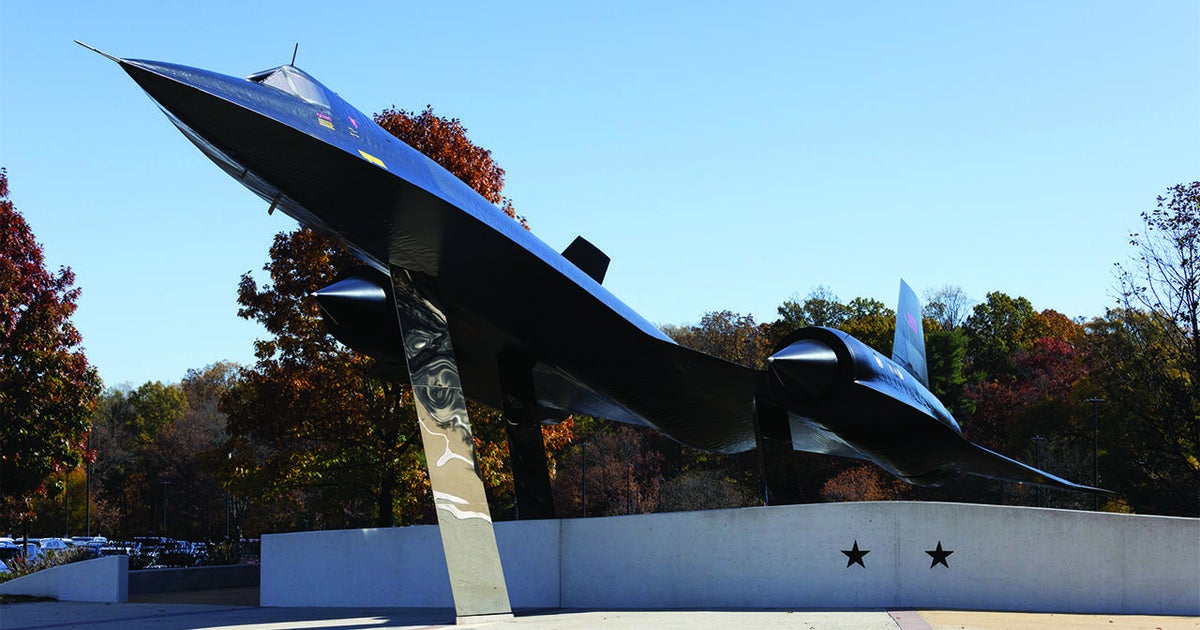
Outside the main entrance of CIA headquarters in Langley, Virginia, stands an extraordinary piece of Cold War history—the A-12 spy aircraft, a technological marvel that once soared at three times the speed of sound at altitudes reaching 80,000 feet. Today, this imposing aircraft serves as a daily reminder to CIA employees of a pivotal era in intelligence gathering, but its grounded existence has created unexpected challenges. The plane, which was designed to withstand the extreme conditions of supersonic flight, was never intended to spend decades exposed to the elements. Robert Byer, the CIA’s museum director, explains the irony: while the A-12, known internally as Article 128, occupies “prime real estate” at the agency’s headquarters, it faces deterioration from something as mundane as weather, insects, and plant life. This 39,000-pound titanium giant, which arrived at Langley in 2007 aboard five wide-load trucks and was mounted on pylons driven 40 feet into the ground, represents what Byer calls the “golden age of overhead reconnaissance.” The aircraft is more than just a display piece—it’s a “macro artifact” that presents unique conservation challenges, and the CIA has undertaken extensive restoration work to ensure this piece of aviation and intelligence history survives for future generations.
Born from Necessity: The A-12’s Cold War Origins
The A-12’s development was a direct response to one of the most significant setbacks in American intelligence history—the 1960 shootdown of a U-2 spy plane over the Soviet Union. This incident exposed the dangerous vulnerability of existing surveillance methods and created an urgent need for an aircraft that could outfly Soviet air defenses. During an era when, as Byer describes it, “there really was an Iron Curtain,” American intelligence officials needed technology that could penetrate deep into Soviet territory without being intercepted or destroyed. The result was the A-12, developed in the late 1950s and operational by the early 1960s, a top-secret reconnaissance plane that pushed aerospace engineering to its absolute limits. Constructed largely from titanium composites, the aircraft represented a quantum leap in aviation technology. The A-12 on display at Langley is the eighth of only 15 built and one of just nine known to survive today. Beyond its technological significance, the aircraft serves as a memorial to CIA pilots Walt Ray and Jack Weeks, who made the ultimate sacrifice in the line of duty during the late 1960s. Though it occupies a prominent position at the agency’s main campus, the plane remains inaccessible to the public, a classified monument to classified work.
The Price of Speed: Operating and Preserving a Supersonic Legend
Operating the A-12 was an extraordinarily demanding and expensive undertaking that required specialized resources and highly trained personnel. The aircraft needed unique fuel formulations, intensive and constant maintenance, and pilots trained to fly while wearing full pressure suits—essentially becoming astronauts in the upper atmosphere. The very design features that made the A-12 so effective in its reconnaissance role have created long-term preservation nightmares. The aircraft was intentionally built with seams and gaps throughout its structure, allowing the titanium skin to expand during the extreme heat generated by flying at Mach 3 speeds and high altitudes. While this was a brilliant engineering solution for flight operations, it became a significant liability once the plane was grounded permanently. Over the years, these openings have allowed insects, moss, and mold to infiltrate the cockpit and other interior spaces. The exterior paint has suffered repeated adhesion failures, requiring multiple restoration efforts. In 2018, the CIA completed a major cleaning and recoating project, but additional wear appeared shortly thereafter, prompting the agency to conduct further research and seek collaboration with other institutions facing similar challenges with their own A-12 aircraft.
A Very Exclusive Club: Collaboration Among A-12 Guardians
In the summer of 2025, CIA preservation experts embarked on a research mission to consult with curators at two other institutions that display A-12 aircraft—the Intrepid Museum in New York City and the U.S. Space & Rocket Center in Huntsville, Alabama. These visits allowed the CIA team to learn how these museums protect their aircraft from harsh outdoor conditions, with the added complexity that those planes are accessible to the public and face different environmental stresses. Byer describes this network with evident appreciation: “It’s a small, small, very small niche subgroup of museums that have an A-12. And it’s definitely a nice little club that we belong to. And everyone in that club is very friendly [with] sharing information because we all want to keep our A-12s in the best possible shape.” This collaborative approach reflects a shared commitment to preserving these rare artifacts of Cold War technology and intelligence history. Drawing on insights gained from these consultations, the CIA made the innovative decision to recoat their A-12 using automotive paint, chosen specifically for its durability, flexibility, and superior resistance to UV damage and extreme weather conditions. The latest restoration, completed just before the 60th anniversary of the A-12’s operational readiness in November 1965, was comprehensive, including stripping away failing paint layers, repairing water damage throughout the structure, and conducting thorough inspections of the cockpit and other vulnerable areas.
More Than Technology: The A-12’s Intelligence Legacy
Despite its relatively brief operational lifespan—the A-12 was soon superseded by satellite reconnaissance technology and its Air Force successor, the SR-71 Blackbird—Byer emphasizes the aircraft’s enduring significance to both the CIA and American intelligence history. “The A-12 was not built for technology’s sake; it was built to get us information on the Soviet Union that we couldn’t get anywhere else,” he explains, adding, “It’s a huge artifact of CIA history, and we’re committed to keeping it in the best possible shape for the future.” The aircraft primarily conducted reconnaissance missions over Asia, including critical flights photographing missile sites during the Vietnam War, providing intelligence that satellite technology of that era simply couldn’t deliver. However, by the mid-1960s, satellite technology was rapidly advancing and beginning to assume the intelligence-gathering role that had been filled by high-speed, high-altitude aircraft. One fascinating detail addressed in the recent restoration was returning the aircraft’s tail number color to red, reflecting its actual operational appearance. Historical research and consultation with a former engineer who worked at Area 51—the highly classified U.S. military base in Nevada where the A-12 program was developed and tested—confirmed that red tail numbers were used during active flight operations and were changed regularly to confuse ground observers who might spot the aircraft.
Aliens, Innovation, and the Future of Intelligence
The A-12’s connection to Area 51 has an amusing footnote in popular culture that Byer is happy to address. “Whenever people were talking about aliens over Area 51, if you look at alien sightings, over 50% of them line up with A-12 flights,” he reveals. “Back then people were so sure that there were aliens out there and the truth is it was just technology that they didn’t know about yet.” This observation highlights how advanced the A-12 was for its time—so far beyond civilian understanding that witnesses literally couldn’t conceive of a human-made explanation for what they were seeing in the sky. When asked whether comparable stealth technologies exist today that might be similarly perplexing to the public, Byer diplomatically declined to comment, but he emphasized that the CIA’s culture of innovation remains fundamentally driven by intelligence needs rather than technology for its own sake. The guiding question, he explains, is always: “How does it get us the information we need in order to be able to brief the president, to give our policy makers the information that they can’t get anywhere else?” This mission-focused approach to technological development is the real legacy of the A-12 program. The aircraft represents a time when American engineers and intelligence professionals faced what seemed like an insurmountable challenge and responded with innovation that redefined what was possible. Today, as the CIA works to preserve this remarkable aircraft for future generations, it stands as both a memorial to those who flew and maintained it and a symbol of the agency’s ongoing commitment to pushing boundaries in service of national security.