

Federal Judge Orders Release of Evidence in Chicago Woman’s Shooting by Border Agent
Court Grants Motion to Combat “Damage to Reputation”
A significant development emerged Friday in the controversial case of Marimar Martinez, a Chicago woman who survived being shot five times by a Customs and Border Protection agent last fall. U.S. District Judge Georgia Alexakis approved Martinez’s request to publicly release crucial evidence from the incident, including body camera footage, FBI reports, photographs, and personal communications. The decision marks a pivotal moment in a case that has raised serious questions about law enforcement accountability and the treatment of American citizens by federal agents.
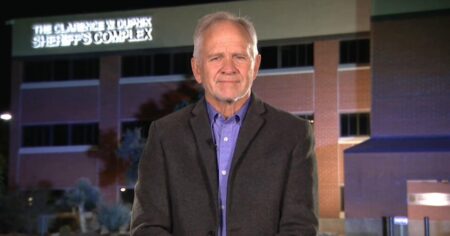
The evidence ordered for release includes body camera recordings from three CBP agents—including Charles Exum, who fired the shots—along with FBI reports documenting the agents’ actions, audio from Martinez’s 911 call, medical treatment records, and approximately 40 text messages that Exum sent to friends, family, and colleagues after the shooting. Martinez’s legal team had specifically requested this release to counter what they describe as ongoing damage to her reputation caused by government statements that have labeled her a “domestic terrorist” and accused her of participating in an “ambush” of federal agents. These serious allegations have remained publicly available on official government channels, even after prosecutors dismissed all charges against Martinez in November, admitting they could not prove she had intentionally rammed CBP agents with her vehicle as originally claimed.
The Shooting and Its Troubling Timeline
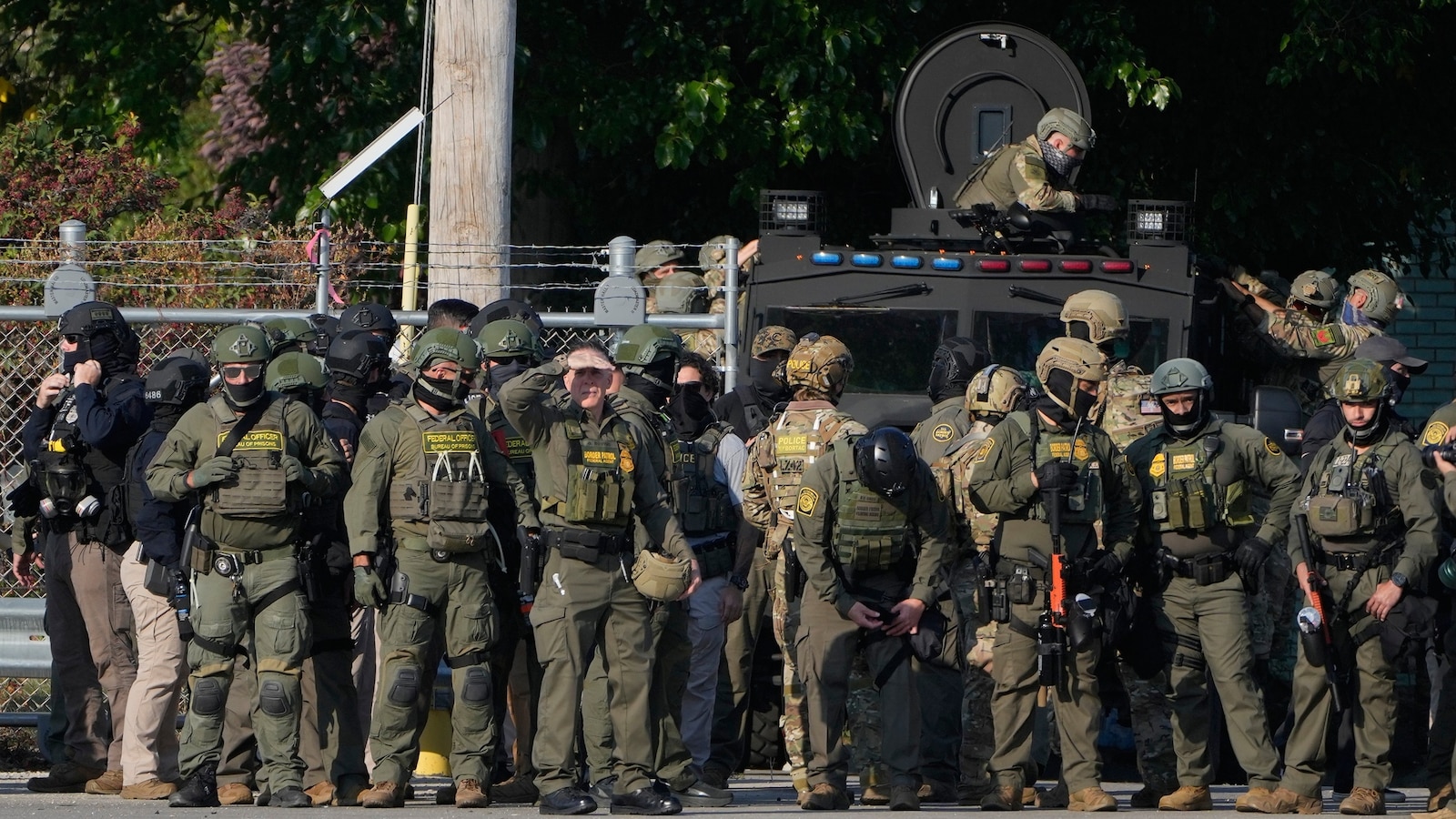
While the body camera footage won’t show the actual shooting—because Agent Exum was not wearing his camera at the time—other agents’ recordings will provide disturbing audio evidence of how quickly the incident unfolded. According to Martinez’s attorney, Chris Parente, the videos reveal that Exum fired five shots within just two seconds of exiting his vehicle. “It is quite alarming that we have agents jumping out of the car and within two seconds, shooting,” Parente told reporters following Friday’s hearing. This rapid timeline raises serious questions about whether proper threat assessment and de-escalation procedures were followed during what federal authorities had characterized as Operation Midway Blitz.
The incident occurred last fall when Martinez encountered CBP agents during this operation. Government prosecutors initially portrayed the encounter as a deliberate attack, accusing Martinez of ramming federal agents with her car in what they called an “ambush.” However, after maintaining these serious allegations for months and subjecting Martinez to criminal prosecution, the government quietly dismissed all charges in November without explanation or apology. Throughout this period, Martinez has maintained her innocence, and her legal team has consistently argued that the objective evidence would vindicate her account of events rather than support the government’s narrative.
Text Messages Reveal Agent’s Disturbing Attitude
Perhaps most troubling among the evidence to be released are the text messages sent by Agent Exum in the immediate aftermath of shooting Martinez. During a November 5 court hearing, Parente questioned Exum about messages in which he appeared to boast about his marksmanship. “I fired 5 rounds and she had 7 holes. Put that in your book, boys,” read one particularly shocking message. When confronted about this communication during testimony, Exum defended his words by explaining that he is a firearms instructor who takes pride in his shooting skills. The exchange became even more disturbing when Parente pressed him directly: “So you’re bragging that you shot her five times and gets seven holes, five shots? Are you literally bragging about this?” Exum’s response—”I’m just saying five shots, seven holes”—appeared to confirm that he was indeed treating the shooting of an American citizen as a demonstration of his professional abilities rather than a tragic use of deadly force.
Judge Alexakis specifically noted the importance of these text messages in understanding both Exum’s perspective on the shooting and how Department of Homeland Security leadership and other government officials responded to the incident. “They communicate his impression of the relevant events,” the judge stated. “They bear on his credibility, they have impeachment value.” The messages provide a window into the agent’s state of mind immediately following an incident in which he shot an unarmed American citizen multiple times—a state of mind that appears to have been characterized more by professional pride than remorse or concern about the person he had just seriously wounded.
Judge Criticizes Government’s Treatment of American Citizen
During Friday’s hearing, Judge Alexakis expressed pointed frustration with the government’s handling of Martinez’s reputation, even after dropping all charges against her. “I don’t understand why the United States government, after being given many, many opportunities to do so, has expressed zero concern about the sullying of Miss Martinez’s reputation,” the judge stated from the bench. She emphasized a fundamental principle of American justice that appeared to have been forgotten in this case: “She’s a United States citizen … and under our legal system, it bears repeating, she’s presumed innocent of any offense for which she has not been convicted.” This judicial rebuke highlights a disturbing pattern where federal authorities made serious public allegations against an American citizen, subjected her to criminal prosecution, and then quietly abandoned the case while leaving those damaging accusations in place for the world to see.
Martinez’s attorney argued that federal authorities have been conducting a “counter-factual public relations war” against his client while simultaneously trying to keep evidence sealed that would disprove their narrative. Parente specifically pointed out that government statements labeling Martinez as a “domestic terrorist”—an extraordinarily serious accusation in contemporary America—remain publicly accessible on official accounts. “You can’t call a U.S. citizen a domestic terrorist, which is such a loaded word in this country, and repeat it over and over as late as yesterday,” Parente told reporters after the hearing. He expressed confidence that once the materials are disclosed, the public will see things “that just completely destroy the credibility of the narrative that she drove at these agents.” The government had argued against releasing the evidence, claiming the court lacked jurisdiction due to a pending appeal and that sensitive law enforcement information, including Exum’s private text messages, should remain sealed to protect investigative tactics and personal privacy—an argument the judge ultimately rejected.
Survivor Speaks Out About Government Accountability
The legal proceedings came just days after Martinez took the extraordinary step of testifying before Congress about her experience. “I know that being a survivor, it’s my duty to be here today to let you elected officials know what is happening on the streets of our country because silence is no longer an option,” she told lawmakers on Tuesday. Her testimony described both the physical and psychological trauma she continues to endure. Martinez explained that she still struggles with ongoing physical pain from being shot five times, but emphasized that the mental wounds run even deeper. “And perhaps even worse, the mental scars will always be there as a reminder of the time my own government attempted to execute me, and when they failed, they chose to vilify me,” she stated in powerful testimony that highlighted the dual victimization she experienced—first from the shooting itself, and then from the character assassination that followed.
Martinez’s attorney indicated that the forthcoming evidence release will provide important insights into “how our government responds right in the immediate aftermath of one of these shootings,” suggesting patterns of behavior that go beyond this single incident. The case has become emblematic of broader concerns about federal law enforcement accountability, the treatment of American citizens by border and immigration enforcement agencies operating far from actual borders, and the power imbalance that exists when government agencies can make serious public allegations while controlling access to evidence that might contradict those claims. As the evidence becomes public in the coming days, it will offer Americans a rare opportunity to examine the full picture of a law enforcement shooting—including not just what happened in the moment, but how agents, supervisors, and officials responded afterward. For Martinez, who has endured both bullets and accusations, the release represents a long-sought opportunity to let the facts speak for themselves and begin reclaiming a reputation that federal authorities severely damaged with allegations they ultimately could not sustain in court.