


Sonny Jurgensen: A Washington Football Legend Passes at 91
A Golden Arm and a Heart of Gold
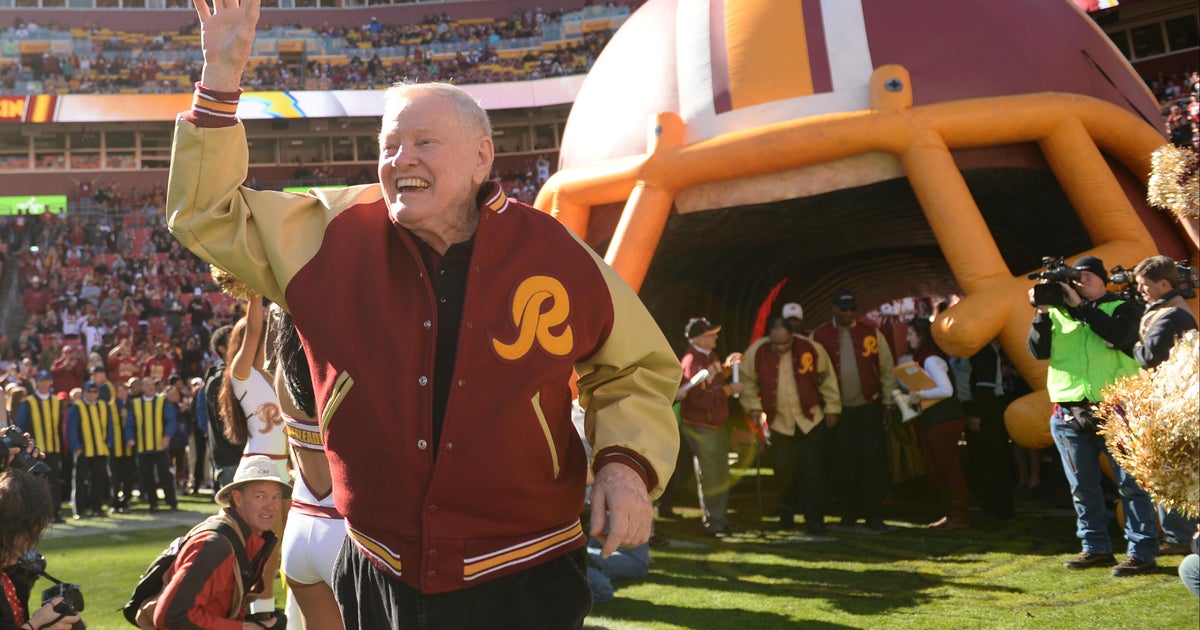
The football world lost one of its most cherished icons when Sonny Jurgensen, the legendary Hall of Fame quarterback, passed away at the age of 91. His family shared the news on Friday through a statement released by the Washington Commanders, marking the end of an era for a player who became synonymous with the franchise itself. Jurgensen wasn’t just a talented athlete with an exceptional throwing arm—he was a personality, a character, and a beloved figure whose influence extended far beyond the gridiron. His family remembered him beautifully, describing him as possessing not only a “golden arm” but also a “fearless spirit and intellect” that earned him his rightful place among football’s immortals in Canton, Ohio. But perhaps most importantly, they celebrated him as the “steady, humorous, and deeply loving heart” of their family. While his playing days ended decades ago, his legacy remained woven into the fabric of Washington football and the city he called home for more than half a century.
From Philadelphia to Washington: A Career-Defining Trade
Jurgensen’s journey to Washington began with what seemed like an April Fool’s joke. On April 1, 1964, he was informed that he’d been traded from the Philadelphia Eagles to the Washington Redskins in exchange for quarterback Norm Snead. When someone first told him about the trade, Jurgensen actually thought it was a prank because of the date. “I said, ‘No, it’s April Fool’s Day, you’re kidding,'” he recalled years later. “He said, ‘No, I’m not kidding. I just heard it on the radio.’ So I was shocked.” That shock would turn into a love affair between a quarterback and a city that would last the rest of his life. Born Christian Adolph Jurgensen III in Wilmington, North Carolina, on August 23, 1934, he had been a two-way star at Duke University before the Eagles selected him in the fourth round of the 1957 draft. He spent years learning behind the legendary Norm Van Brocklin before finally getting his chance to start in 1961, when he immediately made his mark by throwing for 3,723 yards and 32 touchdowns—both league-leading numbers that announced his arrival as an elite quarterback.
Rewriting the Record Books in Burgundy and Gold
Over the next eleven seasons in Washington, Jurgensen transformed the franchise and rewrote its record books with performances that remain legendary to this day. He topped 3,000 passing yards in a season five times—an extraordinary achievement in an era before rule changes made the NFL the pass-happy league it is today. His style was pure pocket passing artistry; he didn’t need to run around or scramble. “All I ask of my blockers is 4 seconds,” he once said with characteristic wit. “I try to stay on my feet and not be forced out of the pocket. I beat people by throwing, not running.” And throw he did, with precision and power that mesmerized fans and terrorized defenses. Perhaps his most memorable performance came on November 28, 1965, in a game against the Dallas Cowboys that became the stuff of legend. With fans booing and the team down 21-0, Jurgensen ignored the criticism and orchestrated one of the greatest comebacks in franchise history, throwing for 411 yards and three touchdowns to lead Washington to a stunning 34-31 victory. After the game, he couldn’t resist a sarcastic jab at the doubters: “I’m glad the crowd let me stay in. It was decent of them, and maybe Bill McPeak appreciates it, too.”
The Quarterback Who Played by His Own Rules
What made Jurgensen truly special wasn’t just his arm—it was his personality. He was notorious for breaking curfew, ignoring coaches’ instructions, and joking about his less-than-ideal physique. Unlike today’s meticulously conditioned athletes, Jurgensen sported what could charitably be called an “everyman” body, complete with a red-headed appearance and an out-of-shape belly that made him look more like a fan than a professional athlete. Yet this only endeared him more to Washington supporters, who saw in him a reflection of themselves—someone who could pull out a cigar, hobnob with the team owner, and still deliver when it mattered most. Even the legendary Vince Lombardi, one of the toughest coaches in football history, was won over by Jurgensen’s talent. After coaching Washington to its first winning season in over a decade in 1969, Lombardi declared that Jurgensen was “the best I have seen”—high praise from a man who had coached Bart Starr to multiple championships. Unfortunately, Lombardi died the following year, and Jurgensen never quite connected with his successor, the defense-minded George Allen, who brought in Billy Kilmer and created the famous “Sonny vs. Billy” quarterback controversy that divided fans until Jurgensen’s retirement after the 1974 season. By the time he hung up his cleats, Jurgensen had compiled remarkable statistics: 2,433 completions for 32,224 yards, 255 touchdown passes, and a 57.1 completion percentage. He made five Pro Bowls, led the NFL in passing yards five times, and threw an unforgettable 99-yard touchdown pass to Gerry Allen in 1968—a record that can be tied but never broken.
A Second Career Behind the Microphone
Jurgensen’s retirement from playing didn’t mean his departure from Washington football—far from it. He embarked on a second career as a broadcaster that would extend his influence for another four decades and introduce him to a new generation of fans who never saw him play. As part of the beloved radio broadcast trio known as “Sonny, Sam and Frank”—alongside Hall of Fame linebacker Sam Huff and play-by-play announcer Frank Herzog—Jurgensen became a fixture on Washington football broadcasts. The three would analyze games with astute observations, affectionate criticism, and plenty of laughter, creating a unique chemistry that fans adored. Jurgensen brought an insider’s perspective combined with a willingness to question decisions and performances he didn’t agree with, especially when it came to quarterbacks. He often expressed nostalgia for the days when quarterbacks called their own plays, believing it made the game more strategic and interesting. Beyond broadcasting, he became an unofficial confidant within the organization, mentoring young quarterbacks like Gus Frerotte during his battle with Heath Shuler for the starting job in the mid-1990s. When Daniel Snyder purchased the team in 1999, Jurgensen became part of his inner circle, sometimes arriving at the practice facility via the owner’s helicopter and enjoying special sideline seats to watch preparations. Yet even with this privileged access, he never became a yes-man, maintaining his independent voice and willingness to speak his mind.
A Legacy That Lives Forever
Josh Harris, the team’s current controlling owner who grew up watching Jurgensen, perfectly captured what made him special: “Sonny Jurgensen is, and always will be, one of the defining legends of Washington football. For me, Sonny was the embodiment of what it means to don the burgundy and gold: tough, smart and endlessly devoted to this franchise and its fans.” That devotion was mutual—Washington fans loved Jurgensen with an intensity reserved for only the greatest figures in a franchise’s history. He became a one-name celebrity in the nation’s capital, simply “Sonny” to everyone who knew him or felt like they did. The Pro Football Hall of Fame inducted him in 1983, recognizing his place among the game’s all-time greats, and to this day, he remains the only Washington player to wear the No. 9 jersey in a game—a number that has been unofficially retired in his honor. Hall of Fame president Jim Porter summed up Jurgensen’s impact beautifully: “Few players could rival Sonny Jurgensen’s genuine love of the game that continued long after his playing days. Watching Sonny throw a football was like watching a master craftsman create a work of art.” Now, as his family noted, he has “taken his final snap,” but his legacy remains “an indelible part of the city he loved and the family he built.” For Washington football fans of all generations, Sonny Jurgensen will forever represent an era when the game was played with both exceptional skill and infectious joy, when personalities mattered as much as performance, and when a red-headed quarterback with an everyman’s body and a Hall of Famer’s arm could capture a city’s heart and never let it go.