


Super Bowl Security: Why Drones Are Banned and How Authorities Are Prepared to Respond
The Growing Concern Over Drones at Major Events
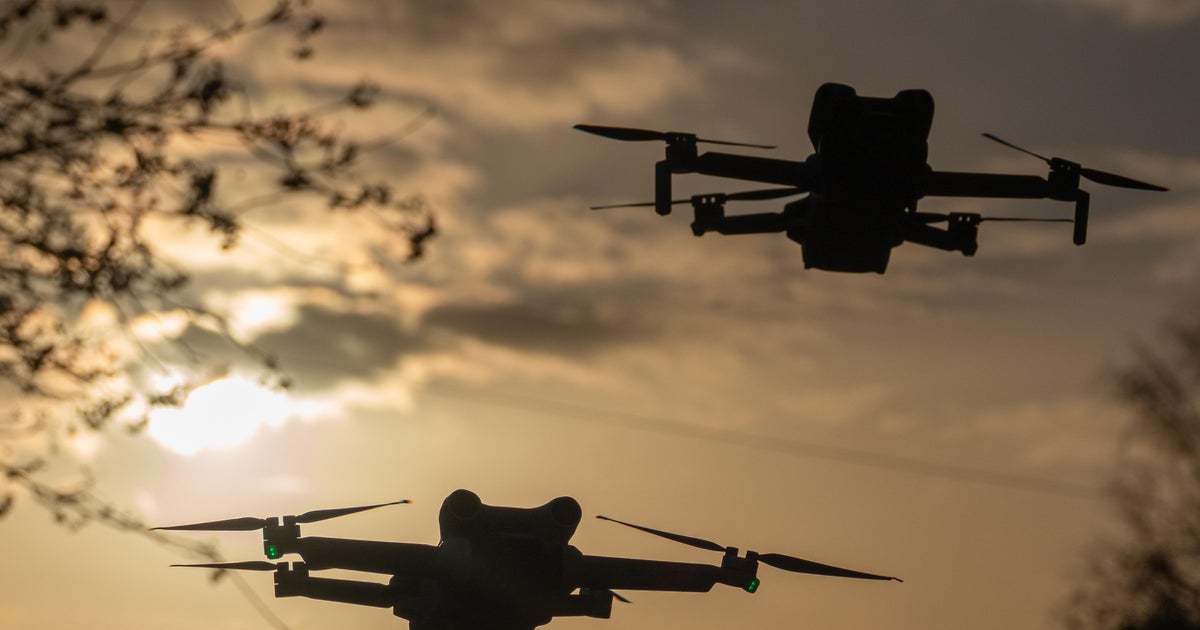
As football fans from across the nation make their way to California for one of the biggest sporting events of the year—the Super Bowl matchup between the New England Patriots and Seattle Seahawks—they’re receiving an unusual warning from authorities: leave your drones at home. What might seem like an overreaction is actually a serious security measure designed to protect the thousands of spectators who will pack the stadium on game day. Santa Clara’s police chief has made it abundantly clear that law enforcement is prepared to take drastic action, including shooting down any unauthorized drones that enter the airspace above the stadium. This aggressive stance reflects the growing recognition among security professionals that drones, while fascinating pieces of technology, pose genuine threats to public safety at large gatherings.
The popularity of drones has exploded in recent years, with these unmanned aerial vehicles becoming increasingly accessible to everyday consumers. Anyone with a credit card and internet connection can purchase a drone online, often for a few hundred dollars or less. Sports enthusiasts, in particular, have embraced this technology, seeing it as an exciting way to capture unique aerial footage of their favorite events. The bird’s-eye view that drones provide can create spectacular video content that was once only possible with expensive helicopter-mounted cameras. However, this democratization of aerial filming technology has created new headaches for law enforcement and event security personnel, who must now contend with the possibility of multiple unauthorized aircraft buzzing around stadiums filled with tens of thousands of people.
Understanding the Real Dangers Drones Present
The threats posed by drones at major sporting events aren’t merely theoretical—they represent genuine dangers that security professionals must take seriously. On the more innocent end of the spectrum, there’s the possibility of equipment failure. Even when operated by well-meaning hobbyists with no malicious intent, drones can malfunction. A battery might die unexpectedly, a control signal might be lost, or a mechanical failure might occur, sending the device plummeting from the sky directly into the crowded stands below. A drone falling from significant height could easily cause serious injuries to spectators who would have no warning and no way to protect themselves from the falling object.
More concerning, however, is the potential for drones to be used as weapons or delivery systems for harmful materials. A bad actor could theoretically use a drone to drop dangerous substances into the stadium, whether that’s a chemical agent, an explosive device, or some other threat to public safety. This isn’t paranoid speculation—security experts worldwide have recognized that commercially available drones could be weaponized relatively easily by those with malicious intentions. Retired Army Colonel Bill Edwards, who now runs specialized counter-drone training programs at ENSCO, a Washington, D.C.-based technology company, doesn’t mince words about the expectation that people will attempt to fly drones at high-profile events like the Super Bowl. “We have to expect it at every major event that’s happening in the country,” Edwards stated matter-of-factly, reflecting the reality that drone threats have become a standard consideration in modern security planning.
Federal Response and No-Fly Zone Implementation
Recognizing the seriousness of the drone threat, federal authorities haven’t left Super Bowl security to chance. The Federal Aviation Administration has implemented a comprehensive ban on all drone flights over the Super Bowl venue, elevating the event to the status of a “top special event” that warrants extensive coordination among multiple government agencies. This classification isn’t given lightly—it places the Super Bowl in a category of events considered to have national significance and potential vulnerability to various threats, requiring the pooling of resources and expertise from across the federal government.
The FAA isn’t working alone in enforcing this aerial restriction. The agency has partnered closely with the FBI to create a multi-layered detection and response system. Together, these agencies have deployed technology capable of detecting, tracking, and assessing any unauthorized drone activity in the restricted airspace surrounding the stadium. For drone operators who might be tempted to ignore these restrictions, the consequences are severe and multifaceted. Violators face civil penalties of up to $75,000—a financial punishment that would devastate most casual drone enthusiasts. Beyond the monetary fines, offenders can also have their drones permanently confiscated and face federal criminal charges that could result in jail time. The message from authorities is crystal clear: unauthorized drone flights near the Super Bowl will not be tolerated, and those who violate the restrictions will face serious repercussions.
Law Enforcement’s Multi-Layered Defense Strategy
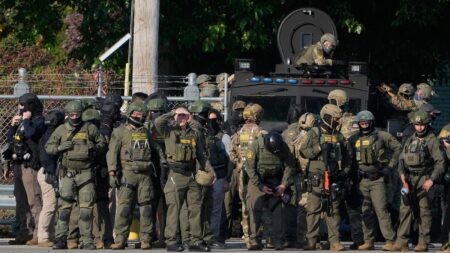
Santa Clara Police Chief Cory Morgan has outlined the comprehensive approach law enforcement will take to handle any drone incursions during the Super Bowl. Rather than relying on a single response method, security teams have developed what Morgan describes as “layers of responses and mitigation efforts.” This graduated approach allows authorities to match their response to the specific circumstances of each incident, ranging from the least to most aggressive interventions depending on the perceived threat level.
At the most basic level, ground intercept teams stand ready to make contact with drone pilots, either to warn them away from restricted airspace or to apprehend them if they’ve already violated the no-fly zone. For drones already in flight, authorities have several technological options at their disposal. They can attempt to redirect the drone using signal interference, force it to land in a controlled manner, or in the most extreme circumstances, destroy it entirely by shooting it down. This last option isn’t merely theoretical posturing—it represents a real possibility if authorities determine that a drone poses an imminent threat to public safety that cannot be neutralized through less destructive means.
Evolving Threats from Military Conflicts Abroad
Perhaps most troubling for security professionals is that the drone threat isn’t static—it’s evolving rapidly, driven in large part by innovations developed in active war zones. The ongoing conflict between Russia and Ukraine, along with various conflicts in the Middle East, has become a proving ground for drone technology, with military forces on all sides finding new and increasingly sophisticated ways to deploy unmanned aerial vehicles. These technological advancements, initially developed for military purposes, inevitably find their way into civilian markets, creating new challenges for law enforcement agencies tasked with protecting public events.
Colonel Edwards, whose company trains police departments including the New York Police Department on drone threat mitigation, has identified fiber-optic drones as a particular concern. These advanced devices use fiber-optic cables for control and communication, making them virtually invisible to the radar systems that security teams rely on to detect conventional drones. As Edwards puts it, these innovations are “promulgating the technology’s capability 20 years into the future—now,” meaning that law enforcement is being forced to contend with threats that would normally have taken decades to develop, but which have been accelerated by the intense demands of modern warfare. The result, according to Edwards, is that “the threat level has increased a hundredfold,” requiring constant adaptation and investment in new counter-drone technologies and training to keep pace with the rapidly evolving capabilities of potential bad actors. As major events like the Super Bowl continue to attract enormous crowds and media attention, the cat-and-mouse game between drone operators and security forces will undoubtedly continue to escalate.