
Washington Post CEO Resigns Amid Newsroom Turmoil and Mass Layoffs
A Sudden Departure After Controversial Restructuring
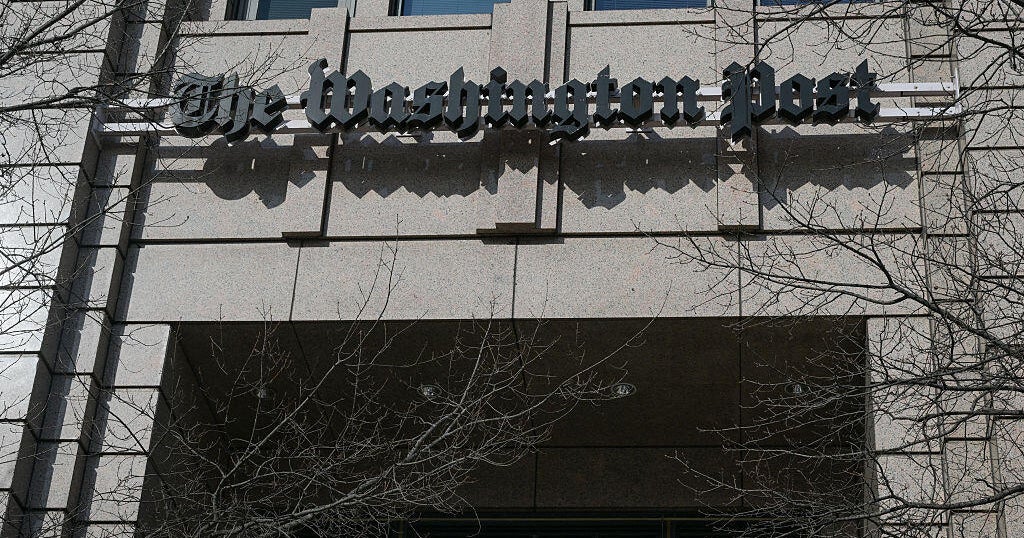
The Washington Post is facing another seismic shift in its leadership as Will Lewis, the newspaper’s CEO and publisher, stepped down from his position on Saturday, just three days after implementing devastating layoffs that eliminated approximately one-third of the newsroom staff. In a brief note sent to employees and subsequently shared across social media, Lewis explained his decision by stating that “after two years of transformation, now is the right time for me to step aside.” His abrupt resignation comes at a particularly turbulent time for one of America’s most prestigious newspapers, leaving many to wonder about the future direction of the publication and whether his departure was truly voluntary or the result of mounting pressure from the dramatic workforce reduction he oversaw.
Lewis, who had held the position since November 2023 after previously serving as publisher of the Wall Street Journal from 2014 to 2020, defended his tenure by emphasizing that difficult choices were necessary to secure the newspaper’s long-term viability. In his farewell message to staff, he maintained that the controversial decisions made during his leadership were essential “to ensure the sustainable future of The Post so it can for many years ahead publish high-quality nonpartisan news to millions of customers each day.” He also made a point of thanking Jeff Bezos, the Amazon founder who owns the Washington Post, for his “support and leadership” throughout his time at the helm. However, Lewis’s departure raises serious questions about whether the transformation he championed was the right approach or if the cost—both in terms of talent lost and employee morale—was simply too high.
New Leadership Takes Over During Crisis
The Washington Post wasted no time in naming Lewis’s replacement, announcing that Jeff D’Onofrio would “immediately” step into the role of acting publisher. D’Onofrio brings a financial background to the position, having served as the Post’s chief financial officer since June 2025. His previous experience includes a stint as CEO of the social media platform Tumblr, which gives him some insight into digital media operations. However, his appointment during such a challenging period suggests that the Post’s ownership may be prioritizing financial restructuring over journalistic leadership, a choice that could further concern staff members already reeling from the recent layoffs. D’Onofrio faces the enormous challenge of stabilizing a newsroom in crisis, rebuilding trust with demoralized employees, and charting a sustainable path forward for an institution that has lost a significant portion of its reporting capacity.
The circumstances surrounding Lewis’s departure became even more controversial when reports emerged that he had been notably absent from the Zoom call where executive editor Matt Murray announced the layoffs to staff on Wednesday. According to multiple media reports, employees criticized Lewis for not facing the newsroom during one of the most difficult moments in the newspaper’s recent history. This perceived absence during a critical moment of crisis likely contributed to the erosion of confidence in his leadership and may have accelerated his decision to resign. For journalists who dedicate their careers to holding powerful people accountable, having leadership that appears to avoid accountability during difficult times represents a particularly bitter irony.
The Scope and Impact of the Newsroom Cuts
The layoffs that precipitated this leadership crisis were extensive and strategically significant, fundamentally reshaping the Washington Post’s journalistic capabilities. A Post spokesperson confirmed that the cuts affected approximately one-third of the newsroom, representing a massive reduction in the newspaper’s reporting capacity. The restructuring went beyond simple staff reductions, fundamentally altering what the Post covers and how it operates. Most notably, the newspaper scaled back its foreign news coverage—once a hallmark of its international journalism—and completely shut down entire sections, including its sports department. These decisions represent a dramatic narrowing of the Post’s scope and ambition, transforming it from a comprehensive news organization into something considerably more limited in its coverage areas.
In a letter to the newsroom that was shared with CBS News, executive editor Matt Murray attempted to frame the restructuring as a necessary evolution, explaining that the plans are intended to “place The Washington Post on a stronger footing” and better position the paper in a “rapidly changing era of new technologies and evolving user habits.” This language echoes the justifications offered by many legacy media organizations as they struggle to adapt to digital disruption and changing reader behaviors. However, the scale of the cuts and the elimination of entire coverage areas suggest that the Post is not merely adapting to change but fundamentally retreating from its traditional mission. For a newspaper that built its reputation on comprehensive, fearless journalism—including the Watergate investigation that brought down a presidency—the decision to dramatically reduce its foreign coverage and eliminate whole sections represents a significant diminishment of its journalistic ambitions.
Criticism from Former Leadership and Industry Observers
The turmoil at the Washington Post has drawn sharp criticism from former leadership, most notably Martin Baron, who served as executive editor from 2013 to 2021 and presided over a period of growth and journalistic excellence at the paper. Speaking to CBS News earlier this week, Baron was particularly critical of several editorial decisions made under the current leadership, including the highly controversial choice not to endorse a presidential candidate in the days before the 2024 national election. Baron argued that this decision, which broke with the newspaper’s long-standing tradition of making presidential endorsements, significantly hurt the Post’s reputation among its readership and the broader journalism community. The non-endorsement was widely seen as a capitulation to political pressure and raised serious questions about the newspaper’s editorial independence and willingness to take principled stands on important issues.
Baron’s criticism extended beyond current Post leadership to owner Jeff Bezos himself, whom he accused of prioritizing his other business interests—primarily Amazon and the space exploration company Blue Origin—over the newspaper. This critique touches on a fundamental tension that has plagued the Post during Bezos’s ownership: while his deep pockets initially seemed to promise journalistic investment and independence, the reality has proven more complicated. The suggestion that Bezos views the Post as less important than his commercial ventures raises troubling questions about the future of the newspaper and whether it can truly fulfill its mission when its owner’s attention and resources are directed elsewhere. For a publication that relies on its reputation for editorial independence and journalistic integrity, being perceived as a secondary priority for its billionaire owner represents a serious problem that could further undermine staff morale and public trust.
The Future of Legacy Journalism in Question
The crisis at the Washington Post reflects broader challenges facing legacy journalism organizations as they struggle to find sustainable business models in the digital age. The traditional newspaper industry has been in decline for years, with print advertising revenue collapsing and digital subscription models proving difficult to scale sufficiently to replace lost income. Even well-resourced organizations like the Post, backed by one of the world’s wealthiest individuals, are finding it difficult to maintain comprehensive newsrooms capable of covering the full range of important stories. The decision to eliminate foreign coverage and entire sections like sports represents a recognition that the old model of comprehensive metropolitan newspapers may no longer be viable, even for prestigious national publications.
However, the manner in which the Post has handled this transition—with mass layoffs, leadership absences during critical moments, and a CEO resignation just days after devastating cuts—suggests an organization in reactive crisis mode rather than executing a thoughtful strategic transformation. The rapid succession of events, from the layoffs to Lewis’s departure, creates an impression of chaos and dysfunction that could further damage the newspaper’s reputation and ability to attract and retain top journalistic talent. As the Post moves forward under new leadership, it faces fundamental questions about what kind of publication it wants to be, whether it can maintain its journalistic standards with a dramatically reduced staff, and how it can rebuild trust with both employees and readers who have watched this tumultuous period unfold. The resolution of this crisis will likely have implications far beyond the Post itself, serving as a test case for how legacy journalism institutions can—or cannot—successfully navigate the transition to a sustainable digital future while maintaining their core mission and values.