



The Tragedy Behind “What the Little Girl Saw”: A Murder-for-Hire That Shocked New York
A Child’s Devastating Testimony
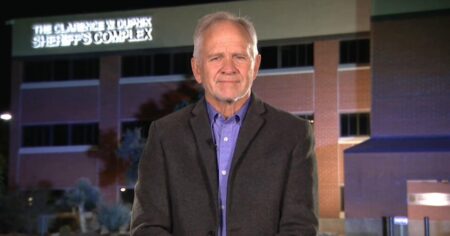
In one of the most heartbreaking criminal cases to emerge from upstate New York, seven-year-old Charlie Clayton became the sole witness to her mother’s brutal murder in 2015. ABC News’ “20/20” revisited this harrowing case in an episode titled “What the Little Girl Saw,” which originally aired in 2023 and was scheduled for an encore presentation on February 5th. Just hours after witnessing the violent attack that claimed her mother’s life, young Charlie sat down with Steuben County Sheriff Jim Allard to recount the horrifying events. Her words were chilling in their simplicity and devastating in their implications: “A man was hurting Mommy, and Mommy was yelling ‘Run, Charlie, Run.'” What began as a straightforward investigation into a home invasion would soon unravel into something far more sinister—a murder-for-hire plot orchestrated by the person who should have protected Kelley Clayton most: her own husband, Thomas Clayton.
The innocence in Charlie’s voice couldn’t mask the horror of what she’d witnessed, and her testimony would become central to unraveling a conspiracy that shocked the community. Sheriff Allard recalled how he simply sat down with the young girl and started a conversation, never imagining that her observations would lead investigators down a path involving betrayal at the deepest level. When Charlie described the masked intruder’s eyes as resembling her father’s, alarm bells immediately rang for the seasoned investigator. He knew that interviewing a child witness required specialized expertise, so he brought in a child forensic investigator to conduct a follow-up interview at the Chemung County Child Advocacy Center, where professionals trained in handling traumatic situations could create a safe environment for Charlie to share what she saw.
The Details That Pointed to a Familiar Face
During the second, more thorough interview, Charlie’s statements became even more troubling for investigators. She told them, “It could have been my dad, but he looked real—he looked like my dad.” When pressed on how the assailant resembled her father, she mentioned “his mask and jeans.” Most disturbingly, when asked if she’d ever seen anyone wearing the mask before, Charlie replied, “My dad.” Sheriff Allard recounted one particularly poignant moment that has stayed with him: “Every question I asked her related back to Daddy and then she looks at me. She goes, ‘But it couldn’t have been Daddy, because then who would take care of us?'” This heartbreaking question captured the impossible position this child found herself in—trying to reconcile the horror she witnessed with the fundamental need to believe her remaining parent couldn’t be responsible for such violence.
Charlie’s testimony, while emotionally compelling, presented investigators with a complex challenge. Was she saying her father was literally the attacker, or was she describing someone who reminded her of her father? The answer to this question would prove crucial in determining the direction of the investigation. Despite the confusion natural for a traumatized seven-year-old, Sheriff Allard noted that he observed “no deceit in the statements [Charlie] gave” and believed “it was true in her mind when she told it and as she related it.” This assessment of Charlie’s credibility, combined with other evidence that would emerge, set investigators on a path that would ultimately lead to arrests and convictions that tore apart what remained of this family.
Unraveling the Murder-for-Hire Plot
As investigators dug deeper, they discovered that Thomas Clayton had what appeared to be a solid alibi—he claimed to be at a friend’s house for a weekly poker game when his wife was murdered. Multiple witnesses corroborated his presence at the poker game, which initially seemed to rule him out as a suspect. However, a crucial detail emerged that cast doubt on his innocence: a woman at the gathering told police that Thomas had asked to borrow her cellphone to make a call just 90 minutes before he arrived home to discover his wife’s body. That seemingly innocent request would prove to be a critical piece of evidence.
Investigators traced that borrowed phone call to Michael Beard, Thomas Clayton’s former employee, placed around 10:50 p.m. Beard’s partner provided additional damning information, telling police that the couple had been fighting that evening and that Beard left their home around 11:30 p.m., returning approximately an hour and a half later—a timeline that aligned perfectly with the murder. During an initial police interview that wasn’t recorded, Beard confessed to killing Kelley Clayton, stating that her husband had hired him to carry out the murder for $10,000. However, before trial, Beard changed his story, claiming that Thomas Clayton had actually hired him to burn down the house, and that he discovered Kelley’s body already dead when he arrived at the home that night.
Despite Beard’s attempts to recant his confession, investigators had gathered substantial physical evidence linking him directly to the crime. Beard led police to the murder weapon, bloody clothing he wore during the attack, and keys to the Clayton house that he had disposed of in a small creek near the property. Perhaps most chillingly, Beard’s accomplice—the lookout who accompanied him that night—told investigators that as they approached the Clayton home, Beard said, “I’m going to have to kill a bitch.” This statement clearly indicated premeditation and intent, contradicting Beard’s later claims of discovering an already-murdered victim.
The Killer’s Changing Story
In an exclusive interview with “20/20,” Michael Beard maintained his revised version of events, insisting that he went to the Clayton home after Thomas Clayton asked him to help with a last-minute job. “I get the key, open the door, walk in and get the shock of my life,” Beard told the program. “I see her laying on the floor. I get scared from that point, which I’m not using for an excuse, but never called 911 that night.” Beard claimed he signed a written confession admitting to Kelley’s murder only to “keep my family out of this,” while maintaining his innocence of the actual killing. His explanations, however, failed to account for the physical evidence that tied him to the brutal attack.
District Attorney Weeden Wetmore of Chemung County explained the forensic evidence that contradicted Beard’s claims: “The maul handle, which was recovered some distance from the crime scene, was examined. We believe that Beard was wearing gloves at the time of the crime. He talked about getting rid of gloves. That would, of course, eliminate his DNA on it, but it was Kelley Clayton’s.” The presence of Kelley’s DNA on the murder weapon, combined with Beard’s knowledge of where the weapon and other evidence were hidden, painted a damning picture that his alternative explanation simply couldn’t overcome.
Reconciling a Child’s Perspective
One question continued to haunt the investigation: if Michael Beard was the perpetrator, why did Charlie tell investigators that the intruder looked like her father? Investigator Don Lewis from the Steuben County Sheriff’s Office provided an explanation based on further interviews and analysis: “After further interviews of Charlie and further analysis, the person that was in there had a mask on. We’re pretty sure that when she says, ‘Well, it looks like daddy,’ it was more of ‘Well, the clothing he had on looked like daddy.'” This interpretation suggested that Charlie was identifying familiar clothing—perhaps jeans and a style of mask her father owned—rather than definitively identifying her father as the attacker.
This reassessment shifted the focus of the investigation from Thomas Clayton physically committing the crime himself to orchestrating it through a hired killer. “Now the focus shifted from Thomas Clayton doing the crime himself. Now it became a murder for hire,” District Attorney Wetmore explained. Without Beard willing to testify against Thomas Clayton, prosecutors relied heavily on cellphone records and geolocation data to build their case, demonstrating the connection between the two men and establishing the timeline that placed Beard at the crime scene while Thomas maintained his alibi at the poker game.
Justice and Its Aftermath
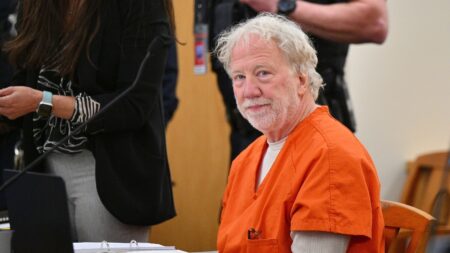
The case concluded with both Michael Beard and Thomas Clayton being convicted of first- and second-degree murder and sentenced to life in prison without the possibility of parole, though Beard’s second-degree murder charge was later dismissed by a judge on appeal. Thomas Clayton continues to deny any involvement in his wife’s murder. Custody of Charlie and her younger brother was granted to Kelley’s sister, Kim Bourgeois, who read a statement from Charlie at Thomas Clayton’s sentencing that captured the profound betrayal this child experienced.
“Charlie actually wrote a letter on her own that she loved her mom. She loved her dad, but that her dad was a coward because he made Michael Beard kill Mommy,” Bourgeois shared. These words from a child forced to grow up far too quickly encapsulate the devastating impact of this crime—not just the loss of a mother, but the loss of a father to imprisonment for orchestrating that very loss. Charlie’s courage in speaking the truth, despite the emotional turmoil of potentially implicating her own father, played a crucial role in bringing justice for her mother. Her testimony, combined with forensic evidence and electronic records, ensured that both the man who wielded the murder weapon and the man who hired him to do so would face accountability for their actions. The case serves as a sobering reminder that sometimes the greatest dangers come from those closest to us, and that even the youngest witnesses can provide testimony that helps bring killers to justice, no matter how painful the truth might be.