

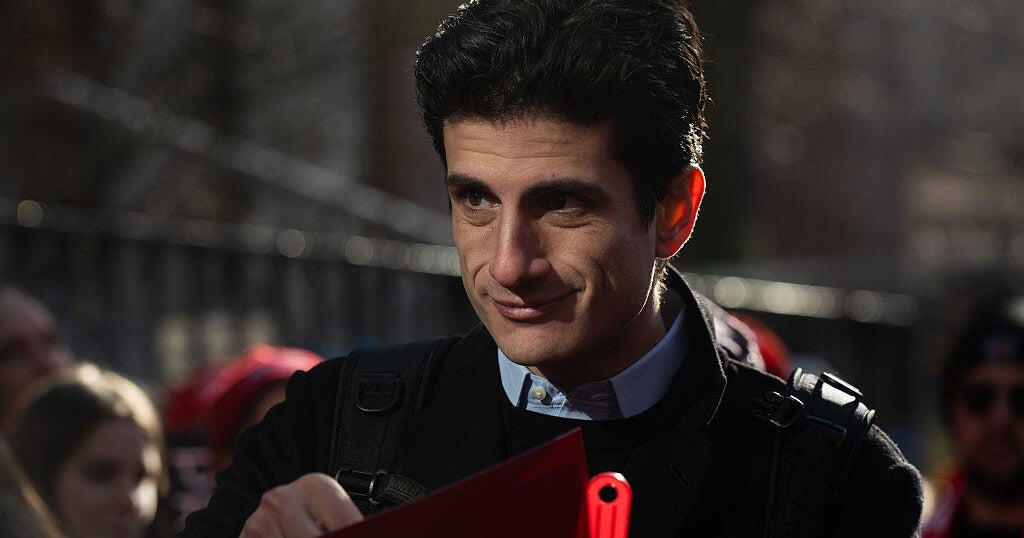

Nancy Pelosi Set to Endorse JFK’s Grandson in New York Congressional Race
A Kennedy Returns to Politics with High-Profile Support
In a move that bridges generations of Democratic Party leadership, former House Speaker Nancy Pelosi is preparing to throw her considerable political weight behind Jack Schlossberg, the grandson of President John F. Kennedy, in his bid for Congress. Sources close to the situation confirmed to CBS News that Pelosi plans to endorse the 33-year-old Kennedy descendant in the Democratic primary for New York’s 12th Congressional District. While the endorsement has reportedly been in development for several weeks, it hasn’t yet been formally announced to the public. This backing from one of the Democratic Party’s most influential figures could provide a significant boost to Schlossberg’s campaign as he navigates a crowded and competitive primary field. The endorsement represents a passing of the torch of sorts, with an 84-year-old political icon supporting a millennial candidate who represents both a storied family legacy and a new generation of progressive leadership.
The Latest Kennedy to Enter the Political Arena
Jack Schlossberg officially threw his hat into the ring last November, joining what has become an increasingly crowded Democratic primary race. As the son of Caroline Kennedy, former U.S. Ambassador to Australia and Japan, and the first cousin of current Health and Human Services Secretary Robert F. Kennedy Jr., Schlossberg carries one of the most recognizable names in American political history. The 33-year-old is seeking to fill the seat being vacated by retiring Representative Jerry Nadler, a longtime fixture in New York politics. If successful, Schlossberg would become at least the seventh member of the extended Kennedy family to serve in Congress, continuing a political dynasty that has spanned more than seven decades. His entry into the race has generated considerable attention, not just because of his famous surname, but also due to his unique approach to campaigning that emphasizes digital engagement and speaks directly to younger voters who have grown up in an entirely different media landscape than previous generations of politicians.
A Crowded Field of Democratic Contenders
Schlossberg faces stiff competition in the Democratic primary from a diverse group of accomplished candidates, each bringing their own credentials and constituencies to the race. Among his competitors are state Assemblymen Alex Bores and Micah Lasher, both of whom have experience in New York state politics and established bases of support. The field also includes George Conway, an attorney who gained national prominence as a vocal critic of former President Donald Trump despite being married to Trump’s former counselor Kellyanne Conway, and Jami Floyd, a respected journalist with deep roots in legal reporting and analysis. This competitive primary reflects the desirability of the seat, which represents one of the most Democratic-leaning and affluent districts in the country. Each candidate is working to distinguish themselves in a race where name recognition, fundraising ability, political connections, and message all play crucial roles in determining who will ultimately emerge victorious and go on to represent the district in Congress.
A Progressive Campaign Built for the Social Media Age
What sets Schlossberg apart from many traditional political candidates is his sophisticated understanding of digital media and his ability to connect with voters through social media platforms. His campaign has placed a strong emphasis on online engagement, recognizing that modern political movements are often built as much through viral moments and digital organizing as they are through traditional campaigning methods like door-knocking and town halls. During the 2024 election cycle, Schlossberg actively campaigned alongside President Joe Biden and Vice President Kamala Harris, specifically working to help them build bridges with younger voters who have historically been less engaged in the political process. His progressive platform addresses issues that resonate particularly strongly with younger Americans, including climate change, economic inequality, healthcare access, and social justice. This approach has helped him build a following that extends beyond his famous last name, attracting supporters who appreciate his policy positions and his communication style, which feels more authentic and less scripted than many conventional politicians.
Representing Manhattan’s Most Affluent Neighborhoods
New York’s 12th Congressional District encompasses some of the most iconic and wealthy neighborhoods in Manhattan, including Midtown, the Upper East Side, and the Upper West Side. This district is home to world-renowned cultural institutions, major corporations, prestigious universities, and some of the most expensive real estate in the world. The area is solidly Democratic, meaning the real contest is the primary rather than the general election. The district’s voters tend to be highly educated, politically engaged, and progressive on many issues, though they also include a significant number of moderate Democrats and independents. Representing this district means addressing the concerns of constituents who care deeply about issues like climate change, education, healthcare, economic opportunity, and maintaining New York’s position as a global cultural and financial capital. The retiring Representative Jerry Nadler has served this area (in various district configurations due to redistricting) for more than three decades, establishing a legacy of progressive leadership that all the candidates seeking to replace him are promising to continue and build upon.
The Kennedy Legacy and What It Means for Modern Politics
The potential election of Jack Schlossberg to Congress raises interesting questions about political dynasties in American democracy and what the Kennedy name means to voters in 2025. The Kennedy family has been part of American political consciousness for generations, beginning with Joseph P. Kennedy Sr.’s service as Ambassador to the United Kingdom, continuing through President John F. Kennedy’s administration, and including the long Senate careers of Robert F. Kennedy and Ted Kennedy. For some voters, particularly older Americans, the Kennedy name evokes a sense of nostalgia for what they perceive as a more idealistic era in American politics. For younger voters, the family name might carry less automatic weight, requiring Jack Schlossberg to prove himself on his own merits rather than simply coasting on his ancestry. The fact that Nancy Pelosi, herself a product of a political family (her father and brother both served as mayors of Baltimore), is endorsing Schlossberg suggests she sees in him not just a famous name but genuine political talent and leadership potential. As the campaign continues, it will be fascinating to watch how Schlossberg balances honoring his family’s legacy while establishing his own political identity and demonstrating that he has something unique to offer beyond his last name. Whether voters in Manhattan’s 12th District ultimately choose him will depend on his ability to convince them that he’s the right person for this moment in history, regardless of who his grandfather was.