


FBI Arrests Key Suspect in 2012 Benghazi Attack That Killed Four Americans
Justice Delayed But Not Denied: A Thirteen-Year Pursuit Comes to Fruition
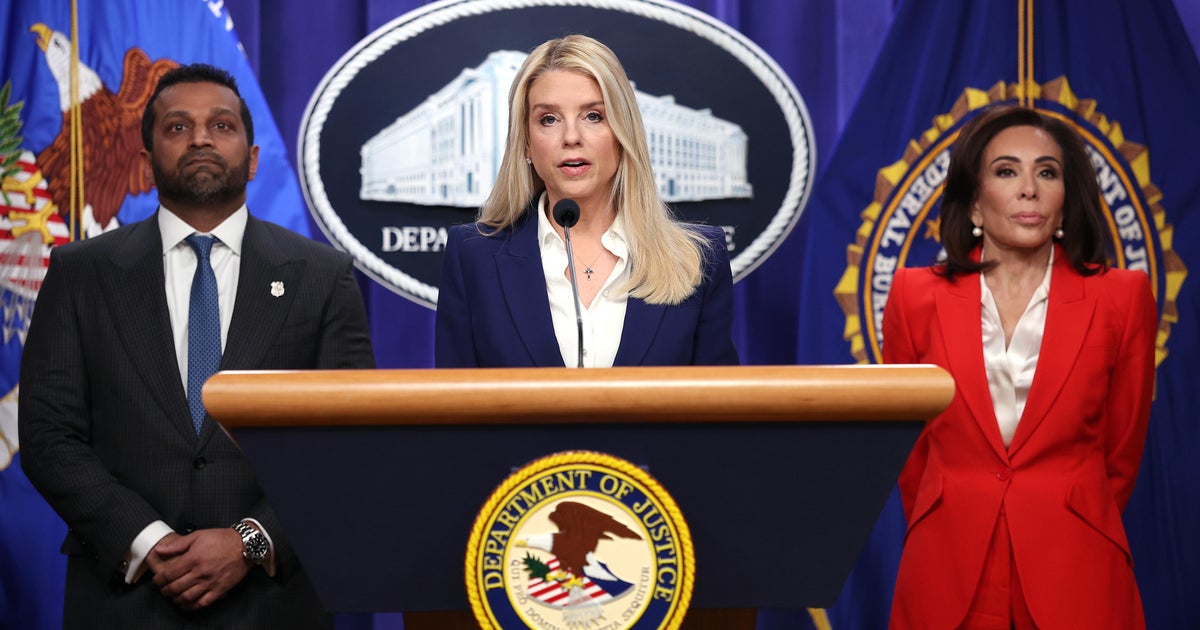
More than a decade after one of the most controversial and tragic attacks on American personnel abroad, federal authorities have announced a significant breakthrough in the pursuit of justice for the victims of the 2012 Benghazi attack. On Friday, Attorney General Pam Bondi stood before the nation to deliver news that families of the fallen had waited years to hear: the FBI had successfully apprehended another key figure allegedly responsible for the deadly assault that claimed four American lives on September 11, 2012. The arrest of Zubayar al-Bakoush represents not just a law enforcement victory, but a powerful message that the United States does not forget its fallen citizens and will pursue those responsible no matter how much time passes or how far they run. “You can run, but you cannot hide,” Bondi declared, her words carrying the weight of thirteen years of investigative work, international cooperation, and unwavering commitment to accountability. The suspect was transferred to U.S. soil overnight, where he would face the American justice system for his alleged role in one of the darkest days in recent American diplomatic history.
The Night That Changed Everything: Remembering the Benghazi Attack
The events of September 11, 2012, remain seared into the collective memory of Americans, particularly those who serve in diplomatic and intelligence capacities overseas. That night in Benghazi, Libya, militants associated with the extremist group Ansar al-Sharia launched a coordinated assault on two American facilities—a diplomatic compound and a nearby CIA outpost. The violence claimed the lives of four dedicated public servants: U.S. Ambassador to Libya Chris Stevens, information management officer Sean Smith, and two former Navy SEALs working as CIA contractors, Tyrone Woods and Glen Doherty. Ambassador Stevens became the first U.S. ambassador killed in the line of duty since 1979, a grim milestone that underscored the dangerous reality faced by American diplomats serving in unstable regions. The attack unfolded in two phases, beginning with approximately twenty armed militants breaching the main gate of the diplomatic compound where Ambassador Stevens and his security team were stationed. The assailants set fires throughout the buildings, creating chaos and confusion that ultimately led to the deaths of Stevens and Smith. Hours later, a separate mortar attack on the CIA annex roughly a mile away killed Woods and Doherty, who had rushed to help defend their fellow Americans. The synchronized nature of the attacks and the level of coordination involved suggested significant planning and multiple participants, setting the stage for a complex, multi-year investigation that would span continents.
The Case Against Al-Bakoush: What the Indictment Reveals
Following Attorney General Bondi’s announcement, federal prosecutors unsealed a comprehensive thirteen-page indictment in the U.S. District Court in Washington, D.C., laying out seven serious criminal charges against Zubayar al-Bakoush. The charges paint a picture of deliberate participation in a terrorist operation and include murder, attempted murder, providing material support to terrorists, and arson—each carrying potentially severe penalties that could result in al-Bakoush spending the remainder of his life behind bars if convicted. According to the detailed allegations in the indictment, al-Bakoush was a Benghazi resident and active member of Ansar al-Sharia, the extremist organization that orchestrated and executed the attacks. Prosecutors allege that while al-Bakoush was part of the group of armed militants who stormed the U.S. mission, he entered the compound after the initial fires had been set. Once inside, according to the government’s case, he “conducted surveillance activity” and attempted to gain access to vehicles on the grounds—actions that prosecutors argue demonstrate his knowing participation in the broader terrorist operation. The specificity of these allegations suggests that investigators have gathered substantial evidence, potentially including witness testimony, communications intercepts, or video footage that places al-Bakoush at the scene. His scheduled court appearance would mark the beginning of what promises to be a closely watched legal proceeding, as the families of the victims and the American public seek answers and accountability for a tragedy that sparked intense political debate and numerous congressional investigations.
A Global Manhunt: International Cooperation Brings Results
The arrest of al-Bakoush represents the culmination of years of painstaking investigative work that required seamless coordination between multiple U.S. government agencies operating across international boundaries. Attorney General Bondi specifically acknowledged the collaborative efforts of the State Department and the Central Intelligence Agency, which worked alongside the FBI to track down and apprehend the suspect. While officials deliberately remained tight-lipped about the operational details of the arrest—declining to specify exactly where “overseas” al-Bakoush was captured or the precise methods used to locate him after more than a decade—the successful operation demonstrates the extended reach and persistent determination of American law enforcement and intelligence services. The challenges inherent in such international manhunts cannot be overstated. Libya has remained in a state of political fragmentation and instability since the 2011 uprising that toppled longtime dictator Muammar Gaddafi, with various militia groups, rival governments, and extremist organizations vying for control of different regions. This chaotic environment has historically provided safe haven for individuals seeking to evade justice, making the work of tracking and apprehending suspects extraordinarily difficult and dangerous. The fact that authorities managed to locate al-Bakoush and bring him into custody without apparent incident speaks to sophisticated intelligence gathering, careful planning, and likely cooperation from allies or local partners willing to assist in bringing a terrorist suspect to justice.
Not the First, Not the Last: Other Prosecutions and Ongoing Pursuits
Al-Bakoush’s arrest marks the third successful prosecution related to the Benghazi attacks, but officials made clear on Friday that the pursuit of justice remains far from complete. In 2014, U.S. Special Forces captured Ahmed Abu Khatallah, a Libyan national identified as a purported leader of the attack, in a dramatic operation that brought him to American soil to face justice. His subsequent trial in 2017 produced mixed results—while he was acquitted of the most serious murder charges, he was convicted on other counts and initially sentenced to 22 years in federal prison. In a notable development, a federal judge later determined that this initial sentence was insufficient given the severity of his crimes, and in 2024, Khatallah was resentenced to 28 years behind bars, ensuring he would spend a significant portion of his remaining life in an American prison. Three years after Khatallah’s capture, in 2017, another Libyan national named Mustafa al-Imam was apprehended in a separate U.S. operation. He faced trial in 2019, where a jury found him guilty, resulting in a 19-year prison sentence. These previous prosecutions established legal precedents and demonstrated America’s commitment to pursuing those responsible, regardless of the time elapsed or the difficulties involved in bringing suspects to justice.
A Promise to Families: The Hunt Continues
Perhaps the most emotionally resonant aspect of Friday’s announcement came from U.S. Attorney Jeanine Pirro, who revealed that she had personally informed the surviving family members of the victims about al-Bakoush’s capture before the public announcement. This gesture of respect and consideration reflects the deeply personal dimension of what might otherwise be viewed as merely a law enforcement matter. For the families of Ambassador Stevens, Sean Smith, Tyrone Woods, and Glen Doherty, the arrest represents not closure—such a thing may never truly come—but rather validation that their loved ones have not been forgotten and that those responsible for cutting their lives short will be held accountable. Pirro’s words during the press conference carried both solemnity and steel as she addressed those who participated in the attack but remain at large: “Let me be very clear—there are more of them out there. Time will not stop us from going after these predators, no matter how long it takes, in order to fulfill our obligation to those families who suffered horrific pain at the hands of these violent terrorists.” This statement serves multiple purposes: it offers comfort to grieving families that the pursuit continues, it warns other suspects that they remain targets of ongoing investigations, and it sends a broader message about American resolve in the face of terrorism. The Benghazi attack occurred during a period of optimism following the Arab Spring, when many hoped that the Middle East and North Africa might transition toward greater democracy and stability. The brutal reality of that September night shattered such illusions and reminded Americans of the ongoing threats faced by those who serve their country in dangerous places. Thirteen years later, as al-Bakoush prepares for his day in court, the message remains clear: attacking Americans carries consequences that may be delayed but will ultimately arrive, and the pursuit of justice recognizes no statute of limitations when American lives have been taken by terrorist violence.