


President Trump’s Reversal on Major Media Acquisition Deal
Trump Endorses Nexstar’s Billion-Dollar Purchase of Tegna
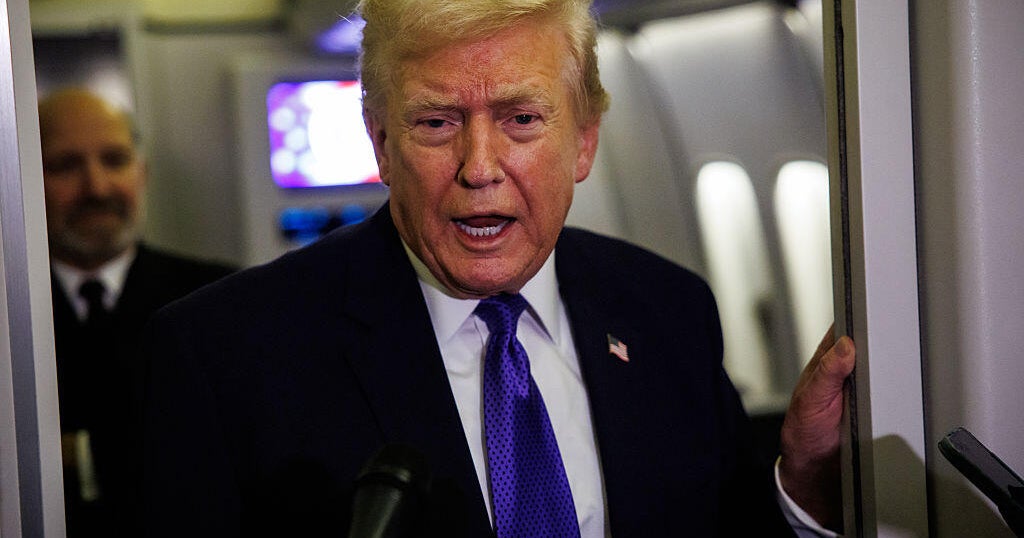
In a surprising turn of events, President Trump took to his Truth Social platform on Saturday to voice his support for Nexstar Media Group’s massive $6.2 billion acquisition of its competitor Tegna. This marked a significant reversal from his previous stance on the deal, demonstrating the unpredictable nature of his position on media consolidation. The President framed his endorsement in combative terms, stating that “we need more competition against THE ENEMY, the Fake News National TV Networks.” He argued that beneficial transactions like Nexstar’s proposed purchase of Tegna would “help knock out the Fake News because there will be more competition.” Trump’s statement concluded with a direct call to action, insisting that opponents of the deal don’t fully grasp its potential benefits but would understand in time, and demanding “GET THAT DEAL DONE!” This endorsement represents a complete about-face from his November comments, when he expressed concerns that the deal might inadvertently allow “Radical Left Networks” to expand, which he said would displease him. The President’s change of heart appears to align with his broader antagonism toward what he characterizes as mainstream media bias.
Understanding the Scope of the Nexstar-Tegna Merger
The acquisition announced in August would create a broadcasting behemoth with unprecedented reach across American local television markets. Nexstar Media Group already operates as one of the nation’s largest local television station owners, currently overseeing more than 200 owned and partner stations spread across 116 markets nationwide. Beyond local stations, Nexstar’s portfolio includes ownership of television networks such as The CW and the cable news channel NewsNation, giving the company a diverse footprint in the media landscape. Tegna, the acquisition target, brings its own substantial assets to the table with 64 news stations operating across 51 different markets throughout the United States. The combination of these two media companies would consolidate significant portions of local broadcast journalism and programming under a single corporate umbrella. Pending approval from Tegna shareholders, the transaction is projected to close during the second half of 2026, though regulatory approval from federal authorities remains a crucial hurdle. The deal’s completion would fundamentally reshape the local television broadcasting industry and could have far-reaching implications for how Americans in numerous markets receive their local news and information.
Independent Operations and Recent Controversies
Despite Trump’s concerns about benefiting “Radical Left Networks,” both Nexstar and Tegna operate independently from the major national broadcast networks that typically draw his ire. These local broadcasting companies maintain their own editorial control and business operations, though they may carry programming from larger networks. This independence was recently demonstrated in September when Nexstar, working alongside the conservative-leaning Sinclair Broadcast Group, made the controversial decision to suspend ABC’s late-night talk show hosted by Jimmy Kimmel for approximately one week. This suspension came in response to Kimmel’s on-air comments regarding the assassination of Charlie Kirk, a prominent conservative activist and political commentator. The incident highlighted how local broadcast station owners can exercise significant control over what programming airs in their markets, even when it comes from major national networks. This ability to make independent programming decisions represents the kind of media power that would be concentrated further if the Nexstar-Tegna deal receives approval. The episode also illustrated the increasingly polarized nature of media operations, with broadcasting companies willing to take stands on political controversies that affect the content they distribute to local audiences across the country.
Regulatory Environment and Deregulation Efforts
The timing of this acquisition attempt coincides with significant shifts in the regulatory landscape governing television station ownership in the United States. The Federal Communications Commission has been actively pursuing reforms to rules that have traditionally limited how many local TV stations a single company can own in various markets. Several court decisions have also struck down existing regulations that previously restricted the number of top-rated television stations in a single market that one company could control, opening the door for greater consolidation. Nexstar has strategically positioned the acquisition as being in harmony with the Trump administration’s broader deregulatory agenda across multiple industries. Perry Sook, Nexstar’s Chief Executive Officer, explicitly connected the deal to administration policies when announcing the acquisition, stating that “the initiatives being pursued by the Trump administration offer local broadcasters the opportunity to expand reach, level the playing field, and compete more effectively with the Big Tech and legacy Big Media companies that have unchecked reach and vast financial resources.” This framing attempts to portray local broadcast consolidation not as a threat to media diversity, but rather as a necessary defensive measure against the dominance of technology giants and established media conglomerates. The argument suggests that allowing companies like Nexstar to grow larger would create a more competitive media environment rather than reducing competition, though critics of media consolidation would likely dispute this characterization.
The Changing Television Landscape
The announcement of this major acquisition arrives at a pivotal moment for the traditional television industry, as viewing habits undergo dramatic transformation. Americans are increasingly abandoning traditional cable and satellite television subscriptions in a phenomenon widely referred to as “cord-cutting,” instead migrating to streaming services for their entertainment and information needs. According to research conducted by Gallup in July 2025, which surveyed approximately 10,000 American adults about their media consumption habits, a striking 83% reported that they watch streaming services. In stark contrast, only 36% indicated they currently maintain subscriptions to cable or satellite television services at home. These statistics paint a picture of an industry in transition, where the traditional broadcasting model faces existential challenges from digital competitors. This broader context makes the Nexstar-Tegna deal particularly significant, as it represents an attempt by traditional broadcasters to achieve the scale they believe necessary to survive in an increasingly competitive and fragmented media environment. The shift toward streaming has disrupted long-established business models, forcing local broadcasters to reconsider their strategies for reaching audiences and generating revenue in an era when viewers have countless entertainment options available through internet-connected devices.
Implications for Media Competition and Local News
The ultimate approval and completion of the Nexstar-Tegna merger would have profound implications for media competition and the future of local journalism across the United States. Supporters of the deal, including apparently now President Trump, argue that creating larger local broadcasting companies will enable them to compete more effectively against both national media organizations and technology platforms that have increasingly dominated the information landscape. They contend that consolidation provides the resources necessary to invest in quality journalism and maintain a local media presence in an era of declining advertising revenues and changing viewer habits. However, critics of media consolidation typically raise concerns about reduced diversity of viewpoints, potential job losses through elimination of duplicate positions, and the concentration of editorial control over local news in fewer hands. The tension between these competing visions reflects broader debates about the health of American democracy and the role of local journalism in maintaining informed communities. As regulatory authorities consider whether to approve this acquisition, they will need to weigh these competing considerations while determining whether the deal serves the public interest. The outcome will likely influence not only how millions of Americans receive their local news, but also whether similar consolidation deals move forward in the future, potentially reshaping the entire local broadcasting industry for decades to come.