


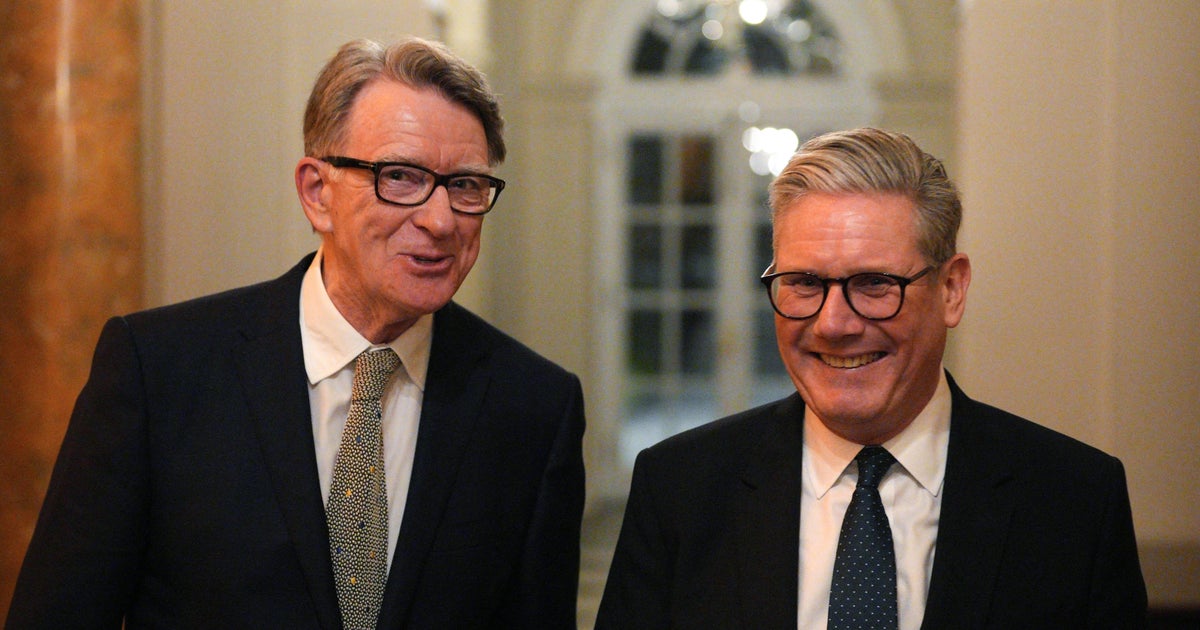

The Mandelson Scandal: How Jeffrey Epstein’s Shadow Reached Downing Street
A Political Crisis Unfolds
British Prime Minister Keir Starmer finds himself in the fight of his political life as the most turbulent period of his premiership reaches a critical point. The crisis centers not on any wrongdoing of his own, but on a decision that has come back to haunt him with devastating consequences: his appointment of Peter Mandelson as Britain’s ambassador to the United States. The controversy exploded when newly released documents from the U.S. Department of Justice revealed the extent of Mandelson’s relationship with convicted sex offender Jeffrey Epstein, including allegations that he may have shared sensitive government secrets with the disgraced financier. What began as a questionable appointment has mushroomed into a full-blown political catastrophe, with calls for Starmer’s resignation coming from both political opponents and members of his own Labour Party. The fundamental questions now being asked are simple but devastating: What did the Prime Minister know about Mandelson’s connections to Epstein, and when did he know it?
The Damning Evidence Against Mandelson
The scandal has unfolded in waves, each one more damaging than the last. Initially, documents released by the U.S. House of Representatives last year showed that Mandelson, a veteran Labour Party politician, had maintained a close friendship with Epstein even after the financier’s 2008 conviction on charges involving the solicitation of prostitution and procuring a child for prostitution. That revelation alone was shocking enough, leading Starmer to fire Mandelson from his ambassadorial position last September. However, the political earthquake truly struck when the Justice Department released another massive trove of documents last Friday. These files contained evidence suggesting something far more serious than merely maintaining an inappropriate friendship. They appeared to show that while Mandelson served in former Prime Minister Gordon Brown’s cabinet during the 2008 global financial crisis, he shared confidential, market-sensitive information about the U.K. government’s response with Epstein. This wasn’t just a social relationship gone wrong; it potentially involved the sharing of state secrets that could have financially benefited Epstein and his wealthy clients during one of the most critical economic periods in modern history.
Legal Consequences and Government Response
The gravity of the allegations has prompted the London Metropolitan Police to launch a formal investigation into Mandelson’s conduct. Authorities are examining whether his actions constitute misconduct in public office, a serious criminal charge that carries the possibility of a life prison sentence. This isn’t merely a political scandal anymore; it has become a matter of potential criminal prosecution. Starmer’s office conducted its own review of the newly released documents and acknowledged on Tuesday that it appears “safeguards were compromised” regarding how sensitive information was handled. This admission, while attempting to show transparency, has only fueled further questions about the government’s vetting procedures and oversight mechanisms. The fact that a senior diplomat could allegedly share classified information with a convicted sex offender without immediate detection has raised profound concerns about national security protocols and the effectiveness of the systems designed to protect state secrets.
Starmer’s Defense: “I Was Lied To”
Standing before Parliament on Wednesday, Prime Minister Starmer mounted his defense with a mixture of contrition and anger. He told lawmakers that Mandelson had “continuously lied” to the government about the extent of his relationship with Epstein throughout the entire vetting process for the ambassadorship. “Mandelson betrayed our country, our Parliament and my party … he lied repeatedly to my team when asked about his relationship with Epstein before and during his tenure as ambassador. I regret appointing him,” Starmer declared. On Thursday, he went further, offering a direct apology to Epstein’s victims: “I am sorry, sorry for what was done to you, sorry that so many people with power failed you, sorry for having believed Mandelson’s lies and appointing him.” He portrayed himself as a victim of deception, stating, “I was lied to. Deceived.” However, this defense has failed to satisfy critics who point out that some information about Mandelson’s ties to Epstein was publicly available before his appointment. Conservative Party leader Kemi Badenoch delivered a particularly stinging rebuke: “The Prime Minister cannot blame the process. He did know — it was on Google. If the Conservative research department could find this information out, why couldn’t Number 10?” This criticism suggests that even a basic internet search would have revealed warning signs about Mandelson’s relationship with Epstein, raising serious questions about the thoroughness of the government’s vetting process and Starmer’s judgment in making such a critical appointment.
A Government in Crisis
The backlash against Starmer has been fierce and, perhaps most worryingly for the Prime Minister, it’s coming from within his own party. Rachael Maskell, a Labour MP, told the BBC that Starmer’s position was “untenable” and that he had “no choice” but to resign. Fellow Labour lawmaker Jonathan Hinder described the appointment of Mandelson as a “catastrophic error of political and moral judgement.” This internal dissent is particularly damaging because it suggests a loss of confidence among the very people who should be the Prime Minister’s strongest supporters. Opposition leader Badenoch has seized on this vulnerability, calling on Labour MPs to join her in pushing for a vote of no confidence. “My message to Labour MPs is if you want the change you know the country needs, come and speak to my team,” she posted on social media. “I’m ready to talk seriously about a vote of no confidence. Because right now Britain is not being governed.” The scandal comes at an already difficult time for Starmer, who according to pollster YouGov had historically low approval ratings even before the Mandelson revelations. His government has faced criticism over a stagnant economy, immigration concerns, and several policy reversals. The rise of Nigel Farage’s right-wing Reform Party has further complicated the political landscape, drawing support away from both major parties.
An Uncertain Future
As the crisis deepens, Starmer has promised to release documents related to Mandelson’s vetting and appointment, bowing to pressure from lawmakers demanding transparency. However, it remains unclear what these documents will reveal and whether they will help or hurt the Prime Minister’s position. Political analysts are increasingly pessimistic about Starmer’s chances of political survival. The Eurasia Group, a respected political risk consultancy, issued a stark assessment on Thursday evening, estimating that Starmer has only a 20% chance of keeping his job. The organization noted that it had previously believed critics had a 65% chance of removing him from the Labour leadership, but that prospect has now risen to 80% in light of the Mandelson scandal. Marina Lacerda, a survivor of Epstein’s abuse who was groomed as a young teenager, offered a measured response to Starmer’s apology, commending him for taking responsibility while emphasizing that what matters now is “what kind of justice will be brought.” Her perspective serves as a reminder that beyond the political theater and career implications, this scandal involves real victims whose lives were devastated by Epstein and those who enabled him. As Starmer faces the most vulnerable position of his 18-month tenure, the coming days will be critical. Whether he can weather this storm depends on the contents of the documents he’s promised to release, the loyalty of his party colleagues, and his ability to convince both Parliament and the public that he exercised proper judgment despite being deceived. What’s certain is that the shadow of Jeffrey Epstein continues to reach across the Atlantic, toppling reputations and threatening careers years after his death, serving as a grim reminder of how association with such toxicity can destroy even those who thought they had escaped unscathed.