


Jimmy Lai’s Sentencing: A Pivotal Moment for Press Freedom in Hong Kong
The Case That Captured Global Attention
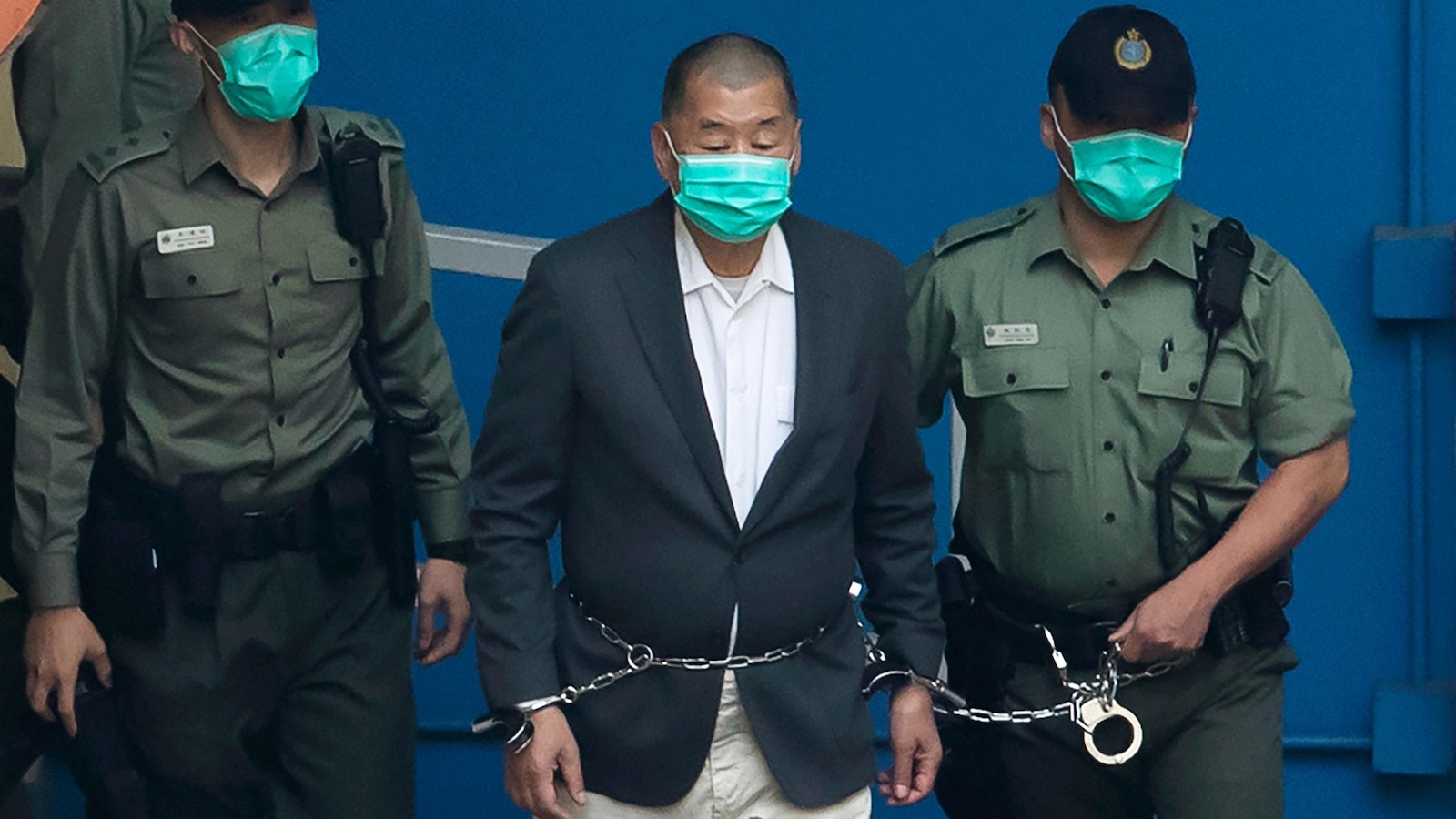
On Monday morning at 10 a.m., Hong Kong’s judiciary will convene to sentence Jimmy Lai, the 78-year-old former media mogul who once stood as one of the most vocal critics of China’s Communist Party leadership. Lai, who founded the now-shuttered Apple Daily newspaper, faces the very real possibility of spending the rest of his life behind bars following his conviction this past December under Hong Kong’s controversial national security law. The charges against him include conspiring to collude with foreign forces and publishing seditious materials—accusations that stem from his newspaper’s editorial stance and his vocal advocacy for democratic reforms in Hong Kong. This sentencing represents far more than just the fate of one elderly journalist; it has become a flashpoint in the ongoing debate about press freedom, civil liberties, and the dramatic political transformation that has reshaped Hong Kong since Beijing imposed its sweeping national security legislation in 2020. The international community has watched this case closely, with governments from Washington to London expressing deep concern about what Lai’s prosecution signals for the future of one of Asia’s most historically open societies.
From Business Success to Political Target
Jimmy Lai’s journey from successful entrepreneur to imprisoned dissident reads like a dramatic arc that mirrors Hong Kong’s own political evolution. As the founder of Apple Daily, Lai built a media empire that wasn’t afraid to challenge authority, criticize the Chinese government, and champion democratic values in a city that had long enjoyed freedoms unknown on the mainland. His newspaper became essential reading for Hong Kong’s pro-democracy movement, offering a platform for voices that questioned Beijing’s increasing influence over the territory. Lai’s arrest in 2020 came in the wake of massive anti-government protests that had rocked Hong Kong the previous year, demonstrations that brought millions into the streets demanding greater democratic freedoms and accountability from their leaders. Beijing’s response was the national security law—legislation that authorities claimed was necessary to restore stability but that critics worldwide condemned as a tool to silence dissent and dismantle Hong Kong’s traditional freedoms. Lai became one of the law’s most prominent targets, accused of conspiring with senior executives at Apple Daily and others to encourage foreign governments to impose sanctions and engage in what Beijing characterized as “hostile activities” against Hong Kong and China. His prosecution has been widely interpreted as a warning shot to anyone in Hong Kong who might consider challenging the new political order.
International Outcry and Diplomatic Tensions
The conviction of Jimmy Lai has not gone unnoticed on the world stage, creating significant diplomatic friction between China and several Western nations. The United States and the United Kingdom have been particularly vocal in their criticism of the proceedings and the broader crackdown on civil society in Hong Kong. Following the December verdict, U.S. President Donald Trump, who had previously raised Lai’s case in discussions with Chinese officials, expressed his dismay, saying he felt “so badly” about the outcome. This personal intervention by an American president underscores how Lai’s case has transcended typical judicial proceedings to become a matter of high-level international diplomacy. The United Kingdom, where Lai holds citizenship, has been even more direct in its opposition, with Prime Minister Keir Starmer’s administration calling explicitly for Lai’s release. This British position reflects both the country’s historical connection to Hong Kong as its former colonial administrator and its current concerns about how China is treating British nationals. The Monday sentencing is expected to intensify these diplomatic tensions, particularly if Lai receives the maximum penalty of life imprisonment. Foreign governments have limited leverage to influence Hong Kong’s judicial system, especially now that Beijing has made clear its determination to use the national security law to reshape the territory’s political landscape, but the international criticism serves as a constant reminder that the world is watching how Hong Kong handles cases that touch on fundamental freedoms.
The Broader Context: Hong Kong’s Changing Identity
To understand the significance of Jimmy Lai’s prosecution, one must grasp the broader transformation that Hong Kong has undergone in recent years. When the former British colony returned to Chinese sovereignty in 1997, it did so under a “one country, two systems” framework that was supposed to preserve Hong Kong’s distinct legal system, free press, and civil liberties for at least 50 years. For decades, Hong Kong maintained its position as a vibrant, freewheeling city where journalists could investigate and criticize in ways impossible on the mainland, where political activism was protected rather than punished, and where the rule of law followed British common law traditions rather than the more politically influenced system used in the rest of China. The massive protests of 2019, sparked initially by opposition to an extradition law that would have allowed suspects to be sent to the mainland for trial, evolved into a broader movement demanding universal suffrage and greater autonomy from Beijing. The Chinese government’s response—the imposition of the national security law in June 2020—fundamentally altered this landscape. The law criminalized secession, subversion, terrorism, and collusion with foreign forces, terms broadly defined enough to encompass a wide range of peaceful political activity and expression. Since its implementation, the law has been used to arrest dozens of activists, journalists, and opposition politicians, dismantle civil society organizations, and fundamentally reshape Hong Kong’s political culture. Lai’s trial has been viewed by observers as perhaps the most significant test case for how the law would be applied to press freedom specifically, and the verdict confirmed the fears of many that critical journalism itself could now be treated as a national security threat.
The Co-Defendants and the Power of Plea Bargains
Jimmy Lai will not face sentencing alone on Monday. Joining him in court will be eight co-defendants: six former journalists from Apple Daily and two activists who were also charged in connection with the newspaper’s operations and advocacy work. These individuals face the same maximum penalty of life imprisonment, though their actual sentences may differ considerably from Lai’s. Significantly, while Lai maintained his innocence and pleaded not guilty to all charges throughout the proceedings, his six former colleagues and the two activists all entered guilty pleas. This distinction could prove crucial when the judge announces sentences on Monday. In legal systems around the world, including Hong Kong’s, defendants who plead guilty and show what courts interpret as remorse or cooperation typically receive reduced sentences compared to those who maintain their innocence and require the government to prove its case at trial. The decision by these eight individuals to plead guilty was undoubtedly agonizing, requiring them to admit to crimes they may not believe they committed in exchange for potentially shorter prison terms. Their choice also highlights the difficult calculus that defendants face under the national security law, where the stakes are extraordinarily high and the maximum penalties severe enough to make even principled individuals consider compromise. The varying sentences handed down on Monday will provide important signals about how Hong Kong’s judiciary balances these considerations and whether there remains any meaningful discretion in a legal framework that has been criticized as politically motivated from its inception.
What Comes Next: Implications for Hong Kong and Beyond
As Monday’s sentencing approaches, the implications extend far beyond Jimmy Lai’s personal fate, significant though that is for a 78-year-old man who has already spent years in detention and is currently serving a nearly six-year sentence for separate convictions related to fraud allegations and his actions during the 2019 protests. The sentencing will be closely analyzed as an indicator of where Hong Kong’s legal system stands in terms of independence from political pressure and whether judges retain any meaningful discretion to show leniency in cases that have clear political dimensions. A life sentence for Lai would send an unmistakable message that critical journalism directed at Beijing and advocacy for international pressure on China will be treated with maximum severity, likely creating a further chilling effect on whatever remains of Hong Kong’s once-vibrant free press. Even a somewhat reduced sentence would still represent a devastating blow to an elderly man and would reinforce the reality that the Hong Kong where Apple Daily could operate freely is gone, replaced by a political environment where dissent carries potentially life-altering consequences. For the international community, Monday’s sentencing presents a dilemma: how to respond meaningfully to what many governments view as a fundamental violation of the freedoms that were supposed to be guaranteed to Hong Kong, while maintaining necessary diplomatic and economic relationships with China. The case has already strained relations, and the sentencing could prompt additional sanctions, visa restrictions, or other measures from Western governments, though China has shown little indication that such pressure will alter its course in Hong Kong. Perhaps most tragically, Lai’s sentencing will mark another milestone in the transformation of a city that once prided itself on being Asia’s freest society into one where the boundaries of acceptable speech and political activity have been dramatically narrowed, leaving journalists, activists, and ordinary citizens to navigate a landscape where yesterday’s normal behavior might be tomorrow’s national security offense.