

The 2026 Winter Olympics Opening Ceremony: A Celebration of Global Unity
The Grand Spectacle Begins
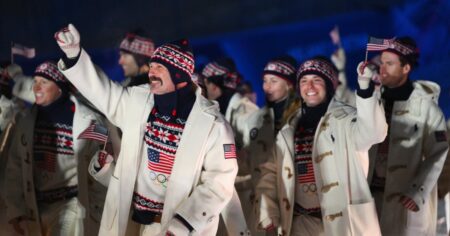
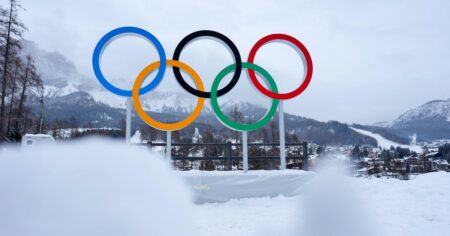
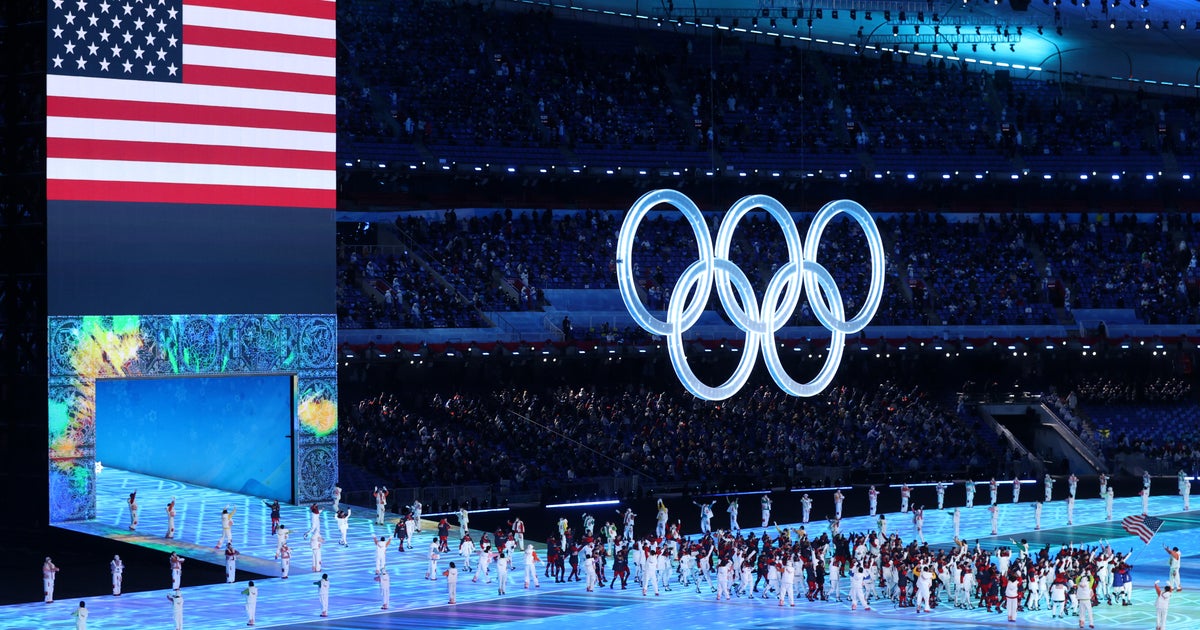
As Friday arrives, millions of viewers worldwide will witness one of the most cherished traditions in sports—the opening ceremony of the 2026 Winter Olympics. Nearly 3,000 athletes representing countries from every corner of the globe will gather in northern Italy for the spectacular Parade of Nations, a moment that blends athletic excellence with cultural pride. Each nation’s delegation, dressed in their official uniforms that showcase their unique heritage and identity, will march into the ceremony united by the common language of sport. Leading the American contingent will be two outstanding athletes: speedskater Erin Jackson and bobsledder Frank Del Duca, who have been honored with the prestigious role of flagbearers for Team USA. This year’s ceremony holds special significance as it features a unique twist—instead of one Olympic cauldron being lit, there will be two, with flames burning in both Milan and Cortina, the co-host cities nestled in Italy’s stunning northern region. This dual-cauldron arrangement reflects the collaborative nature of these Games and the geographical partnership between these two historic Italian cities.
Understanding the Parade Order
For those watching the Parade of Nations, the order in which countries enter might seem puzzling at first, but there’s actually a well-established system that governs this beloved tradition. The sequence changes with each Olympic Games, adapting to the host nation, but one rule remains constant: Greece always leads the procession, an honor recognizing its status as the birthplace of the ancient Olympic Games and the modern Olympic movement. Following Greece’s entrance, the remaining delegations proceed in alphabetical order—but here’s the catch: they’re arranged according to the alphabet of the host country’s language, not English. For the 2026 Games in Italy, this means countries are ordered by their Italian names, which can create some surprising sequences for English-speaking viewers. For instance, Japan (spelled “Giappone” in Italian) will march before Hungary (spelled “Ungheria” in Italian), even though this seems backward in English alphabetical order. The final positions also follow a special protocol: the host nation always enters last, creating a climactic moment for the home crowd. Just before the host country, the nation that will welcome the next Winter Olympics takes the penultimate position. This year, France will march immediately before Italy, as the French Alps will host the 2030 Winter Games, passing the torch from one European nation to another.
Who’s Participating and Who’s Not
This year’s Milano Cortina Games will welcome 92 National Olympic Committees, the governing bodies that represent their nations in the Olympic Movement. It’s important to understand that technically, the Parade of Nations doesn’t feature “countries” but rather these National Olympic Committees, which number 206 worldwide. However, Winter Olympics traditionally see fewer participants than the Summer Games—typically around 90 compared to the much larger summer contingent—simply because winter sports are less accessible globally and require specific climatic and geographical conditions. Notably absent from this year’s parade will be the Olympic Refugee Team, which has become a meaningful presence at recent Games, giving displaced athletes a chance to compete under the Olympic flag. Additionally, Individual Neutral Athletes from Russia and Belarus, designated as “AIN” (Athlètes Individuels Neutres), will not participate in the opening ceremony parade, according to directives from the International Olympic Committee. This decision reflects the ongoing geopolitical complexities that occasionally intersect with the Olympic ideal of bringing nations together peacefully through sport.
A Journey Through Olympic History
The Parade of Nations wasn’t always part of the Olympic experience. The modern Olympics launched in 1896, but it took another twelve years before the Parade of Nations made its debut at the 1908 London Games, as noted by Mark McDowell, a tour guide at the U.S. Olympic and Paralympic Museum. Since that introduction over a century ago, this ceremonial march has evolved into an indispensable element of every Olympic opening ceremony, symbolizing the delicate balance between national pride and international cooperation. McDowell explains how organizers have worked to strike “the balance between national pride and coming together as people of a global world and competing together peacefully.” The early iterations of the parade looked quite different from today’s polished productions. In the 1920s, for example, winter athletes actually marched while carrying their equipment—imagine athletes lugging skis and skates through the ceremony! This practice has long since been abandoned for practical reasons. The tradition of Greece leading the parade was established in 1928, cementing what has become one of the most recognizable aspects of Olympic protocol.
Evolution and Modern Traditions
Over the decades, the opening ceremony and its centerpiece Parade of Nations have undergone significant transformations while maintaining their core purpose. Perhaps the most obvious change has been the dramatic increase in scale. Early Olympics featured a relatively modest number of participating nations, but today’s Games showcase athletes from across the globe, representing the truly worldwide reach of the Olympic movement. The difference between Summer and Winter Olympics remains pronounced, with Summer Games typically featuring more athletes due to the greater number of sports on the program. One practical difference that television viewers might notice is that Winter Olympic athletes are considerably more bundled up during their march, dressed in warm clothing to protect against the cold temperatures, while their summer counterparts often wear lighter, more fashion-forward designs. Not every athlete who competes in the Games participates in the Parade of Nations, and there are legitimate reasons for this. Standing and marching for an hours-long ceremony can be physically demanding, especially when you’re scheduled to compete the very next day. Athletes must carefully weigh the once-in-a-lifetime experience of marching for their country against the practical need to conserve energy for their events.
The Lasting Impact of Marching Together
Despite the physical demands and logistical challenges, many athletes choose to participate in the Parade of Nations because it represents something profoundly meaningful that transcends medals and podium finishes. According to McDowell, numerous U.S. athletes have shared that “the opening ceremony, the Parade of Nations, is the biggest lasting impact of the games.” This sentiment speaks to the deeper purpose of the Olympics—not just individual athletic achievement, but the collective experience of representing one’s nation on the world’s biggest sporting stage. The feelings of pride, camaraderie, and purpose that come from marching alongside fellow countrymen and women, wearing your nation’s colors, and standing among the world’s best athletes create memories that endure long after the competitions end and the medals are distributed. As McDowell observes, “That sense of pride, camaraderie and going out there for your country is just something that’s hard to replicate.” As the 2026 Winter Olympics open with this timeless tradition, viewers worldwide will witness not just a parade, but a powerful symbol of humanity’s ability to come together, celebrate our differences, and compete in the spirit of friendship and respect. Whether you’re cheering for the athletes from your own country or simply appreciating the pageantry and diversity on display, the Parade of Nations reminds us why the Olympics continue to captivate billions of people every two years.