

Hungary’s Orbán to Join Trump’s Controversial “Board of Peace” Initiative
A New Global Forum Takes Shape
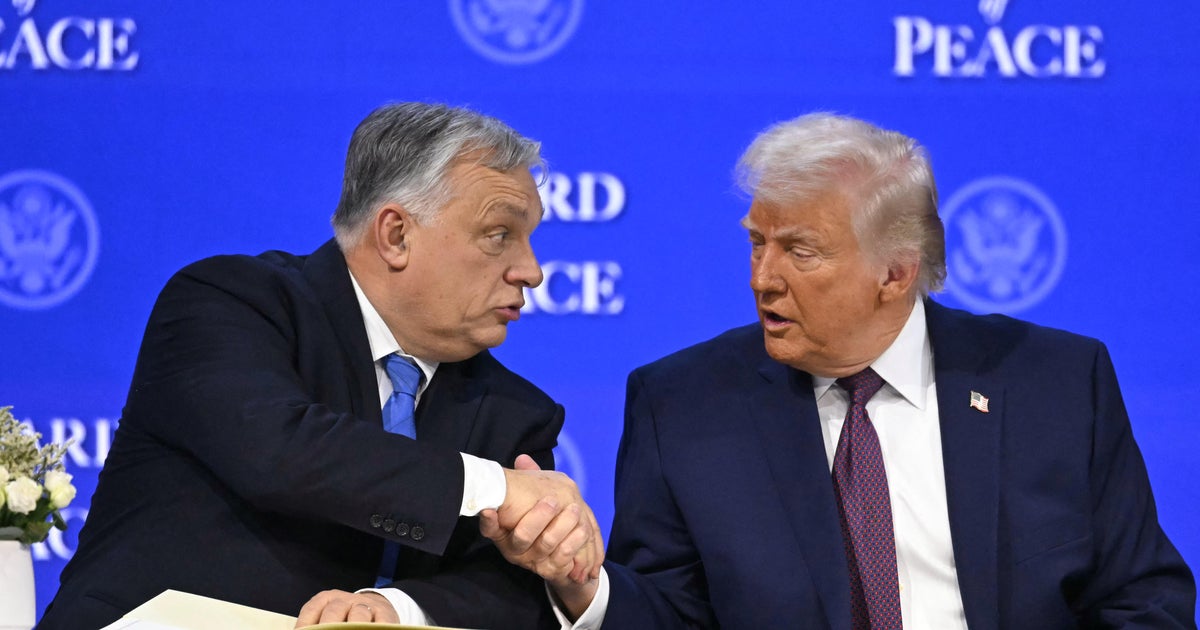
Hungarian Prime Minister Viktor Orbán has announced his plans to travel to Washington within the next two weeks to participate in the inaugural official meeting of what President Donald Trump has dubbed the “Board of Peace.” Speaking at a campaign rally in the western Hungarian town of Szombathely, Orbán confirmed his attendance at this first gathering of what appears to be an ambitious—and controversial—new international body. The Hungarian leader, who has positioned himself as one of Trump’s most reliable allies within the European Union, first encountered this initiative at its launch last month in the exclusive Swiss ski resort of Davos, where global leaders and business elites regularly gather. Now, as the board prepares for its first formal meeting, questions are mounting about what this organization will actually do, who will be part of it, and whether it represents a genuine effort at peacemaking or something else entirely.
From Gaza Reconstruction to Global Ambitions
The Board of Peace initially emerged with a seemingly focused mission: overseeing the reconstruction and stabilization of Gaza following the devastating conflicts in the region. In November of last year, the United Nations Security Council actually passed a resolution approving this “Board of Peace” concept, with its mandate clearly limited to implementing the stabilization aspects of the Trump administration’s comprehensive 20-point Gaza peace plan. However, in the months since that U.N. resolution, the scope and ambition of the board appears to have expanded dramatically. President Trump himself publicly suggested last month that this new body “might” actually replace the United Nations as the world’s primary global organization—a stunning statement that transforms what seemed like a regional reconstruction committee into a potential rival to the 80-year-old institution that has served as the cornerstone of international cooperation since World War II. The shift from a Gaza-focused rebuilding effort to a broader global governance body has happened remarkably quickly and with little public explanation about how or why this mission creep occurred.
The Billion-Dollar Entry Fee and “Pay to Play” Concerns
One of the most controversial aspects of Trump’s Board of Peace is its membership structure, which requires permanent members to contribute a staggering $1 billion to join. This extraordinary entry fee has immediately raised alarm bells among international observers and critics, who worry that the board could essentially become a “pay to play” version of the U.N. Security Council—where influence and a seat at the table go to the highest bidders rather than being based on democratic principles, regional representation, or other traditional diplomatic considerations. The billion-dollar price tag effectively excludes most of the world’s nations, limiting membership to either the wealthiest countries or those willing to divert enormous resources away from domestic needs to secure international influence. This stands in stark contrast to the United Nations, where all 193 member states have a voice in the General Assembly, even if the Security Council’s permanent membership has long been criticized for reflecting the power dynamics of 1945 rather than today’s world. Critics argue that creating an international body where membership literally depends on financial payment undermines the very concept of international cooperation and could establish dangerous precedents for global governance based purely on wealth rather than principles.
Uncertain Membership and Unclear Criteria
As of late January, CBS News confirmed that invitations to join the Board of Peace had been extended to more than 50 countries, though the Trump administration has not publicly explained what criteria are being used to determine which nations receive these coveted invitations. The White House released a preliminary list of participants, but many of the countries named had not actually confirmed their intention to attend the first meeting, suggesting either diplomatic hesitation about the initiative or perhaps surprise at being included. U.S. Secretary of State Marco Rubio, who has been designated to head the board, has characterized the formation as a “work in progress,” indicating that the Trump administration expects membership to grow over time. This vague description raises more questions than it answers: Will there be different tiers of membership beyond the billion-dollar permanent seats? How will decisions be made within the board? What enforcement mechanisms, if any, will it have? Will it coordinate with the United Nations or operate as a competitor? The lack of clear answers to these fundamental questions about structure, governance, and purpose has fueled skepticism among international relations experts who note that successful international organizations typically require years of careful negotiation and clearly defined charters rather than being announced at luxury resorts and evolving on the fly.
Orbán’s Strategic Alignment with Trump
For Viktor Orbán, participation in Trump’s Board of Peace represents another chapter in his careful cultivation of a relationship with the American president. As the longest-serving national leader currently in office within the European Union, Orbán has often found himself at odds with Brussels on issues ranging from immigration and rule of law to media freedom and judicial independence. His nationalist, conservative politics align more closely with Trump’s worldview than with many of his EU counterparts, making him a natural ally for the American president within Europe. By securing a position in this new initiative, Orbán bolsters his image as a player on the global stage and strengthens his ties to the Trump administration at a time when he faces serious political challenges at home. His visible role in the Board of Peace allows him to present himself to Hungarian voters as a leader who commands international respect and has access to the corridors of power in Washington, potentially providing a boost to his campaign as elections approach.
Domestic Challenges Amid International Ambitions
Despite his international profile, Orbán faces unprecedented political pressure at home as Hungary prepares for general elections scheduled for April 12. Independent polling shows that the opposition, led by Peter Magyar—a former government insider who has transformed into one of Orbán’s most effective critics—currently holds a lead over the long-dominant ruling party. This represents a remarkable turn of events in a country where Orbán has maintained firm control over politics for years through a combination of constitutional changes, media influence, and strategic distribution of state resources. The Hungarian economy has stagnated, failing to deliver the prosperity that might excuse other concerns, while public discontent with the quality of essential services like healthcare and education has grown. Magyar’s insider status gives his criticisms particular credibility, as he can speak from personal experience about the workings of Orbán’s government. In this challenging domestic context, Orbán’s announcement about attending the Board of Peace meeting in Washington serves multiple purposes: it reminds voters of his international connections, it shifts attention from domestic problems to foreign policy achievements, and it reinforces his image as a leader who operates on the world stage alongside figures like President Trump. Whether this international visibility will be enough to overcome voter frustration with conditions at home remains to be seen, but Orbán is clearly betting that his global profile remains a political asset worth highlighting as the crucial election approaches.