


The Battle for Olympic Gold: Ilia Malinin Faces Unexpected Challenge at Milan 2026
A Surprising Turn in the Short Program
The road to Olympic glory has proven more challenging than anticipated for American figure skating phenom Ilia Malinin, as Japan’s Yuma Kagiyama delivered a stunning performance that has intensified the competition at the Milan 2026 Winter Olympics. On a dramatic Saturday night at the Milano Ice Skating Arena, Kagiyama executed two near-flawless quadruple jumps, including one in combination with a triple toe loop, earning an impressive 108.67 points in the men’s short program. This exceptional performance placed him ahead of Malinin, who scored 98.00 points, marking a rare moment where the American skating sensation found himself in second place. The outcome has significant implications not just for individual glory but for the team competition as well, as Japan now trails the defending champion United States by just five points heading into the final day of competition. The American team, bolstered by a spectacular free skate performance from ice dancers Madison Chock and Evan Bates later that evening, ended the day with 44 points, but their lead is far from comfortable as the men’s, women’s, and pairs free skates will determine the medal standings on Sunday.
The Quad God Faces Reality
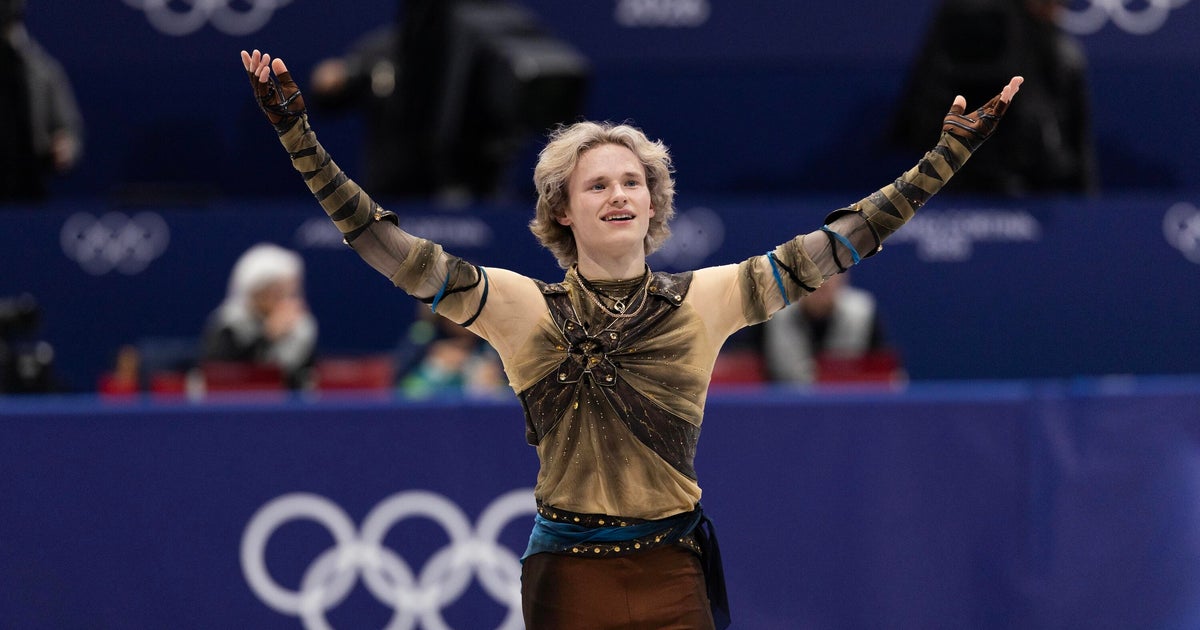
Ilia Malinin arrived at his Olympic debut with all the confidence befitting his nickname “Quad God,” even wearing a black tank top emblazoned with those very words as he stalked through the tunnels of the Milano Ice Skating Arena. The 21-year-old wunderkind, who has remained unbeaten in his last 14 full competitions spanning more than two years, earned his distinctive moniker through his ability to land otherworldly four-revolution jumps that no other skater can consistently execute. In a recent interview, Malinin explained the origin of his Instagram handle with characteristic humor: “I was like, ‘Oh, I landed a quad? Quad God, there it is, okay, let’s put it in.’ And from there everyone’s like, ‘Why’d you name yourself Quad God? You only have one quad.’ And I’m like, ‘Well, now that I think about it, maybe I should try to land all of them to get the Quad God status.'” However, Saturday night revealed that even gods can have off days. The two-time reigning world champion notably did not attempt his signature quad axel—the 4 1/2-revolution jump that only he has ever landed in competition—opting instead for a shaky triple axel. While Malinin did successfully execute a big opening quad flip and finished strong with a quad lutz-triple toe loop combination that earned bonus points for being performed in the second half of his program, it wasn’t enough to match Kagiyama’s brilliance. When his scores were announced, Malinin appeared visibly stunned by the 10-point margin separating him from his Japanese rival, a gap that speaks volumes in the precisely scored world of elite figure skating.
Kagiyama’s Moment of Triumph
For Yuma Kagiyama, Saturday night represented vindication and the realization of years of dedication to catching up with his American rival. The Japanese skater delivered what can only be described as a masterclass in technical execution, opening his short program with a perfectly executed quad toe-triple toe combination before landing a clean quad salchow and finishing with what judges considered a flawless triple axel. Unlike Malinin’s subdued reaction to his scores, when Kagiyama’s numbers were read, he jumped from his seat with clenched fists raised triumphantly, embodying the joy and relief of an athlete who had just achieved something truly special. In his post-performance comments, Kagiyama graciously acknowledged the role his American competitor has played in pushing him to greater heights: “I always receive good motivation from Ilia because he is one of the skaters who created this figure skating moment. He’s a good jumper, and he can do quads, so I always think that I want to catch him.” This statement reveals the fascinating dynamic between these two elite athletes—a relationship built on mutual respect and the understanding that their rivalry elevates both of their performances. Kagiyama’s success wasn’t just a personal achievement; it was a crucial contribution to Japan’s overall team effort, joining strong performances from women’s skater Kaori Sakamoto and pairs world champions Riku Miura and Ryuichi Kihara in keeping their nation within striking distance of the American team.
Team USA’s Response and the Broader Competition
While Malinin’s second-place finish in the short program created unexpected drama, Team USA demonstrated its depth and resilience through the exceptional performance of ice dancers Madison Chock and Evan Bates. The veteran duo, skating to a flamenco-styled program set to “Paint It Black” from the dystopian sci-fi western “Westworld,” brought the crowd to its feet with a mesmerizing free dance that earned them a season-best score of 133.23 points. This performance was particularly meaningful for Chock and Bates, who were part of the American squad that won gold at the 2022 Beijing Games—a triumph that was overshadowed by a Russian doping controversy and left their medals in limbo for more than two years. The couple finally received their gold medals in a ceremony during the 2024 Summer Olympics in Paris, and their commanding performances during the Milan team competition demonstrated their determination to defend that hard-won title. Beyond the U.S.-Japan duel for gold, a tight race for bronze has developed among Italy (37 points), Canada (35 points), and Georgia (32 points). Canada’s advancement to the final day came down to Stephen Gogolev’s personal-best score of 92.99, which barely edged out France’s Kevin Aymoz and secured the fifth and final qualifying position by just one point. Gogolev’s philosophy reflected the intense pressure of team competition: “I’m focusing more on myself, and obviously that is going to translate to the highest ranking possible for the team.”
The Legacy and Pressure Behind Malinin’s Journey
Understanding Ilia Malinin’s reaction to his second-place finish requires appreciating the extraordinary legacy he carries and the expectations that come with it. Born into figure skating royalty—his parents were Olympic figure skaters for Uzbekistan and his grandfather competed for the USSR—Malinin began skating at age six with the sport literally in his DNA. His rise to prominence culminated in gold medal victories at both the 2024 and 2025 ISU Figure Skating World Championships, establishing him as the dominant force in men’s figure skating heading into these Olympic Games. His unbeaten streak of 14 competitions had created an aura of invincibility that Saturday night’s result punctured, forcing both Malinin and his supporters to confront the reality that Olympic competition operates under different pressures than any other event. Despite the setback, Malinin demonstrated maturity and perspective in his post-performance comments: “You know, I think I got to buckle down and see what happens and get better next time. We will work it out. Being here, I’m trying to enjoy every single moment and just be grateful for everything, because there’s a lot of unexpected things that can happen in life and I’m taking everything to heart.” His acknowledgment that his performance represented “only 50% of my full potential here” suggested both frustration with the outcome and confidence that he has more to give in the upcoming free skate portion of the competition.
Looking Ahead to the Final Day
As the Milan 2026 Winter Olympics move into their decisive final day of team figure skating competition, the stage is set for a thrilling conclusion that will test not only technical skill but mental fortitude and team cohesion. The five-point gap between the United States and Japan is narrow enough that exceptional performances in the men’s, women’s, and pairs free skates could swing the gold medal either way. For Malinin, the pressure is immense—he must deliver a redemptive free skate performance that not only showcases his full arsenal of quadruple jumps but also provides enough points to help secure Team USA’s position atop the podium. The question on everyone’s mind is whether he will attempt his signature quad axel, the jump that has become synonymous with his “Quad God” persona and could provide the technical edge needed to reclaim his position ahead of Kagiyama. Meanwhile, Japan will look to build on Kagiyama’s momentum while hoping their other competitors can match the excellence already demonstrated by their men’s, women’s, and pairs skaters. The bronze medal race adds another layer of intrigue, with Italy enjoying home-ice advantage, Canada riding the confidence of Gogolev’s clutch performance, and Georgia positioned as the dark horse capable of surprising the favorites. What remains certain is that the final day will determine not just who stands atop the podium, but will also write the opening chapter of these athletes’ Olympic legacies—stories of triumph, resilience, and the pursuit of perfection on ice that will be retold for generations to come.