



Meet Tina and Milo: The Stoat Siblings Leading the 2026 Winter Olympics
An Unlikely Champion Takes Center Stage
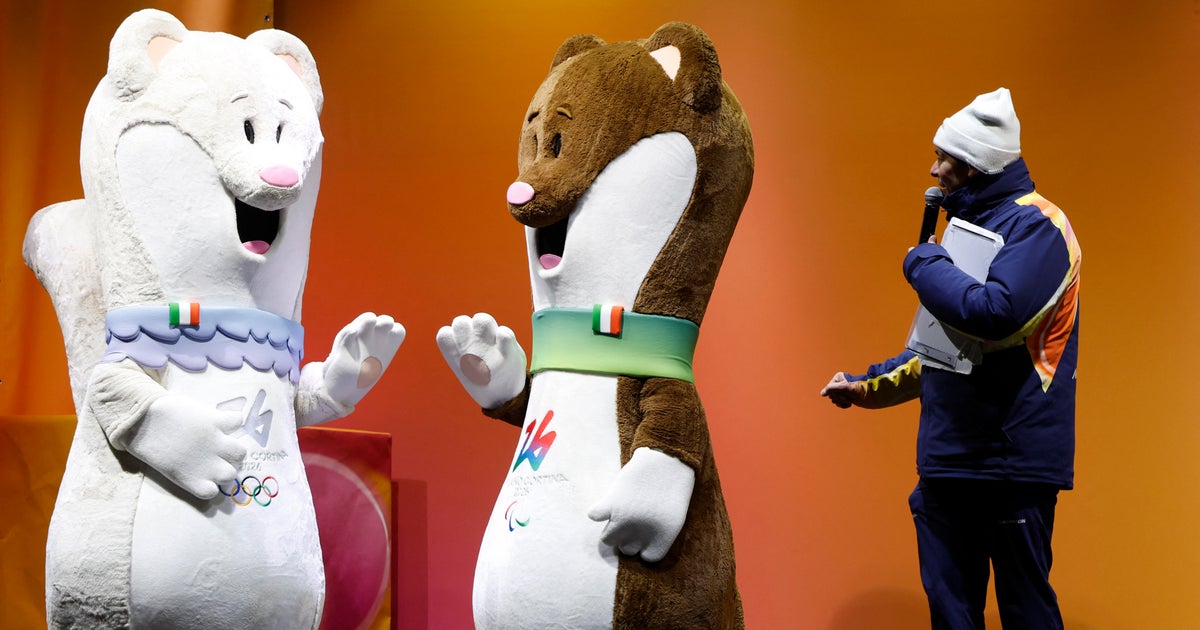
When organizers revealed the mascots for the 2026 Winter Olympics, many people around the world found themselves asking the same question: what exactly is a stoat? This small, spirited creature that most have never heard of is now sharing the global spotlight alongside its fluffy companion, the snowdrop flower. Tina the stoat represents the Olympic Games, while her younger brother Milo proudly stands as the Paralympic mascot. These charming characters weren’t dreamed up in a corporate boardroom but were brought to life by the imaginative students of the Istituto Comprensivo of Taverna in Italy. According to Olympic organizers, Tina and Milo capture something essential about their host country—they embody the contemporary, vibrant, and dynamic Italian spirit. Accompanying the stoat siblings are six delightful snowdrop flowers collectively known as “The Flo,” inspired by drawings from students at the Istituto Comprensivo Sabin. Together, this unlikely group of characters will represent the Milano Cortina 2026 Games, bringing a distinctly Italian flavor to the world’s premier winter sporting event.
Getting to Know Tina, Milo, and Their Flowery Friends
The Olympic website paints Tina as a creative and grounded character with an inspiring backstory. Born in Italy’s majestic mountains, she now makes her home in the city—and while the organizers don’t explicitly say which one, her name offers a clue. “Tina” is a diminutive of Cortina, one of the two cities co-hosting the Winter Olympics. Despite her urban lifestyle, Tina remains deeply connected to her roots in nature. “Nature is her home, and even though she now lives in the city, she does everything she can to protect it and keep it untouched,” the official description reads. This environmental consciousness makes Tina a mascot for our times, representing the balance many of us struggle to maintain between modern life and our responsibility to the natural world.
Milo, Tina’s younger brother, carries an equally powerful message. Born without one paw, he serves as the perfect ambassador for the Paralympic Games. Far from being defined by what he lacks, Milo is described as a dreamer who absolutely loves playing in the snow. His name, a shortened version of Milano (the other host city), connects him to Italy’s vibrant metropolis. What makes Milo truly special is his resilient character—nothing holds him back. The Olympics notes that despite being born without a paw, he’s learned to walk using his tail. His personal motto captures his spirit perfectly: “Obstacles are trampolines.” This powerful message of turning challenges into opportunities for growth resonates far beyond the Paralympic Games, offering inspiration to anyone facing difficulties in their lives.
Rounding out this charming crew are The Flo, six snowdrop flowers described as “curious and irresistible.” These little flowers are loyal companions who never leave their friends’ sides and absolutely love having fun—even when their enthusiasm occasionally lands them in trouble. Their playful nature adds a lighthearted element to the mascot family, ensuring that the 2026 Games will have a festive and approachable feel.
The Real-Life Inspiration Behind the Mascots
To truly appreciate Tina and Milo, it helps to understand what real stoats are actually like. Also known as ermines, stoats are small, carnivorous mammals belonging to the weasel family. These fascinating creatures can be found not just in Italy but across the globe, including in China, the United States, Japan, and Ukraine, according to the International Union for Conservation of Nature. Don’t let their small size fool you—the Woodland Trust, a conservation charity in the United Kingdom, describes the stoat as “fast and definitely furious.” These fierce little predators aren’t afraid to take on prey more than five times their own size, and they’ll pursue their next meal up trees or underground with equal determination. One of their most remarkable features is their seasonal wardrobe change: their fur turns white in winter, providing perfect camouflage in snowy environments—a fitting trait for a Winter Olympics mascot.
The snowdrops accompanying Tina and Milo are equally remarkable in their own right. While most flowers retreat and go dormant when winter arrives, snowdrops do the exact opposite—that’s when they come alive. According to Jenny Shelton, a wildlife expert at The Wildlife Trusts, these resilient flowers “meet the challenge of winter head on.” She describes snowdrops as “a twinkle of joy in the winter landscape and, for many, a symbol of triumph and defiance.” In the competitive natural world where plants race for vital resources, snowdrops are always out in front. “As one of the first flowers to emerge, they’re already soaking up sunlight and attracting pollinating insects before many other flowers have shown up,” Shelton explains. This competitive advantage and ability to thrive when others cannot makes the snowdrop a perfect symbol for the determination and excellence that Olympic athletes embody.
A Thoughtful Selection Process With Deeper Meaning
The journey to selecting Tina and Milo involved genuine collaboration with Italy’s next generation. The Milano Cortina 2026 Organizing Committee partnered with the Italian Ministry of Education to crowdsource ideas from students across the country. The response was overwhelming—more than 1,600 entries poured in, showcasing the creativity and enthusiasm of Italian youth. From this impressive collection, organizers shortlisted two finalists, and the ultimate winners were chosen through a public poll, giving citizens a voice in who would represent their Games to the world.
Jenny Shelton sees both stoats and snowdrops as perfect icons of resilience and hope, creatures that face winter’s harshest challenges without backing down. “Nature is integral to our physical and mental health and, when given the space to flourish, can really help to boost our wellbeing, resilience and overall mood too,” she told CBS News. “That’s why helping inspiring species like stoats to thrive is so important—after all, we only win when nature wins.” This philosophy aligns beautifully with the Olympic values of striving for excellence while respecting the environment and community.
Marco Granata, a biologist and PhD candidate at the University of Turin, brings a more sobering perspective to the selection. He believes stoats are particularly fitting for the Winter Olympics because both the animal and the Winter Games themselves face a common existential threat: climate change. “I often call stoats ‘wild ghosts’ as they are extremely hard to see and very difficult to study because of their small size, rarity, and elusive behavior,” Granata explains. “The real risk is that they may become ghosts in a literal sense, disappearing from large parts of our territory.” As part of the Ermlin Project, Granata studies mustelids like stoats and assesses their conservation status in the Alps. Concerned about climate change’s impact on stoat habitats, he reached out to the Milano Cortina 2026 Foundation with a proposal: dedicate part of the proceeds from mascot merchandise to stoat preservation efforts. Unfortunately, the foundation declined his request and did not respond to multiple requests for comment from CBS News. This missed opportunity highlights a disconnect between symbolic representation and concrete conservation action.
The Legacy of Olympic Mascots
Tina and Milo join a colorful legacy of Olympic mascots that stretches back more than half a century. According to Olympic tradition, mascots serve as ambassadors that embody the spirit of the Games. “They’re tasked with giving concrete form to the Olympic spirit, spreading the values highlighted at each edition of the Games; promoting the history and culture of the host city; and giving the event a festive atmosphere,” the official Olympic description states. While today’s mascots are designed and selected through elaborate processes years in advance, the very first Olympic mascot came together under drastically different circumstances.
The pioneer of Olympic mascots was Aline Lafargue, who had just one night to prepare her submission for the 1968 Winter Games in Grenoble, France. Her design—a little man on skis named Schuss—made history and started a tradition that continues today. Several years later, the Summer Olympics got its own mascot when a dachshund named Waldi represented the 1972 Munich Games. In the decades since, the world has been introduced to a menagerie of memorable characters: Schneemandl the snowman, Amik the beaver, Sam the eagle, Hodori the tiger, and the recent sensation Bing Dwen Dwen from the Beijing Games. Most recently, the 2024 Summer Games broke from the animal tradition entirely, choosing the Phrygian cap—a powerful symbol of freedom in French history—as their mascot.
Looking Forward to Milano Cortina 2026
As the world prepares for the 2026 Winter Olympics, Tina and Milo stand ready to welcome athletes and spectators alike to Italy’s stunning alpine landscape. These stoat siblings, with their snowdrop companions, represent more than just cute characters for merchandise and marketing. They embody genuine Italian values—the connection between urban and rural life, the determination to overcome obstacles, the importance of protecting nature even as we embrace modernity, and the resilience needed to thrive in challenging conditions. Tina’s environmental consciousness speaks to a generation increasingly concerned about climate change and sustainability. Milo’s triumphant spirit—turning his physical difference into an asset rather than a limitation—offers powerful representation for Paralympic athletes and anyone who has ever felt defined by what they lack rather than what they possess.
The selection of these particular creatures also reminds us that the most inspiring ambassadors sometimes come from unexpected places. Most people had never heard of a stoat before the mascot announcement, and many might not have given snowdrops much thought beyond their brief winter appearance. Yet both creatures demonstrate extraordinary adaptation, fierce determination, and the ability to thrive when conditions seem least favorable—qualities that every Olympic athlete must possess. Whether the organizing committee will heed calls to connect mascot popularity with actual conservation efforts remains to be seen, but the conversation itself represents progress. As we count down to the Milano Cortina 2026 Games, Tina, Milo, and The Flo invite us to look more closely at the natural world around us, to appreciate the small but mighty creatures who share our planet, and to remember that obstacles truly can become trampolines if we approach them with the right spirit.