


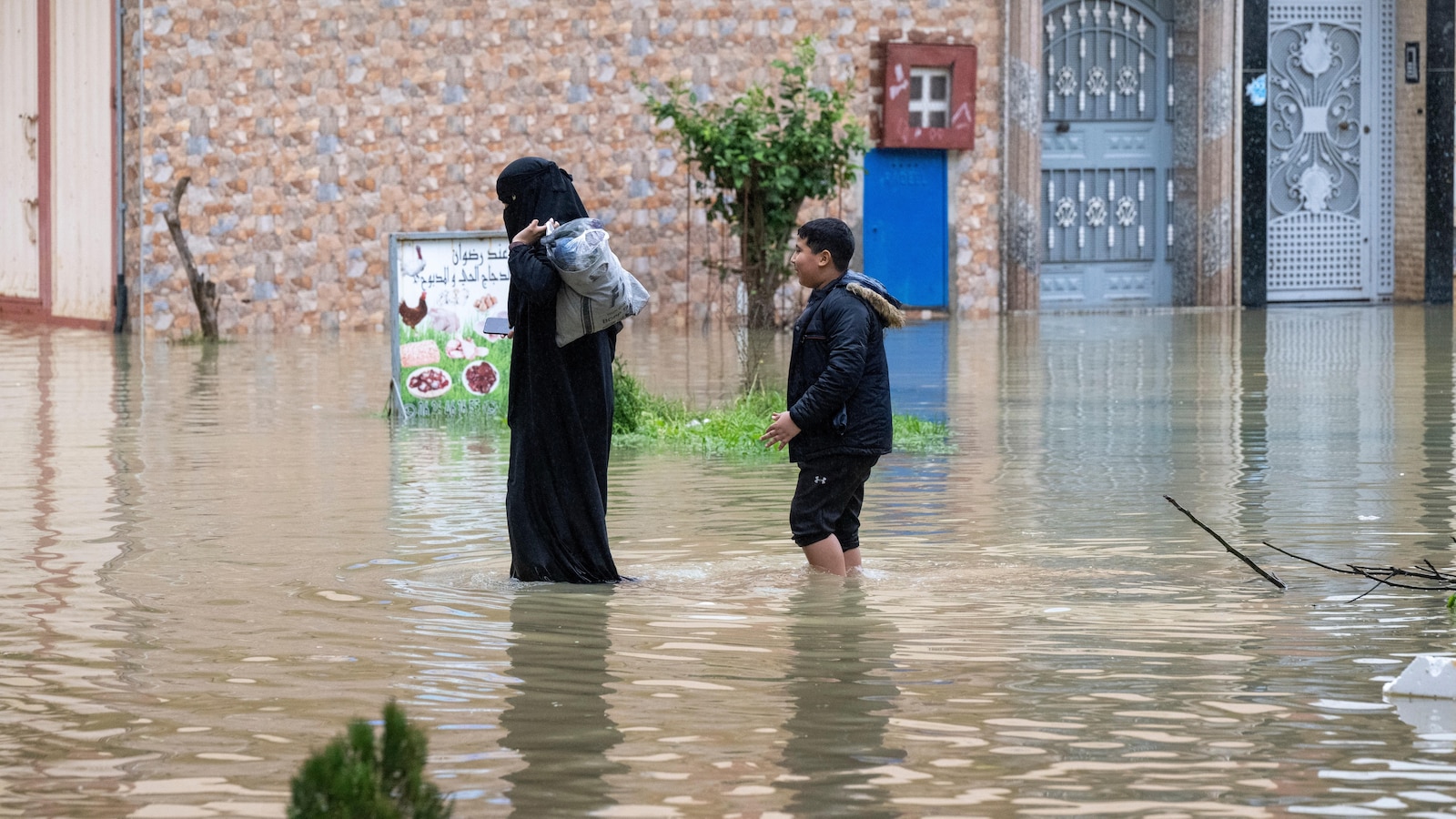

Historic Flooding Forces Mass Evacuation in Northwestern Morocco
Emergency Response to Unprecedented Rainfall
The Kingdom of Morocco is facing one of its most significant flooding events in recent memory, with more than 143,000 residents forced to evacuate their homes across the northwestern region. The Interior Ministry confirmed the massive displacement as torrential rains combined with emergency water releases from dangerously overfilled dams created hazardous conditions throughout several provinces. The Moroccan government mobilized military forces to assist with evacuations, establishing temporary shelters for those who had nowhere else to go. Schools and universities across the affected regions were shut down as a precautionary measure, while maritime traffic between Morocco and Spain experienced significant disruptions due to the stormy conditions. The scale of the evacuation effort highlights the severity of the situation, with entire communities being relocated to safer ground as water levels continued to rise in rivers like the Loukkous, which flows through some of the region’s most populated areas.
Ksar El Kebir: A Town Nearly Abandoned
The town of Ksar El Kebir, renowned throughout Morocco for its sugar production, has become a ghost town after authorities evacuated approximately 85% of its population. Local resident Mohamed El Hachimi, who relocated to stay with family members in a safer area, described the exodus to the Associated Press, noting that “almost everyone left.” Those fortunate enough to have relatives in other towns fled to stay with family, while others who had no such options were directed to government-established emergency shelters. The primary concern haunting residents isn’t just the rain itself, but the Oued Al Makhazine dam that looms over the region. This massive structure, designed to hold 672.8 million cubic meters of water, has exceeded its maximum capacity by an alarming 46%. El Hachimi’s words capture the anxiety felt by many: “The fear now is from the dam, which has surpassed its maximum capacity … and the rain is still pouring heavily.” The situation in Ksar El Kebir represents the broader crisis facing multiple towns across northwestern Morocco, where infrastructure designed for normal conditions is being pushed well beyond its limits.
Dramatic Scenes of Destruction and Response
Eyewitness footage and videos shared with international media outlets paint a sobering picture of the flooding’s impact on Morocco’s rural communities. In the northern town of Bni Zid, homes sustained significant damage while landslides carved through the landscape, reshaping the terrain in destructive ways. The visual documentation shows bulldozers working tirelessly to clear debris-choked roads and restore access to communities that had become completely isolated by the floodwaters. The Moroccan military’s involvement in the evacuation effort underscores the gravity of the situation, with soldiers assisting civilians in leaving their homes and moving to higher ground or designated shelters. Meanwhile, the water ministry has taken the extraordinary step of implementing controlled releases from multiple dams that have reached or exceeded their capacity. From the Oued Al Makhazine dam alone, more than 372 million cubic meters of water have been discharged—a staggering volume that had to be released to prevent catastrophic dam failure, even though the controlled releases themselves contributed to downstream flooding. These controlled discharges represent a difficult choice between two dangerous scenarios: gradual flooding versus potential dam collapse.
The Paradox of Relief and Disaster
Morocco’s current flooding crisis embodies a bitter irony—the rain that’s causing so much destruction and displacement is also the long-awaited answer to seven years of punishing drought. The North African nation has suffered through an extended dry period that threatened water security, agricultural production, and economic stability. The recent rainfall has finally ended this devastating drought, filling reservoirs and securing at least a year’s worth of drinking water for the population. In the past six months alone, Morocco has recorded 150 millimeters of precipitation, exceeding the country’s annual average by 32.5%—a statistic that would normally be cause for celebration. The country’s meteorology directorate characterized the climate conditions as “exceptional” and issued a red alert for continuing heavy rainfall. However, the intensity and concentration of the precipitation has transformed this blessing into a crisis, as systems designed for gradual water accumulation were overwhelmed by the sheer volume arriving in such a short timeframe. The situation demonstrates how climate extremes—whether drought or deluge—pose serious challenges to communities and infrastructure, and how what’s needed can become dangerous when it arrives too abundantly and too quickly.
Economic and Agricultural Impacts
Beyond the immediate humanitarian crisis and safety concerns, the flooding has created significant economic disruptions across multiple sectors of Morocco’s economy. Agricultural regions have been particularly hard hit, with valuable crops including avocados, potatoes, and olives suffering damage from the excessive water and flooding. These crops represent important sources of income for farming communities and contribute significantly to Morocco’s export economy. The country’s port operations have also experienced disruptions, with the stormy weather conditions making maritime activities dangerous and causing delays in shipments that will likely have ripple effects throughout supply chains. The closure of the strait crossing between Morocco and Spain has further isolated the country and interrupted the regular flow of goods and people between the North African kingdom and Europe. The rising water levels in the Sebou River have forced partial road closures that complicate transportation networks, while flooded neighborhoods have displaced residents and damaged property. Perhaps most significantly for daily connectivity, train service has been halted in affected areas, cutting off a vital transportation link for commuters and travelers. The economic toll of the flooding will likely be calculated for months to come, as the agricultural losses, infrastructure damage, and business disruptions are fully assessed.
Looking Forward: Climate Challenges and Community Resilience
The current crisis in Morocco reflects broader climate challenges facing nations around the world, where weather patterns are becoming more extreme and less predictable. The country’s shift from seven years of drought to flooding that exceeds annual rainfall averages by more than a third illustrates how climate volatility creates planning and infrastructure challenges. Dams and water management systems designed for historical weather patterns struggle to cope with these new extremes, whether holding enough water during droughts or safely managing sudden abundance during periods of exceptional rainfall. As the red alert remains in effect and rain continues to fall, Moroccan authorities face the ongoing challenge of keeping displaced populations safe while managing water releases to prevent catastrophic infrastructure failures. The resilience of communities like Ksar El Kebir will be tested not only during the immediate crisis but in the recovery period that follows, as residents eventually return to assess damage and rebuild. The flooding serves as a reminder that water security involves not just having enough water, but also having the infrastructure and systems to manage it safely when it arrives. For Morocco, the current emergency will likely prompt serious discussions about upgrading water management infrastructure and developing more robust systems for handling climate extremes in both directions—the droughts that may return and the intense rainfall events that appear to be increasing in frequency and severity. The experiences of the 143,000 evacuated residents will not be forgotten, and their stories will inform how Morocco prepares for whatever climate challenges the future may bring.