


High-Stakes Violence in Moscow: Russian General Shot in Alleged Ukrainian Operation
Assassination Attempt Rocks Russian Capital
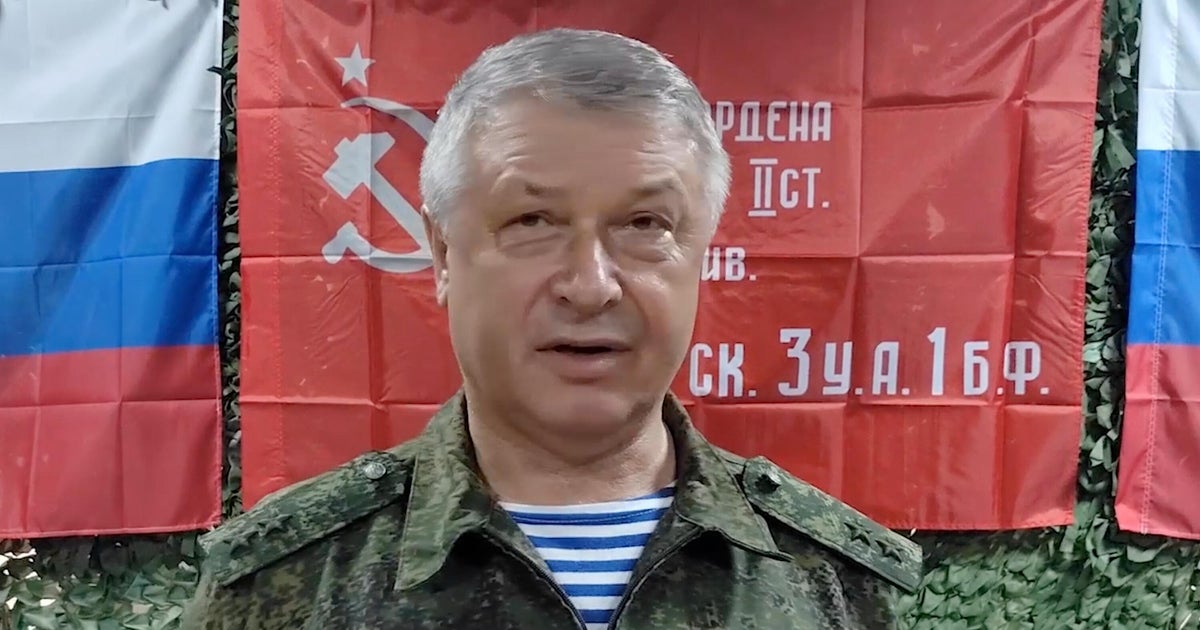
In a dramatic escalation of the shadow war between Russia and Ukraine, a high-ranking Russian military intelligence officer was shot multiple times in Moscow on Friday, sparking immediate accusations from the Kremlin that Ukraine orchestrated the attack. Vladimir Alekseyev, who serves as deputy head of Russia’s GRU military intelligence agency, was ambushed by an unidentified assailant inside a Moscow apartment building and rushed to hospital with serious injuries. The incident has sent shockwaves through Russia’s security establishment, particularly given Alekseyev’s prominent role in some of the country’s most controversial international operations. Russian Foreign Minister Sergei Lavrov wasted no time in pointing fingers at Kyiv, characterizing the shooting as a “terrorist act” designed to undermine ongoing peace negotiations between the two nations. The timing is particularly significant, coming just one day after the announcement of a major prisoner exchange agreement facilitated by U.S. mediators in Abu Dhabi, suggesting someone may be trying to sabotage diplomatic progress. Ukraine, maintaining its typical silence on such matters, has not issued any statement regarding the attack, though the country has previously acknowledged responsibility for eliminating several Russian military figures since Moscow’s full-scale invasion began in February 2022.
The Target: A Controversial Intelligence Chief
Vladimir Alekseyev is no ordinary military officer—he represents one of the most powerful and controversial figures in Russia’s sprawling intelligence apparatus. Having served as first deputy chief of the GRU since 2011, Alekseyev has accumulated a lengthy record of involvement in operations that have drawn international condemnation and Western sanctions. His career portfolio reads like a greatest-hits compilation of Russian international intrigue: he’s been sanctioned by Western nations for alleged involvement in cyberattacks against foreign governments, and most notoriously, for his purported role in organizing the 2018 nerve agent attack on former Russian spy Sergei Skripal in Salisbury, England. That poisoning attempt, which utilized the deadly Novichok nerve agent, resulted in the death of an innocent British citizen and triggered one of the most serious diplomatic crises between Russia and the West in recent decades. Beyond these operations, Alekseyev played a key role in Russia’s military intervention in Syria, where he led intelligence operations supporting the regime of Bashar al-Assad, who has since been ousted from power. Perhaps most tellingly, during the Wagner Group’s attempted mutiny in 2023, Alekseyev was personally dispatched to negotiate with mercenary chief Yevgeny Prigozhin, demonstrating his status as one of the Kremlin’s most trusted problem-solvers in crisis situations. Video footage from that tense standoff showed Alekseyev sitting face-to-face with Prigozhin in a military compound seized by Wagner forces, attempting to convince the rebellious commander to stand down—a mission that temporarily succeeded, though Prigozhin would die months later when his plane mysteriously exploded mid-flight.
Details of the Attack and Investigation
The shooting occurred in a northwestern Moscow suburb, where forensic teams quickly descended on the apartment complex, cordoning off the area as investigators combed for evidence. According to Russia’s Investigative Committee, Alekseyev was struck by “several shots” from an assailant who managed to escape the scene before authorities arrived. The precision of the attack—targeting a heavily protected intelligence official in Russia’s capital city—suggests a high level of planning and operational sophistication. Kremlin spokesman Dmitry Peskov confirmed that Russia’s special services were actively investigating the incident and keeping President Vladimir Putin personally informed of developments. “The special services are doing their job,” Peskov stated matter-of-factly, before adding what seemed like a hopeful note: “We wish the general a speedy recovery. We hope that will be the case.” However, Russian authorities have provided no updates on Alekseyev’s medical condition beyond confirming his hospitalization, leaving questions about the severity of his injuries unanswered. Investigative Committee spokeswoman Svetlana Petrenko released a statement noting that “investigative actions and operational search measures are being carried out to identify the person or persons involved in committing the aforementioned crime.” Journalists from AFP who visited the scene observed a forensic truck parked outside the apartment block, with investigators maintaining tight security around the perimeter—a stark reminder that even in Moscow, far from the active war zone, the conflict with Ukraine has created an atmosphere of danger and vulnerability for Russian military officials.
Pattern of Targeted Eliminations
This latest attack on Alekseyev fits into a disturbing pattern of targeted killings that have characterized the Ukraine-Russia conflict, transforming it from a conventional war into something more closely resembling a multi-front intelligence war with assassination as a key tactic. Since Moscow launched its full-scale invasion in February 2022, Russian authorities have attributed numerous killings of military officers and public figures to Ukrainian operatives, and Kyiv has acknowledged responsibility for several of these operations, viewing them as legitimate acts of war against enemy commanders. The list of Russian military officials eliminated in similar attacks has grown alarmingly long. In December of last year, Lieutenant General Fanil Sarvarov, who headed the Operational Training Directorate of the Russian Armed Forces’ General Staff, was killed by a car bomb—a method that has become almost signature in these operations. Just months earlier, in April, Lieutenant General Yaroslav Moskalik, a deputy head of the main operational department in the General Staff, met a similar fate when an explosive device planted in his car detonated near his apartment building outside Moscow. A Russian man who had previously resided in Ukraine eventually pleaded guilty to carrying out that attack, admitting he had been paid by Ukraine’s security services to execute the mission. Following Moskalik’s death, Ukrainian President Volodymyr Zelenskyy made thinly veiled references to the killing, stating he had received a report from Ukraine’s foreign intelligence chief regarding the “liquidation” of top Russian military figures, adding ominously that “justice inevitably comes”—though he stopped short of explicitly naming Moskalik. Perhaps the most high-profile assassination occurred in December 2024, when Lieutenant General Igor Kirillov, chief of Russia’s nuclear, biological and chemical protection forces, was killed by a bomb concealed in an electric scooter outside his apartment building, an attack that also claimed the life of his assistant. Ukraine’s security service openly claimed responsibility for that operation, marking it as a significant escalation in the targeted killing campaign.
The Diplomatic Context and Timing
What makes the attack on Alekseyev particularly significant is its timing in relation to ongoing diplomatic efforts to find a negotiated end to the nearly four-year conflict. Just one day before the shooting, U.S. special envoy Steve Witkoff announced a breakthrough agreement between Ukraine and Russia to exchange 314 prisoners—a deal hammered out during the second round of U.S.-mediated peace talks being held in Abu Dhabi. This prisoner swap represented a rare moment of cooperation between the warring parties and suggested that, despite the grinding violence on the battlefield, channels for negotiation remained open and productive. Russian Foreign Minister Lavrov’s immediate characterization of the Alekseyev shooting as an attempt to “disrupt the negotiation process” raises important questions about who might benefit from derailing peace talks at this critical juncture. If Ukrainian intelligence services were indeed responsible, it could signal internal divisions within Ukraine’s leadership about the wisdom of negotiating with Russia, or perhaps a calculated decision that eliminating key Russian military intelligence figures serves Ukraine’s long-term strategic interests regardless of short-term diplomatic fallout. Alternatively, the attack could represent the actions of rogue elements operating outside official channels, or even—as some conspiracy-minded observers might suggest—a false flag operation designed to poison the diplomatic atmosphere. What remains clear is that each side continues to pursue both military and diplomatic tracks simultaneously, creating a complex and often contradictory landscape where prisoner exchanges and assassination attempts can occur within 24 hours of each other, reflecting the multidimensional nature of modern warfare.
The Broader Shadow War and Its Implications
The shooting of Vladimir Alekseyev underscores how the Russia-Ukraine conflict has evolved into something far more complex than a conventional territorial war, incorporating elements of intelligence warfare, targeted assassinations, and operations conducted deep inside what should be secure territory. This shadow war has claimed lives on both sides—Ukraine has also lost military figures to targeted attacks, with Ukrainian security agencies tracking down and eliminating suspected Russian agents involved in killing Ukrainian officers even in the capital city of Kyiv. The normalization of these assassination operations represents a troubling development in the conflict, blurring the lines between legitimate military targeting and terrorism, and raising questions about where such tactics might lead. For Russia, the inability to protect high-ranking military officials even in Moscow represents a significant embarrassment and a challenge to the image of invulnerability that authoritarian regimes depend upon. Each successful attack demonstrates that Ukraine’s intelligence services possess both the capability and the willingness to reach deep into Russian territory, turning the homeland into another front in the war. For Ukraine, these operations serve multiple purposes: they eliminate experienced military commanders who play key roles in prosecuting the war, they demonstrate Ukraine’s offensive capabilities beyond the immediate battlefield, and they deliver a powerful psychological message that no Russian involved in the invasion is truly safe. As the war grinds toward its fourth year with no clear end in sight, these targeted killings have become another bitter feature of a conflict that has already cost hundreds of thousands of lives and displaced millions more, suggesting that even if a diplomatic settlement eventually emerges, the shadow war of intelligence operations and retribution may continue long after the guns fall silent on the conventional battlefield.