


High-Ranking Russian Military Official Ambushed in Moscow Attack
Shocking Assault on Defense Ministry Leader
In a disturbing incident that has sent shockwaves through Russia’s military establishment, Lieutenant General Vladimir Alexeyev fell victim to a brazen ambush attack in the heart of Moscow on Friday. The high-ranking Defense Ministry official was shot multiple times in what appears to be a carefully planned assault that took place in a residential neighborhood along Volokolamskoye Highway. The attack, which occurred in broad daylight within an apartment building, has raised serious questions about security protocols for senior military personnel in the Russian capital. According to official statements from the Investigative Committee of Russia, an unknown assailant opened fire on Alexeyev before quickly fleeing the scene, leaving investigators scrambling to identify the perpetrator and establish a motive for this audacious attack on one of Russia’s senior military figures.
Official Response and Investigation Details
Svetlana Petrenko, the official spokesperson for Russia’s Investigative Committee, provided initial details about the incident through the Telegram messaging platform, though her statement was notably sparse on specifics. She confirmed that investigators are treating this as a serious criminal matter, with the attack having occurred on February 6, 2026, in a residential building in Moscow’s northwestern district. The spokesperson’s carefully worded statement indicated that multiple shots were fired at the victim, though she stopped short of revealing the full extent of Lieutenant General Alexeyev’s injuries or his current medical condition. Following the shooting, emergency medical services transported the wounded general to a nearby hospital, where he is presumably receiving treatment under heightened security measures. The state-affiliated news agency TASS later confirmed that the victim was indeed Alexeyev, lending official credibility to early reports and triggering the launch of a comprehensive criminal investigation into what many are calling an assassination attempt.
Kremlin’s Response and National Security Implications
The attack on such a prominent military figure has clearly reached the highest levels of Russian government, with Kremlin spokesperson Dmitry Peskov confirming that President Vladimir Putin has been personally briefed on the incident. Peskov’s public statement, while brief, attempted to project both concern and confidence, noting that “special services are currently doing their job” while expressing wishes for the general’s “speedy recovery.” This measured response from the Kremlin suggests officials are taking the matter extremely seriously while trying to avoid creating public panic or revealing too much about ongoing security operations. The fact that the head of state was immediately informed about the attack underscores the significance of Alexeyev’s position within Russia’s military hierarchy and the potential national security implications of an assault on such a high-ranking official. The incident has inevitably raised uncomfortable questions about vulnerabilities in the security apparatus protecting senior military and government officials, particularly in residential areas of Moscow that have traditionally been considered safe zones for the Russian elite.
Security Concerns and Unanswered Questions
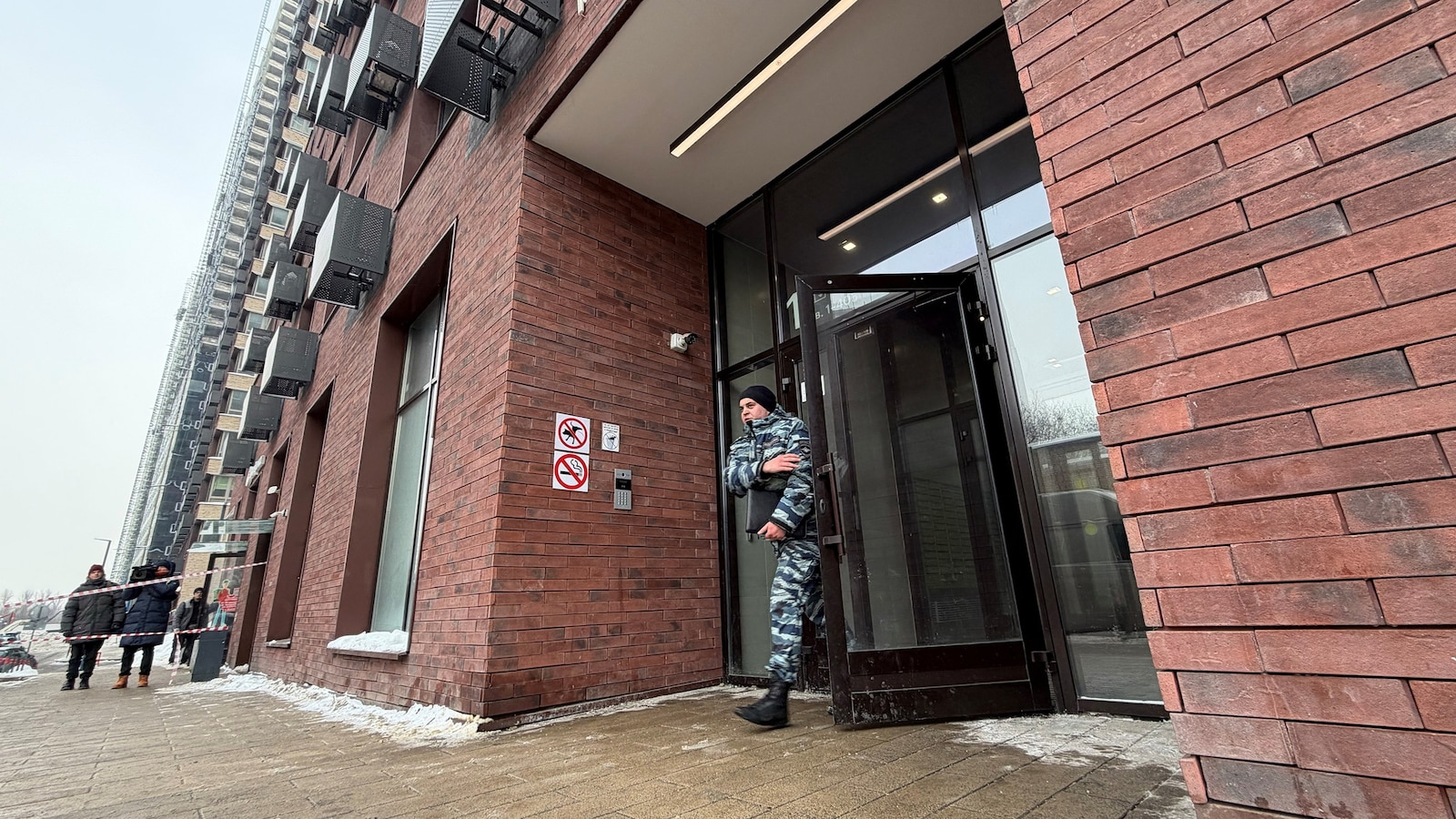
The brazen nature of this attack has left many observers and security analysts deeply concerned about what it might represent for Russia’s internal stability and the safety of its military leadership. The fact that an assailant was able to ambush a lieutenant general in a Moscow residential building—presumably in an area with some level of security presence—suggests either a significant intelligence failure or the work of highly skilled operatives with detailed knowledge of Alexeyev’s movements and routines. Photographs from the scene showing police officers entering and exiting the residential building where the attack occurred paint a picture of an intensive investigation underway, with authorities likely reviewing security camera footage, interviewing witnesses, and attempting to piece together how the shooter managed to get close enough to carry out the attack and subsequently escape. The fact that investigators have not yet identified the perpetrator, or at least have not publicly revealed any suspects, adds another layer of mystery to an already troubling incident that has captured national attention and international interest.
Context and Potential Motivations
While investigators have not disclosed any potential motives for the attack, such incidents targeting high-ranking military officials can stem from various sources, ranging from personal vendettas to politically motivated assassination attempts or even internal conflicts within military or intelligence structures. Lieutenant General Alexeyev’s specific role within the Defense Ministry has not been detailed in official statements, leaving room for speculation about whether his position or recent activities might have made him a target. In the current geopolitical climate, with Russia engaged in various international operations and facing internal pressures, attacks on senior military figures take on particular significance and can be interpreted through multiple lenses—as acts of domestic terrorism, foreign intelligence operations, or manifestations of internal power struggles. The residential setting of the attack suggests the assailant had knowledge of Alexeyev’s personal schedule and living arrangements, pointing toward either careful surveillance or inside information, both of which have troubling implications for Russian security services tasked with protecting high-value personnel.
Aftermath and Ongoing Developments
As Lieutenant General Alexeyev receives medical treatment and investigators work to identify his attacker, this incident serves as a stark reminder of the personal risks faced by senior military officials even within their own capital city. The swift response from both law enforcement and the Kremlin indicates that authorities are treating this as a matter of utmost priority, likely mobilizing significant resources to track down the perpetrator and determine whether this was an isolated incident or part of a broader threat to military leadership. The coming days will likely bring additional details about the general’s condition, the progress of the investigation, and potentially information about suspects or motives. For now, the attack stands as a bold and concerning act of violence that has penetrated the normally secure world of Russia’s military elite, raising questions about security protocols and the climate of risk surrounding high-ranking defense officials. The international community will be watching closely to see how this situation develops and what it might reveal about internal dynamics within Russia’s power structures, while domestically, the incident has undoubtedly prompted security reviews and heightened protective measures for other senior military and government figures who might be considered potential targets.