


Italy’s Golden Breakthrough: Francesca Lollobrigida’s Historic Birthday Victory
A Birthday Celebration for the Ages
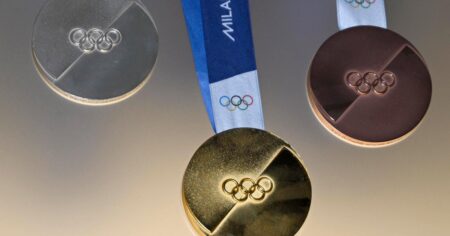
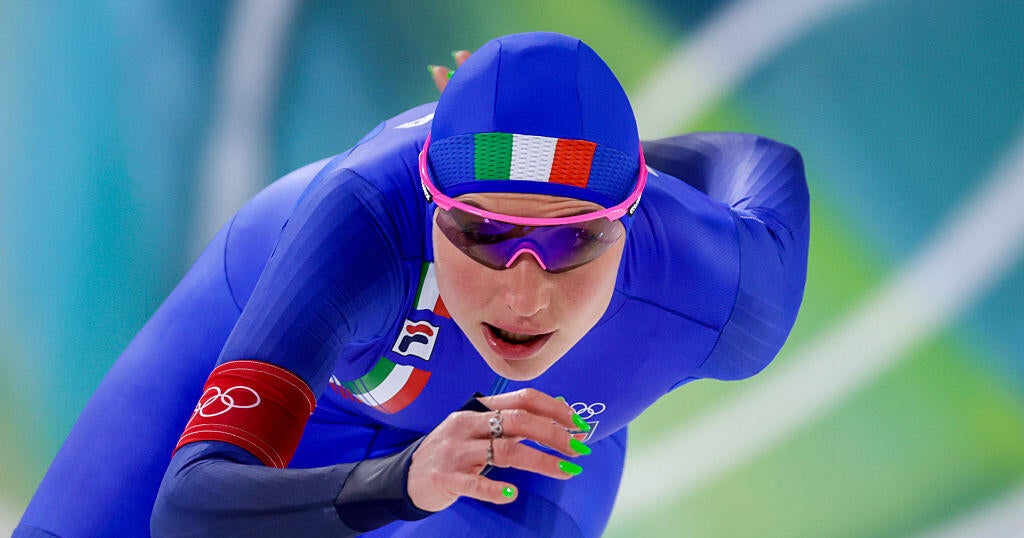
In what can only be described as a fairytale moment in Italian sports history, Francesca Lollobrigida delivered an extraordinary birthday present to herself and her nation on Saturday at the Milano Cortina Games. The 35-year-old speedskater from Frascati didn’t just win a race—she shattered an Olympic record and claimed Italy’s first gold medal of these Winter Olympics in a performance that will be remembered for generations. Racing on the very day she turned 35, Lollobrigida clocked an astounding time of 3 minutes and 54.28 seconds in the women’s 3000 meters, slicing more than two-and-a-half seconds off the previous Olympic record that had been set by Dutch speedskating legend Irene Schouten just four years earlier in Beijing. The victory was even more impressive when considering she finished a full two seconds ahead of silver medalist Ragne Wiklund of Norway, with Canada’s Valerie Maltais rounding out the podium in third place. This wasn’t just a personal triumph for Lollobrigida; it was a moment of national pride that sent shockwaves through the speedskating world.
Breaking Dutch Dominance
What made Lollobrigida’s victory even more remarkable was the historic nature of her achievement in disrupting what had been nearly unshakeable Dutch supremacy in this event. The Netherlands has long been considered the powerhouse of speedskating, and the women’s 3000 meters had been their particular domain for over a decade and a half. Saturday’s race marked the first time since the 2010 Vancouver Winter Olympics that the Netherlands failed to claim a medal in this distance—a stunning 16-year streak brought to an end by the Italian skater’s phenomenal performance. Making the moment even more significant was the fact that Joy Beune, the reigning world champion in the 3000 meters, finished in fourth place, just off the podium. For a nation as dominant in speedskating as the Netherlands, being shut out of the medals in an event they’ve traditionally owned represents a seismic shift in the competitive landscape of the sport. Lollobrigida’s gold medal didn’t just represent a personal victory; it symbolized that the established order in women’s long-distance speedskating could be challenged and overcome.
From Famous Roots to Olympic Glory
Francesca Lollobrigida’s story carries an additional layer of intrigue thanks to her famous family connection. Hailing from Frascati, a picturesque hill town located just outside Rome and celebrated worldwide for its crisp white wine, Lollobrigida grew up in the shadow of cinematic royalty. Her great aunt was none other than Gina Lollobrigida, one of the most glamorous and talented actresses of the 1950s and 1960s, who graced silver screens around the world and became an icon of Italian cinema’s golden age. While Francesca chose a very different path from her great aunt—trading red carpets for ice rinks and film sets for speedskating ovals—she has ultimately carved out her own legacy that stands proudly alongside her family’s storied history. The Lollobrigida name, already synonymous with Italian excellence in the arts, now carries equal weight in the world of elite athletics. This connection to Italian cultural history adds a romantic dimension to her athletic achievements, connecting the worlds of sport and entertainment in a uniquely Italian way.
A Journey Four Olympics in the Making
Lollobrigida’s golden moment on Saturday was far from an overnight success story. This was her fourth Olympic Games, representing years of dedication, sacrifice, and perseverance in pursuit of the sport’s ultimate prize. Her Olympic journey had already yielded success before Milano Cortina, as she collected two medals at the Beijing Games four years earlier: a silver medal in the 3000 meters and a bronze in the mass start event. Those achievements demonstrated her world-class ability and consistency at the highest level of competition, but the elusive Olympic gold had remained just out of reach. The fact that she finally captured that gold medal on home ice, in front of Italian fans, on her 35th birthday, and in record-breaking fashion, reads like a screenplay too perfect for Hollywood—or in this case, Cinecittà, the famous Italian film studio. Her persistence through multiple Olympic cycles, continuing to compete and improve well into her mid-thirties in a sport that often favors younger athletes, makes this victory all the more inspiring. Lollobrigida’s story serves as a powerful reminder that Olympic dreams don’t have expiration dates and that perseverance can ultimately triumph over setbacks.
An Unexpected American Addition
The race itself contained an interesting subplot involving American skater Greta Myers, whose participation came about through unexpected circumstances. The 21-year-old was added to the starting lineup at the last minute after Czech speedskating veteran Martina Sablikova withdrew from the competition. Myers hadn’t initially qualified for the event through the standard selection process, but her strong performances throughout the 2025-26 World Cup circuit had earned her the first reserve quota spot, meaning she was next in line should an opening occur. When Sablikova’s withdrawal created that opportunity, Myers seized her chance to compete on the Olympic stage. Though she finished in 20th place and well off the medal pace, her presence in the race represents the unpredictable nature of Olympic competition and how opportunities can arise when least expected. For the young American, simply being on the starting line at an Olympic Games—even as a late addition—provides invaluable experience that will serve her well in future international competitions. Her story also highlights the depth of talent in women’s speedskating and the razor-thin margins that separate Olympic competitors from those watching from home.
A Golden Beginning for Italy
Lollobrigida’s triumph served as the perfect opening chapter for Italy’s gold medal account at the Milano Cortina Games. Winning the first gold medal of any Olympics on home soil carries special significance, setting a positive tone for the entire Games and energizing both athletes and spectators. For Italian sports fans, seeing their flag raised first in the gold medal position, hearing their national anthem played in celebration of a home-country victory, creates memories that last far beyond the two weeks of Olympic competition. The fact that this inaugural gold came in speedskating—a sport where Italy hasn’t traditionally dominated like they have in alpine skiing or short track—makes the achievement even sweeter and potentially signals a broadening of Italy’s winter sports prowess. Lollobrigida’s record-breaking performance has undoubtedly inspired young Italian athletes across all disciplines and reminded the world that Italian winter sports excellence extends beyond the slopes and into the ice rinks. As the Milano Cortina Games continue, this golden moment on the speedskating oval will be remembered as the spark that ignited Italy’s Olympic campaign, delivered by a 35-year-old woman who proved that age is just a number when talent meets determination meets perfect timing.