



From Battlefield to Living Room: Ukraine’s Drone Combat Simulator Goes Public
A Revolutionary Gaming Experience Born from Real Warfare
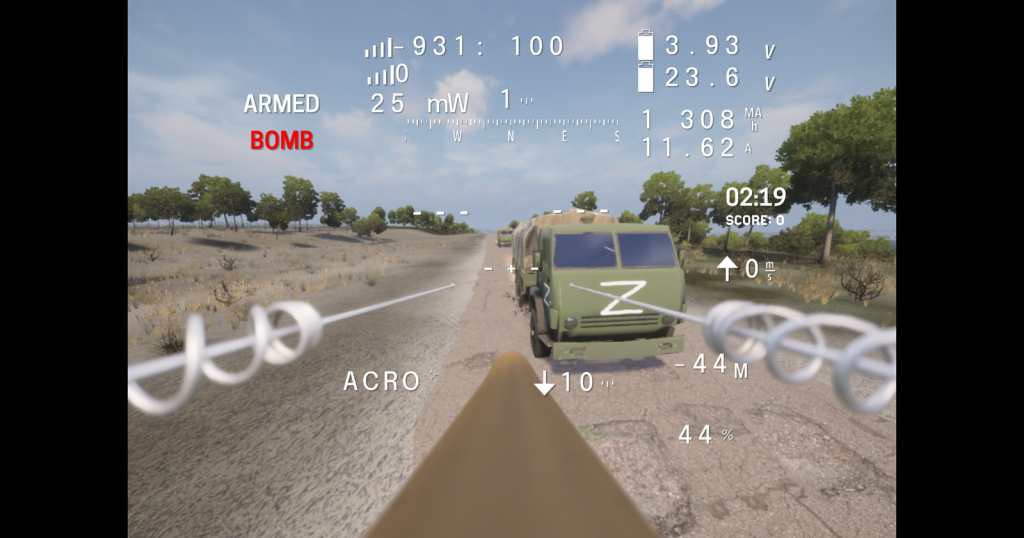
In an unprecedented move that blurs the lines between military training and home entertainment, Ukrainian developers have released a commercial version of their military drone pilot training software to the global gaming market. The “Ukrainian Fight Drone Simulator” (UFDS), priced at approximately $30, brings the hyper-realistic experience of operating combat drones from Ukraine’s ongoing conflict directly to civilian gamers worldwide. This isn’t just another flight simulator built on imagination and general aviation principles—it’s a streamlined version of the actual software that has trained thousands of Ukrainian soldiers to pilot first-person-view drones against Russian forces. The game features the same sophisticated physics engines and control systems that help real Ukrainian pilots navigate their drones to destroy enemy tanks, artillery positions, and military personnel on the actual battlefield. While a more comprehensive version remains freely available exclusively to Ukrainian Armed Forces personnel, this public release marks a significant milestone in how military technology and civilian entertainment intersect. The development represents a fascinating evolution in both gaming and military training, raising important questions about the relationship between virtual warfare and real combat while serving Ukraine’s practical needs in its ongoing defense against Russian invasion.
The Minds Behind the Military-Grade Game
Vlad Plaksin, CEO of the Drone Fight Club Academy and one of the principal architects behind UFDS, has been at the forefront of Ukraine’s drone warfare revolution. His academy has become a cornerstone of Ukraine’s military drone program, having trained over 5,000 Ukrainian military drone pilots since its establishment in the early days of the full-scale Russian invasion that began four years ago. The facility’s credibility extends beyond Ukraine’s borders—last year, the academy collaborated with the United States Air Force for a specialized training session at Ramstein Air Base in Germany, demonstrating the international recognition of their expertise. For Plaksin and his team, releasing this game to the public serves multiple strategic purposes beyond simple commercial interests. One of the primary objectives is to prepare the next generation of Ukrainian defenders by providing accessible drone flight training to young people across the country. As Plaksin explained to CBS News, the goal is to “give them a possibility not to go to the trench with rifles”—offering an alternative path to military service that leverages technology rather than traditional ground combat. This approach acknowledges the changing nature of modern warfare, where technological proficiency can be just as valuable as physical combat skills.
A Nation Captivated by Drone Technology
The Ukrainian public’s fascination with drone warfare has skyrocketed during the conflict, transforming military drone operators into national heroes with celebrity-like status among the younger generation. This cultural shift reflects the prominent role that unmanned aerial vehicles have played in Ukraine’s resistance against the larger and initially better-equipped Russian military. According to Plaksin, Ukrainian youth have become deeply invested in this new dimension of warfare, with “most young people want[ing] to fly, want[ing] to hit [Russian targets], want[ing] to grow up in this new world of robotics.” This enthusiasm represents not just patriotic fervor but a genuine interest in emerging technology and its applications. The game’s developers describe it as a “public adaptation of a leading ultra-realistic FPV [first person view] drone trainer, built on lessons from the Ukrainian front line,” offering players the chance to “learn to fly like a front-line pilot, take on real-world mission scenarios, and feel the rush of modern FPV warfare.” The simulator features multiple drone types, each with authentic flight characteristics, and incorporates variable weather conditions and other environmental factors that drone pilots encounter in actual combat situations. This level of detail provides an experience realistic enough for players to develop fundamental drone piloting skills that could translate to real-world applications.
Navigating Ethical Minefields
The release of UFDS inevitably raises complex ethical questions about allowing civilian gamers, including potentially young players, to engage with such a realistic simulation of lethal military operations. Unlike traditional combat games that are clearly fantasy-based or historically removed from current events, UFDS simulates ongoing military operations in an active war zone with equipment and scenarios drawn directly from contemporary combat. Plaksin acknowledges these concerns, characterizing the ethical dimension as “a very sensitive question,” while also pointing out that UFDS isn’t breaking entirely new ground in this regard. He notes that “there are many other simulators which do the same, and we are not opening something new,” referring to the countless military simulation games available on the market. Indeed, UFDS is far from the first video game to serve a dual purpose as entertainment and potential recruitment or training tool. The U.S. Army’s “America’s Army” series, launched in 2002, is widely recognized as the first explicit attempt by a national military to use video gaming as a recruitment vehicle, though it lacked the realism and direct connection to active combat operations that UFDS possesses. The difference lies in the directional development: most military-themed games are created as entertainment first and may subsequently be adapted for training purposes, whereas UFDS reverses this model, bringing actual military training software into the consumer market.
Protecting Sensitive Information While Sharing Skills
One of the most significant challenges in commercializing military training software is preventing adversaries from gaining valuable intelligence while still providing an authentic and useful experience for civilian users. Plaksin and his team have carefully calibrated the public version of UFDS to teach fundamental drone operation skills while withholding tactical information that could benefit Russian forces. As Plaksin explains, the game provides “a basic knowledge for the drones, but also at the same time, we try to do it maximum safety, for not sharing the sensitive information.” The primary differences between the military and civilian versions center on tactics rather than basic flight mechanics. The public game teaches players how to fly drones with realistic controls and physics but omits the strategic and tactical elements that Ukrainian forces use in actual operations. Plaksin identifies this as “the main difference between the versions”—the game “gives you everything that you need, but it will not give you the tactics.” Part of this protective measure involves making the gaming experience more arcade-like in certain respects. Real drone operations often involve extended flight times, with pilots spending 30 minutes or more navigating to their objectives, requiring constant map reading and terrain comparison to maintain orientation. These aspects, while crucial for actual military training, would make tedious gameplay for most consumers. By removing or condensing these elements, the developers make the game more entertaining while simultaneously protecting operational security. As Plaksin notes, when operating real drones, “you see the area and you need to read the map and compare it with what you see. In missions, it’s very important. In arcade games, it’s not important, and we don’t put it inside because it will not be interesting for the players.”
Building a Community and Looking Forward
Currently, UFDS remains a niche product within the gaming world, with only about 50 daily players online—a modest number that reflects its specialized nature and recent release. Military simulation games typically attract smaller but intensely dedicated player bases rather than the mass-market appeal of mainstream titles. However, Plaksin isn’t content with UFDS remaining an obscure title appreciated only by hardcore simulation enthusiasts. He’s actively working to expand the game’s reach and build a competitive community around it. One key initiative is organizing a championship competition designed to “maximize the level of people playing the game” and foster competitive gameplay between participants. This approach mirrors successful strategies used by other niche games that have built thriving communities through competitive events and tournaments. Beyond its entertainment value, UFDS serves broader strategic objectives for Ukraine. By familiarizing young Ukrainians with drone operation, the game creates a talent pipeline of individuals with basic skills who could transition to military service in technical roles if needed. It also keeps drone warfare at the forefront of public consciousness, maintaining support for this crucial aspect of Ukraine’s defense strategy. The game’s international availability could even generate sympathy and understanding for Ukraine’s situation among global gamers, serving as a soft-power tool that illustrates the technological sophistication of Ukraine’s resistance. As warfare continues evolving toward increasingly automated and remote systems, UFDS represents a glimpse into how military training, civilian education, and entertainment might continue converging in unexpected ways.