


U.S. Announces Additional Aid for Cuba Amid Deepening Crisis and Rising Tensions
Humanitarian Assistance Targets Hurricane-Affected Regions
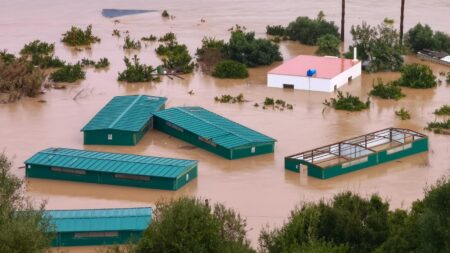
The United States government has stepped forward with an announcement of $6 million in additional humanitarian aid for Cuba, coming at a time when the Caribbean island nation faces mounting challenges and the relationship between the two countries grows increasingly strained. This latest financial commitment represents a significant expansion of American assistance efforts, building upon an earlier $3 million disaster relief package. The newly announced aid is primarily designated for residents of Cuba’s eastern provinces, areas that bore the brunt of Hurricane Melissa’s devastating impact late last year. The assistance package includes essential supplies such as rice, beans, pasta, canned tuna, and solar lamps—items that address both immediate nutritional needs and the ongoing energy crisis plaguing the island. The distribution of these supplies will be managed through established humanitarian channels, specifically the Catholic Church and Caritas, organizations with deep roots in Cuban communities and the infrastructure necessary to reach vulnerable populations. U.S. Department of State Senior Official Jeremy Lewin emphasized that American embassy officials stationed in Cuba would be actively monitoring the distribution process to ensure the aid reaches its intended recipients rather than being diverted or politicized by Cuban government authorities.
Escalating War of Words Between Washington and Havana
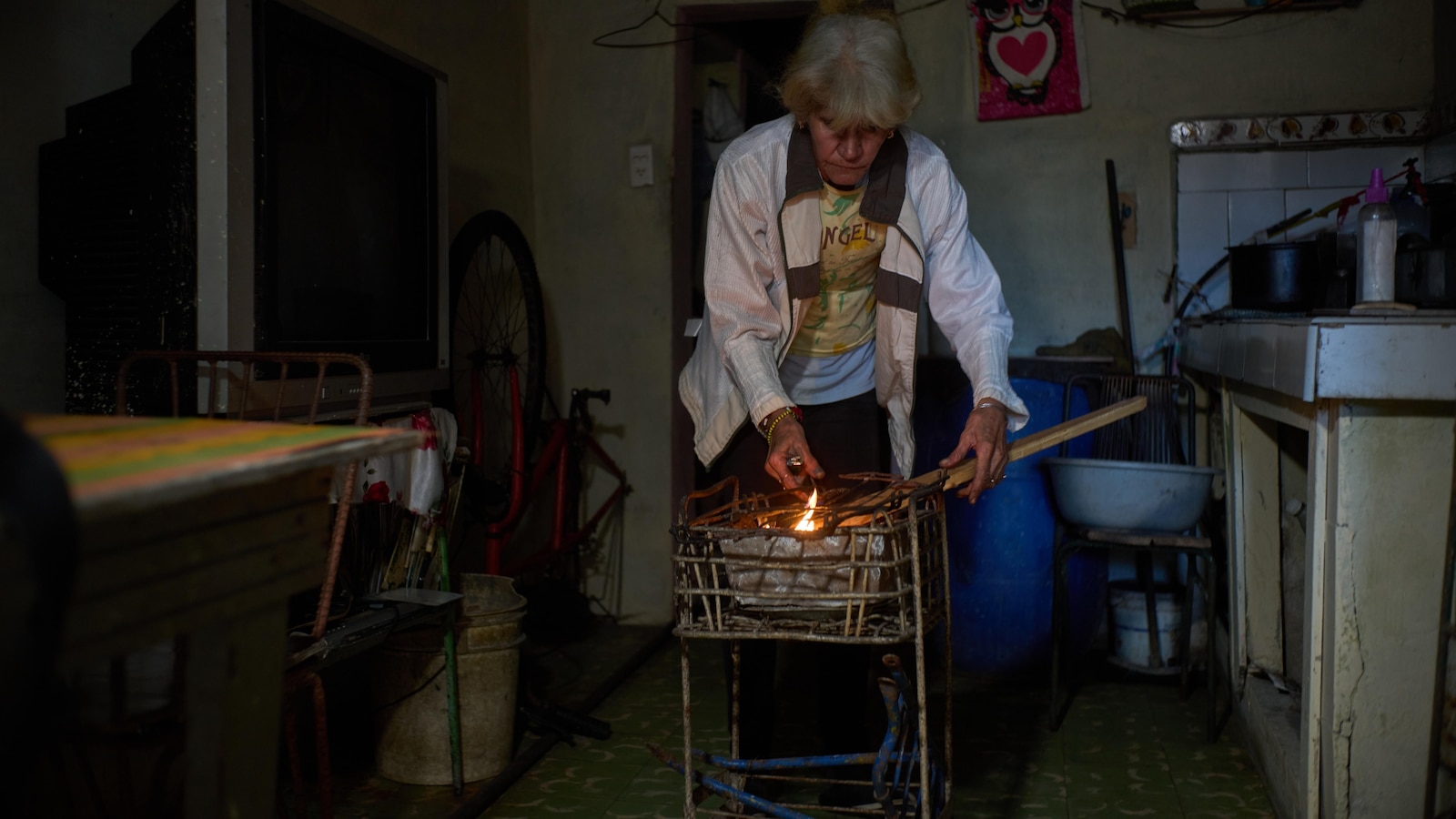
The aid announcement comes against a backdrop of sharply escalating rhetoric between U.S. and Cuban officials, with each side presenting starkly different narratives about the root causes of Cuba’s current humanitarian situation. Cuban President Miguel Díaz-Canel, speaking during a rare and carefully controlled press conference open only to select journalists—notably excluding The Associated Press—accused the United States of waging an “energy blockade” against his country. This characterization specifically referenced recent threats by U.S. President Donald Trump to impose tariffs on any nation that sells or provides oil to Cuba, a move that Díaz-Canel described as part of a broader “psychological war” against the island. The Cuban leader outlined how these energy restrictions ripple throughout Cuban society, affecting transportation networks, hospital operations, educational institutions, tourism—a critical economic sector—and food production capabilities. According to Cuban government figures, U.S. sanctions, which intensified during Trump’s second term in office, have cost the country more than $7.5 billion between March 2024 and February 2025, a staggering economic burden for a nation already struggling with severe infrastructure challenges and widespread shortages of basic goods.
Competing Narratives on Cuba’s Economic Struggles
The divergent explanations offered by American and Cuban officials for Cuba’s crisis reveal fundamentally different perspectives on governance, responsibility, and the impact of U.S. policy. Jeremy Lewin, whose mother was born in Havana, forcefully rejected the notion that disruptions in oil shipments from Venezuela—which occurred after U.S. actions against the South American nation and the arrest of its then-leader—bear responsibility for Cuba’s humanitarian situation. Instead, Lewin painted a picture of a government that has systematically misallocated resources for decades, claiming that Cuba’s leadership has “hoarded all of the resources for the few senile old men that run the country, for their henchmen, for the security apparatus.” He accused the Cuban government of “meddling abroad” and “colonizing Venezuela” rather than focusing on the welfare of ordinary Cubans. According to Lewin, the Cuban government possesses billions of dollars but chooses not to use these funds to purchase food for its citizens, suggesting that the shortages Cubans face result from deliberate policy choices rather than external pressure. He specifically dismissed claims that the halt of “illicit Venezuelan oil” aimed at enriching former Cuban President Raúl Castro should be blamed for empty store shelves, arguing that the government’s inability to provide basic necessities stems from internal failures rather than American sanctions.
Cuba’s Perspective on Sovereignty and Sanctions
During his two-hour address to selected reporters, President Díaz-Canel presented a contrasting view that emphasized external pressures rather than internal governance failures. He noted that Cuba has not received any oil shipments since the United States began what he termed a “naval blockade” of Venezuela in December, creating cascading problems that extend far beyond electricity generation to affect virtually every aspect of daily life in Cuba. The Cuban leader acknowledged the gravity of the situation facing his country, candidly admitting, “I know we are going to live through difficult times.” However, he called for collective resilience, telling his audience, “But we will overcome them together, with creative resilience.” Díaz-Canel recognized the weariness of the Cuban people, acknowledging their frustration with repeated calls for sacrifice: “I know people say, ‘Sacrifice, again?'” But he framed continued resistance as the only viable option, asking, “Well, if we don’t sacrifice, and if we don’t resist, what are we going to do? Are we going to give up?” The president promised to provide detailed information within a week regarding the island’s current situation and the government’s plan for confronting the challenges ahead, suggesting that difficult policy decisions may be forthcoming.
Conditional Openness to Dialogue
Despite the heated rhetoric and mutual recriminations, Díaz-Canel indicated that Cuba remains open to dialogue with the United States, though he attached significant conditions to any potential negotiations. The Cuban president stipulated that any talks must be based on respect for Cuba’s sovereignty and cannot address what his government considers “sensitive issues that could be perceived as interference in our internal affairs.” This formulation suggests that while Cuba may be willing to discuss certain aspects of the bilateral relationship, fundamental questions about the island’s political system, human rights record, or governance structure would remain off-limits. Díaz-Canel also sought to distinguish between the American government and the American people, stating, “Cubans do not hate the American people,” and emphasizing, “We are not a threat to the United States.” These comments appeared designed to appeal to American public opinion and possibly to create political space for future engagement, even as the official relationship between the two governments remains deeply contentious. The Cuban leader’s remarks suggest awareness that international perception matters and that Cuba’s isolation serves the island’s interests poorly, even as he maintains that American policy bears primary responsibility for current hardships.
The Human Cost and Future Prospects
The competing narratives and political posturing occur against the very real backdrop of ordinary Cubans struggling with severe blackouts, food shortages, and economic hardship. The humanitarian aid announced by the United States, while significant, represents only a fraction of what Cuban officials claim the sanctions have cost their economy. Jeremy Lewin suggested that additional American assistance might be forthcoming if “the Cuban government comes to its senses and is willing to allow the U.S. to provide more support,” emphasizing that “any government, its first responsibility is always to provide for its people.” This framing places the burden of change squarely on Cuban leadership while maintaining that the United States stands ready to help ordinary Cubans if permitted to do so effectively. The situation presents a complex humanitarian challenge where geopolitical considerations, historical grievances, questions of sovereignty, and competing ideological frameworks intersect with the immediate needs of millions of people. As both governments dig into their respective positions—the United States insisting on governance changes and the Cuban government defending its sovereignty while blaming external pressure—the path forward remains unclear. What is certain is that the Cuban people face difficult months ahead, caught between an economic crisis that shows no signs of abating and a political standoff that appears equally intractable, with their immediate welfare depending on both the effectiveness of humanitarian aid distribution and potential shifts in the policies of either Havana or Washington.