

Gold Prices Tumble as US-Iran Tensions Reshape Market Dynamics
A Challenging Day for the Yellow Metal
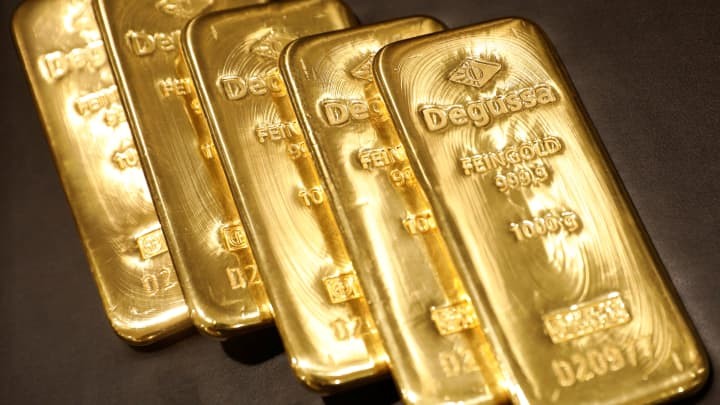
Gold, long considered a reliable safe haven during times of uncertainty, experienced a significant downturn on May 11 that caught the attention of investors worldwide. Spot prices for the precious metal declined by 0.6%, settling at $4,684.32 per ounce, while US gold futures took an even harder hit, falling 0.8% to reach $4,692.70. This wasn’t just another routine market fluctuation—it represented a notable shift in how global events are influencing precious metal valuations. The primary trigger behind this decline was President Trump’s decision to reject Iran’s response to a United States peace proposal, effectively ending any realistic hopes for a diplomatic resolution to a conflict that has now dragged on for ten weeks. This rejection sent shockwaves through multiple markets simultaneously, creating a domino effect that ultimately worked against gold’s traditional position as the go-to asset during troubled times. When the diplomatic door slammed shut, crude oil prices immediately began climbing as traders anticipated potential supply disruptions, inflation concerns resurged with renewed vigor, and the US dollar gained strength—all factors that combined to create perfect storm conditions pushing gold prices downward.
Understanding Gold’s Diminished Safe-Haven Appeal
To fully grasp why gold lost ground despite escalating international tensions, it’s essential to understand the complex interplay of economic forces at work. The mechanism driving this counterintuitive movement is actually quite straightforward when broken down step by step. When negotiations between the United States and Iran collapse without progress, oil market traders immediately begin factoring in the increased risk of supply disruptions, particularly around the Strait of Hormuz. This narrow waterway serves as one of the world’s most critical energy chokepoints, with a massive percentage of global crude oil shipments passing through its waters every single day. Any threat to the free flow of oil through this strategic passage translates directly into higher oil prices across international markets. These elevated oil prices don’t exist in isolation—they feed directly into broader inflation expectations as energy costs ripple through every sector of the economy, from transportation to manufacturing to consumer goods.
When inflation expectations begin climbing, the entire calculus around interest rates shifts dramatically. The Federal Reserve, tasked with maintaining price stability and promoting economic growth, finds its hands tied when energy costs are actively pushing consumer prices higher. In such an environment, the central bank simply cannot justify cutting interest rates, and may even need to consider keeping them elevated for an extended period or raising them further. This is where gold encounters its fundamental problem. Unlike bonds, savings accounts, or other interest-bearing financial instruments, gold generates no yield for its holders. It simply sits there, maintaining its value but producing no income. When interest rates remain high or continue climbing, investors naturally gravitate toward assets that actually pay them for holding onto their capital. Meanwhile, the strengthening of the US dollar creates an additional headwind for gold. Since gold is priced in dollars on international markets, a stronger dollar makes the precious metal more expensive for buyers using other currencies, effectively reducing demand from international purchasers who collectively represent a substantial portion of global gold consumption.
The Ongoing Conflict and Its Global Implications
The current standoff between the United States and Iran has now persisted for ten full weeks, and its influence extends far beyond the immediate region where tensions are concentrated. The ripple effects have touched virtually every corner of global energy markets, creating uncertainty and volatility that traders and investors must navigate daily. The Strait of Hormuz continues to loom as the central pressure point in this geopolitical chess match—a narrow passage where regional politics intersect with the fundamental infrastructure of global commerce. Any military escalation or significant incident near this critical waterway doesn’t merely affect diplomatic relations between nations or alter the security landscape of the Middle East. It threatens the very plumbing of global oil supply, the network of tankers and shipping routes that keep the world economy functioning. President Trump’s decision to reject Iran’s peace proposal effectively removed the most obvious and immediately available pathway to de-escalation, leaving markets to contemplate scenarios ranging from continued stalemate to potentially dangerous confrontation.
What Investors Should Expect Moving Forward
Market analysts and precious metals specialists are currently projecting that spot gold will likely trade within a range between $4,400 and $4,800 per ounce as long as geopolitical conditions remain unresolved and fluid. This projection represents a relatively wide trading band, particularly compared to the tighter ranges often seen during periods of greater certainty. This breadth reflects genuine uncertainty among experts about which competing forces will ultimately dominate price action in the coming weeks and months. The lower boundary of that projected range—around $4,400—becomes more probable under certain conditions. If crude oil prices continue their upward trajectory, if the US dollar maintains or extends its recent strengthening, and if Federal Reserve officials signal through their communications that interest rate cuts are firmly off the table for an extended period, downward pressure on gold could intensify. These factors would reinforce the yield disadvantage that gold faces relative to interest-bearing alternatives and would continue making the metal more expensive for the crucial international buyer segment.
Conversely, the upper end of the projected range—approaching $4,800—becomes more plausible under different circumstances. If the US-Iran conflict escalates significantly, particularly if there’s a military incident or serious disruption to oil shipments through the Strait of Hormuz, pure fear-driven demand for gold could reassert itself with considerable force. In scenarios where investors perceive immediate threats to stability or worry about worst-case geopolitical outcomes, gold’s traditional role as a crisis hedge could overwhelm the macro-economic headwinds currently working against it. History has repeatedly shown that when genuine fear grips markets—when investors feel that paper assets and traditional investments may be at serious risk—physical gold often experiences dramatic demand surges regardless of interest rate environments or currency valuations.
Navigating Uncertainty in Precious Metals Markets
For investors trying to make sense of current conditions and position themselves appropriately, the gold market presents genuine challenges that require careful thought and analysis. The traditional narratives about gold—that it always rises during geopolitical tensions, that it serves as reliable insurance against uncertainty—are being complicated by powerful competing forces in today’s economic environment. The interplay between energy prices, inflation expectations, interest rate policies, and currency movements creates a multidimensional puzzle where simple rules of thumb may not apply. Investors with existing gold positions may find themselves wrestling with the question of whether current prices represent an opportunity to add to holdings before a potential surge, or whether the fundamental headwinds suggest trimming exposure. Those considering new positions face similar dilemmas, needing to weigh the possibility of further near-term weakness against the potential for dramatic upside if geopolitical conditions deteriorate significantly.
The coming weeks will likely provide greater clarity as several key factors evolve. Developments in the US-Iran situation will obviously be crucial—any movement toward renewed dialogue could ease oil market tensions and potentially pressure gold lower, while escalation could trigger the fear-driven buying that pushes prices toward the upper end of analysts’ projected range. Federal Reserve communications will also be critical, particularly any signals about how policymakers are viewing the balance between inflation risks and economic growth concerns. The dollar’s trajectory will influence how international buyers approach the market, potentially opening or closing significant sources of demand. For those invested in gold or considering positions, maintaining flexibility and avoiding overly rigid assumptions may be the wisest approach in an environment where multiple powerful forces are pulling prices in different directions simultaneously. The precious metals market is reminding everyone that even traditional safe havens can face complex challenges when economic cross-currents intensify.