

The Taiwan Question: A High-Stakes Diplomatic Battle Between America and China
The Central Issue in U.S.-China Relations
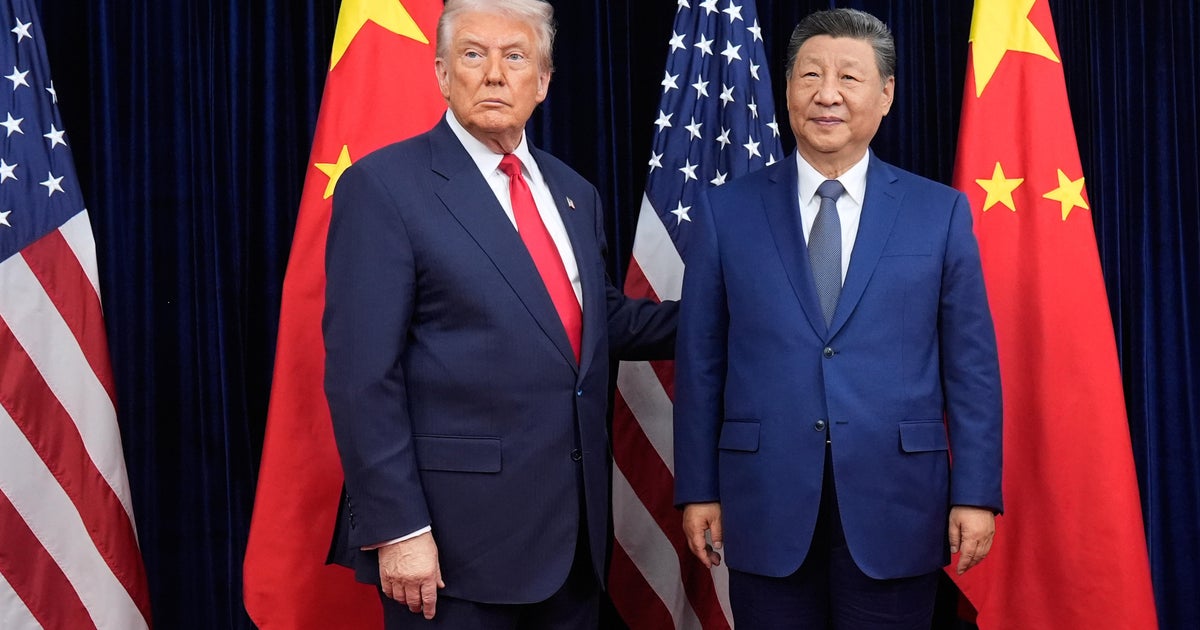
When President Trump’s Air Force One touches down in Beijing for a crucial summit with President Xi Jinping, the conversation will inevitably center on Taiwan—a small island democracy in the western Pacific that has become the most contentious issue between the world’s two largest economies. While global crises like the Iran conflict and concerns about the Strait of Hormuz shipping lanes deserve attention, Xi’s primary focus remains firmly fixed on Taiwan, the self-governing island that China has long claimed as its own territory. This isn’t just another diplomatic talking point; Taiwan represents the single most important and potentially explosive issue in the U.S.-Chinese relationship, carrying implications that could reshape global geopolitics, disrupt the world economy, and potentially trigger military conflict between nuclear powers.
For decades, America has walked a diplomatic tightrope regarding Taiwan, maintaining what policymakers call “strategic ambiguity.” This carefully crafted position means the United States has deliberately refused to state clearly whether it would intervene militarily if China attempted to take Taiwan by force. Yet actions often speak louder than words—the U.S. has sold more than $50 billion worth of military equipment to Taiwan over the years, enabling the island to develop defensive capabilities specifically designed to counter a potential Chinese invasion. This approach has allowed Taiwan to build what military strategists call “asymmetric capabilities”—specialized defenses that don’t try to match China’s massive military might head-to-head but instead aim to make any invasion so costly and complicated that Beijing thinks twice before attempting it.
A Diplomatic Shift That Has Taiwan Worried
The stakes have grown even higher recently. Late last year, the United States approved a record-breaking $11 billion arms package for Taiwan, a move that predictably infuriated Chinese officials. But there’s an even larger deal now sitting on President Trump’s desk awaiting his signature—a massive $14 billion arms package that would represent the largest single military sale to Taiwan in history. What has truly alarmed officials in Taipei, however, isn’t the size of these arms deals but rather Trump’s unprecedented statement that he would discuss this arms package directly with Xi Jinping during their summit. This represents a dramatic departure from standard American policy—no previous U.S. president has ever suggested that Taiwan’s defense needs might be negotiated with the very country threatening the island. This concession contradicts commitments made by President Ronald Reagan in 1982, when he assured Taiwan that arms sales decisions would be made independently based on Taiwan’s defensive requirements, not as bargaining chips with Beijing.
The temperature in Taiwan’s capital has risen considerably following Trump’s comments, with government officials expressing genuine concern that the president might be willing to sacrifice Taiwan’s interests to secure concessions from China on other issues. China’s specific request is telling: Beijing wants Washington to change its official language on Taiwan from saying the U.S. “does not support” Taiwan’s independence to stating that America “opposes” Taiwanese independence. To outsiders, this might seem like meaningless diplomatic hairsplitting—after all, not supporting something sounds similar to opposing it. But in the precise world of international diplomacy, where every word is carefully chosen and analyzed, this shift would signal a fundamental change in America’s position. It would move the U.S. from a neutral stance to actively siding with China’s position, potentially undermining Taiwan’s bargaining position and international standing.
Taiwan’s Strategic Importance Goes Beyond Politics
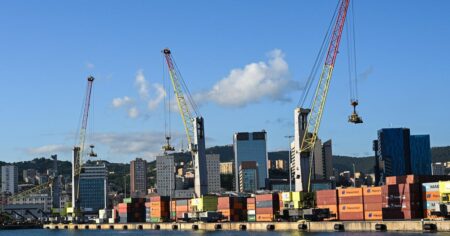
Despite these concerns, Taiwan’s deputy foreign minister, Chen Ming-chi, projects confidence in the enduring U.S.-Taiwan partnership. In a comprehensive interview with CBS News, Chen emphasized that he doesn’t believe America would abandon Taiwan, describing the United States as a “dependable ally” and stressing that the relationship delivers mutual benefits that make abandonment unthinkable. His confidence isn’t based on sentiment or historical friendship alone—Taiwan occupies a unique and irreplaceable position in both global geopolitics and the world economy. The island sits in a strategic location along crucial Pacific shipping lanes, but more importantly, Taiwan dominates the production of advanced semiconductors, the tiny computer chips that power everything from smartphones to artificial intelligence systems to advanced military equipment. An astounding 90% of the world’s high-end semiconductors are manufactured in Taiwan, making the island essentially irreplaceable in the global technology supply chain.
“The U.S. can count on us as much as we can count on the U.S.,” Chen explained. “Do we believe in the U.S. commitment? Yes. They are our reliable partner. Probably the most reliable partner.” This interdependence creates what strategists call “mutual assured necessity”—just as Taiwan needs American military support for its survival, America needs Taiwan’s semiconductor production to maintain its technological edge and economic competitiveness. Any disruption to Taiwan’s semiconductor industry, whether from Chinese invasion, blockade, or political absorption, would send shockwaves through the global economy, affecting everything from car manufacturing to consumer electronics to defense systems. This gives Taiwan leverage in the relationship and provides America with powerful incentives to maintain its commitment to the island’s security.
China’s Timeline and Taiwan’s Democratic Identity
President Xi Jinping has made no secret of his intentions, declaring that reunification of Taiwan with mainland China is “unstoppable” and proposing the “one country, two systems” model—the same arrangement China uses in Hong Kong and Macau, where these territories maintain some autonomy while ultimately answering to Beijing. Xi has pointedly refused to rule out taking Taiwan by force if peaceful reunification proves impossible. China has intensified its military pressure on Taiwan, conducting increasingly aggressive operations in the South China Sea and East China Sea, building up its military capabilities, and conducting daily exercises that simulate potential attacks on the island. Xi previously ordered his military to be prepared to invade Taiwan by 2027, a deadline that sent chills through defense analysts worldwide. However, a March U.S. intelligence assessment concluded that China likely won’t attempt an invasion in the coming year, possibly because recent large-scale purges of China’s military leadership have disrupted planning and preparation.
Dr. Liang-Chih Evans Chen, a military analyst at Taiwan’s Institute for National Defence and Security Research, believes these purges have set back Xi’s timeline. “We won’t face the problem of the situation now, but we might face the problem in a few years,” he explained. “I believe the threat remains.” This provides Taiwan with a window of opportunity to strengthen its defenses and solidify international support, but the respite may be temporary. Meanwhile, Deputy Foreign Minister Chen emphasized that the vast majority of Taiwan’s 24 million citizens have no interest in reunification with China under any circumstances. What the Taiwanese people want, he said, is continued peace, stability, and the preservation of their democratic way of life.
Why Taiwanese People Reject Reunification
Taiwan’s rejection of Chinese control is rooted in lived experience and cherished freedoms. “Since democratization we have enjoyed the freedom of speech, of democracy, a diversified society,” Chen explained. “We’ve been through an authoritarian past. We see democracy is something we achieved. Taiwanese people cherish that very much. So we will never accept the one country, two systems.” Taiwan’s transformation from authoritarian rule to vibrant democracy represents one of Asia’s great success stories. Having experienced both systems, the Taiwanese population overwhelmingly prefers their current democratic government to any arrangement under Chinese Communist Party control. The contrast with Hong Kong has only strengthened this conviction—China’s brutal crackdown on Hong Kong’s mass democracy protests in 2019 provided a stark preview of what “one country, two systems” really means in practice.
“What happened in Hong Kong was not particularly convincing to Taiwanese people,” Chen noted with diplomatic understatement. “Those people who want to speak up got brutally repressed. The Communist Party is not going to allow freedom of speech, human rights and societal diversity.” The world watched as China systematically dismantled Hong Kong’s freedoms, arrested pro-democracy activists, imposed a sweeping national security law, and effectively ended the territory’s autonomy decades before the agreed-upon timeline. For Taiwanese observers, Hong Kong’s fate demolished any remaining credibility of Beijing’s promises about respecting local autonomy under Chinese sovereignty. Chen made a fundamental point that challenges China’s entire claim to Taiwan: “The people of Taiwan have not lived one single day under Chinese Communist Party rule. How come we are part of them?” This question cuts to the heart of the dispute—Taiwan has developed its own distinct identity, political system, and way of life completely separate from the People’s Republic of China, raising the question of why geographic proximity should determine political sovereignty against the will of Taiwan’s population.