



Ripple’s Landmark Partnership: A Sign of Blockchain’s Growing Institutional Appeal
Ripple President Celebrates Strategic Win with Major UK Wealth Manager
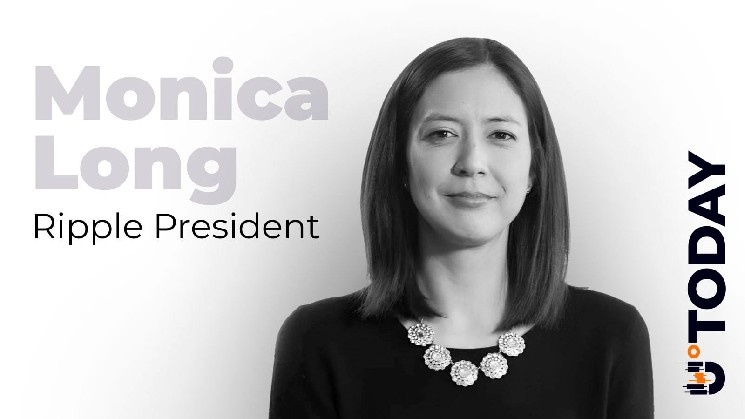
Monica Long, who serves as president of Ripple, the San Francisco-based blockchain company, recently took to social media to celebrate what she characterized as a significant milestone for the company and the broader cryptocurrency industry. Following her participation in XRP Community Day and its associated online discussions on the social media platform X, Long expressed enthusiasm about a groundbreaking partnership between Ripple and Aviva Investors, one of the United Kingdom’s largest and most respected wealth management firms. This collaboration marks a pivotal moment as Aviva Investors has made the decision to move its funds onto the XRP Ledger (XRPL), representing a substantial vote of confidence in blockchain technology from a traditional financial powerhouse. Long’s announcement wasn’t just about celebrating this single achievement; she used the opportunity to paint a broader picture of where she believes the cryptocurrency and blockchain industry is headed in the coming months, making bold predictions about institutional adoption that could reshape how we think about digital assets and their role in mainstream finance.
A Bold Prediction: Institutional Adoption at Scale in 2026
In her recent tweet, Monica Long didn’t hold back in expressing her optimism about the progress Ripple has made in positioning the XRP Ledger as the preferred blockchain solution for institutional decentralized finance (DeFi). Her excitement was palpable as she discussed seeing one of Britain’s most prominent wealth managers take the significant step of moving its funds onto the XRPL infrastructure. But Long’s vision extends far beyond this single partnership. She made a striking prediction that 2026 will be the year when institutional adoption of blockchain technology happens “at scale.” This isn’t just corporate optimism or marketing speak; it’s a forecast based on observable trends in how financial institutions are increasingly warming up to blockchain technology. Long’s statement suggests that what we’re seeing with Aviva Investors is merely the beginning of a much larger wave of institutional adoption. Financial institutions worldwide, which have historically been cautious and conservative in their approach to new technologies, appear to be reaching a tipping point where the benefits of blockchain – including transparency, efficiency, and reduced costs – are becoming too significant to ignore. Long’s prediction implies that 2026 could be remembered as the year when blockchain technology truly went mainstream in the institutional financial world, moving from experimental pilot programs to core operational infrastructure.
Understanding the Aviva Investors Partnership
Aviva Investors operates as the global fund management subsidiary of Aviva Plc, one of the most established names in the insurance and wealth management sectors. Two days before Long’s celebratory tweet, Ripple made an official announcement on its website detailing the strategic partnership with this financial technology powerhouse. Aviva Investors, which already provides cryptocurrency-related solutions for business clients, has now decided to take its blockchain engagement to the next level by partnering with Ripple to tokenize its traditional fund structures. This collaboration represents more than just another business deal; it’s a fundamental shift in how a major financial institution approaches asset management. Through this partnership, Ripple will provide the technological support and infrastructure necessary for Aviva Investors to transfer conventional financial assets – assets with real-world utility and value – onto the XRP Ledger. This marks a particularly significant achievement for Ripple as it represents the company’s first cooperation with this type of financial institution in the European market. Previously, Ripple’s partnerships and operations had been concentrated primarily in the United States and various Asian markets, so this European expansion demonstrates the company’s growing global footprint and its ability to work with diverse regulatory environments and financial ecosystems across different continents.
The Technical Foundation: Why XRPL Appeals to Institutions
The planned collaboration between Ripple and Aviva Investors will unfold throughout 2026, with the specific goal of moving tokenized funds onto the XRP Ledger. But what makes XRPL particularly attractive to a conservative, established financial institution like Aviva Investors? The answer lies in the ledger’s robust feature set and proven track record. The XRP Ledger offers a comprehensive suite of capabilities that are essential for institutional users, including built-in compliance features that help organizations meet regulatory requirements – a critical consideration for any wealth manager handling client assets. The XRPL’s credentials are impressive by any measure: since its launch in 2012, the ledger has successfully processed over four billion transactions, demonstrating both its reliability and scalability. Currently, the network operates more than seven million active wallets and is supported by 120 validators distributed around the world, creating a decentralized infrastructure that doesn’t depend on any single point of control or failure. This combination of longevity, transaction volume, active usage, and decentralized validation creates a level of institutional confidence that newer blockchain platforms simply cannot match. For a wealth manager like Aviva Investors, these aren’t just impressive statistics – they’re evidence of operational stability and technological maturity that makes the decision to move real client assets onto the blockchain less risky and more justifiable to stakeholders and regulators.
Beyond Aviva: A Broader Industry Trend Toward Tokenization
According to Monica Long, the partnership with Aviva Investors is just the opening act in what she expects to be a much larger show. Ripple anticipates that many more financial institutions will follow Aviva’s lead throughout 2026, bringing their operations online and tokenizing their assets through the XRPL and other blockchain platforms. This expectation isn’t based solely on wishful thinking; it’s supported by concrete actions Ripple has taken to make such transitions easier for institutions. One significant development is Ripple’s recent launch of Token Escrow functionality on the XRP Ledger. In a recent announcement, Ripple explained that this new feature extends the native escrow functionality – which was previously limited to XRP, the ledger’s native cryptocurrency – to all Trustline-based tokens (also known as IOUs) and Multi-Purpose Tokens (MPTs). This technical enhancement might sound arcane to those outside the blockchain world, but its implications are profound. Escrow functionality allows parties to hold assets in a secure, programmable way that releases them only when certain conditions are met, creating trust in transactions between parties who might not otherwise trust each other. By extending this capability to a wider range of token types, Ripple has essentially created infrastructure that makes it easier for traditional financial institutions to replicate their existing business processes on blockchain technology. This removes one of the significant barriers to adoption – the concern that moving to blockchain would require completely redesigning how financial products work.
The Bigger Picture: What Institutional Adoption Means for Crypto
The significance of Ripple’s partnership with Aviva Investors and Monica Long’s predictions about institutional adoption at scale extends far beyond the fortunes of any single company or blockchain platform. What we’re witnessing is potentially a fundamental shift in how the cryptocurrency and blockchain industry relates to traditional finance. For years, the crypto space has been characterized by a degree of separation from mainstream financial institutions, with digital assets often positioned as alternatives to, or even replacements for, traditional financial systems. However, what the Aviva partnership demonstrates is a different path forward – one where blockchain technology becomes integrated into existing financial infrastructure rather than replacing it entirely. When major wealth managers begin moving real client funds onto blockchain platforms, it validates the technology in a way that no amount of venture capital investment or retail enthusiasm can match. It suggests that blockchain has matured past its experimental phase and is ready to handle the serious, regulated, compliance-heavy work of managing institutional and client wealth. For the broader cryptocurrency industry, this kind of institutional validation could be transformative. It may lead to increased regulatory clarity as governments see that major regulated entities are using blockchain technology, potentially resulting in more thoughtful and supportive regulatory frameworks. It could also drive significant technological improvements as institutional users demand features, security standards, and performance levels that exceed what currently exists. Perhaps most importantly, it could finally bridge the gap between the cryptocurrency enthusiast community and mainstream investors, bringing blockchain technology’s benefits to a much wider audience who might have previously dismissed it as too speculative or risky. If Monica Long’s prediction proves accurate and 2026 truly becomes the year of institutional adoption at scale, we may look back on the Aviva Investors partnership as the moment when cryptocurrency definitively entered the mainstream financial world.