


The CLARITY Act: A Potential Game-Changer for America’s Crypto Future
Galaxy Digital CEO Predicts May Timeline for Landmark Legislation
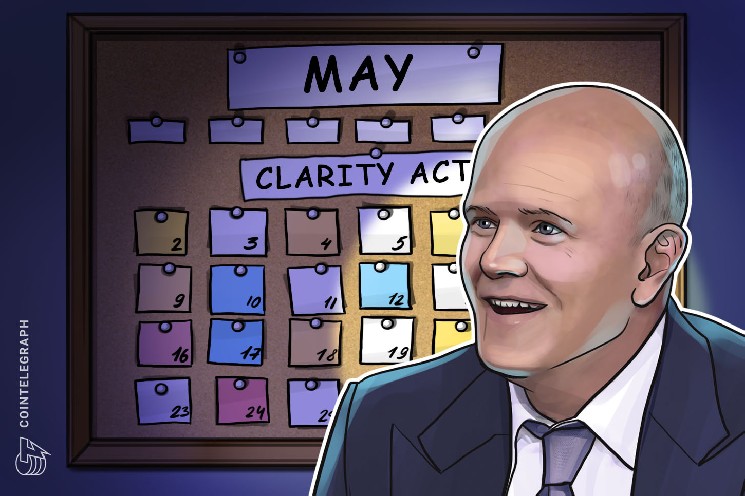
The cryptocurrency industry is holding its breath as the US CLARITY Act inches closer to becoming law, with Galaxy Digital CEO Mike Novogratz offering a cautiously optimistic prediction about its passage. In a recent podcast conversation with SkyBridge Capital founder Anthony Scaramucci, Novogratz suggested that this landmark legislation could reach its final stages as early as May 2025, with President Trump potentially signing it into law by June. This legislation represents a turning point for an industry that has struggled with regulatory uncertainty for years, and its passage would mark a significant shift in how the United States approaches cryptocurrency regulation. Despite a disappointing week where the Senate Banking Committee failed to schedule the expected markup hearing, Novogratz remains confident that the bipartisan nature of this legislation will ultimately push it across the finish line. “It’s wildly important for it to get done for both Democrats and Republicans,” he emphasized, underscoring the rare political consensus surrounding the need for clearer crypto regulations.
Opening America’s Economy to Billions of People Worldwide
The implications of the CLARITY Act extend far beyond the borders of the United States, with Novogratz painting a compelling vision of how this legislation could democratize access to American financial products for billions of people around the globe. According to his analysis, approximately five and a half billion of the world’s eight and a half billion people currently lack access to US financial products—a staggering gap that cryptocurrency and blockchain technology could help bridge. Novogratz described a future where a simple smartphone equipped with a crypto wallet becomes the gateway for young people in countries like Bhutan, Botswana, Bolivia, and Paraguay to participate in the American economy. This isn’t just about expanding markets; it’s about financial inclusion on a scale never before possible. The legislation would enable the tokenization of major American institutions like SpaceX and Google, allowing people worldwide to invest in and benefit from America’s economic success. This represents a fundamental reimagining of how global finance could work, potentially bringing financial opportunities to populations that have historically been excluded from traditional investment markets due to geographic, economic, or regulatory barriers.
A Rocky Road to Regulatory Clarity
The journey toward passing the CLARITY Act has been anything but smooth, despite the legislation’s bipartisan support when it passed the House in July 2025. The crypto industry had high hopes for early passage, but the reality of Washington politics has introduced significant delays and complications. At the heart of the current holdup lies a fundamental disagreement between traditional banking interests and the emerging crypto industry, particularly regarding stablecoin yields and whether they might undermine the competitive position of established banks. This tension represents a broader struggle between innovation and incumbency, between the promise of new technology and the protection of existing institutions. The previous Biden administration’s unfavorable regulatory environment had already pushed numerous crypto firms to relocate outside the United States, making the passage of clear, workable regulations all the more urgent for the industry’s American presence. Many companies that believed in cryptocurrency’s transformative potential found themselves forced to choose between operating in regulatory limbo or moving to more welcoming jurisdictions abroad. The CLARITY Act represents an opportunity to reverse this trend and reestablish America as a leader in financial innovation rather than a cautionary tale of regulatory overreach.
A Closing Window and Rising Stakes
The urgency surrounding the CLARITY Act’s passage has intensified as key political figures warn about narrowing timeframes. US Senator Cynthia Lummis issued a stark warning on April 10, declaring that this might be America’s last chance to pass comprehensive crypto legislation until at least 2030. “We can’t afford to surrender America’s financial future,” she stated emphatically, highlighting the generational stakes involved in this decision. The Senator’s warning reflects the complex political calendar and the reality that legislative windows for major reform can close quickly, especially with midterm elections and changing political dynamics constantly reshaping the congressional landscape. If the legislation doesn’t pass during this current window of opportunity, the crypto industry could face years of continued uncertainty, potentially ceding even more ground to international competitors in countries like Singapore, Switzerland, and the United Arab Emirates, which have established clearer regulatory frameworks. The missed markup hearing deadline that disappointed industry observers served as a reminder that even seemingly straightforward legislation can encounter unexpected delays in the complicated machinery of congressional procedure, where committee schedules, inter-industry disputes, and political considerations can derail even widely supported initiatives.
Industry Skepticism and Realistic Expectations
Not everyone in the cryptocurrency world shares Novogratz’s optimism about the timeline, with some prominent figures expressing more cautious expectations about the CLARITY Act’s chances of becoming law this year. Alex Thorn, Galaxy Digital’s head of firmwide research, offered a more measured assessment, putting the odds of passage during 2026 at only 50%. Thorn noted that while the Senate Banking, Housing, and Urban Affairs Committee was expected to announce a markup hearing during the week in question, that announcement never materialized, adding to concerns about momentum. His analysis suggested that if the markup hearing slips past mid-May, the odds of passage would drop sharply—a sobering reality check for an industry that has experienced its share of false starts and disappointed expectations. This skepticism reflects hard-won experience with the unpredictable nature of legislative processes, where even bills with strong support can founder due to procedural obstacles, political calculations, or last-minute objections from affected parties. The crypto industry has learned to temper its enthusiasm after previous legislative efforts that seemed promising but ultimately stalled or were significantly watered down during the negotiation process.
The Broader Implications for Innovation and Competition
Beyond the immediate concerns of crypto companies and investors, the CLARITY Act represents a critical test of America’s ability to adapt its regulatory framework to technological innovation in a timely manner. The legislation has become a symbol of whether the United States will embrace the blockchain revolution or allow other countries to seize leadership in this transformative technology. The exodus of crypto firms during the previous administration demonstrated the real costs of regulatory uncertainty—not just in lost tax revenue and jobs, but in the innovative capacity and entrepreneurial energy that relocates along with those companies. For institutions like SpaceX and Google, the ability to tokenize and offer fractional ownership to a global audience could unlock new sources of capital and create unprecedented levels of investor participation. For everyday Americans and billions of people worldwide, clearer regulations could mean safer, more accessible ways to participate in this emerging asset class. As the May timeline approaches and industry watchers analyze every congressional move, the fundamental question remains: Will America choose to lead in defining how cryptocurrency integrates with traditional finance, or will it continue to cede that role to more nimble competitors? The answer will shape not just the crypto industry, but the broader landscape of financial innovation and America’s position in the global economy for decades to come.