


When Innocence Vanished: The Tragic Tale of Three Missing Girls and Four Decades of Questions
A Summer Night That Changed Everything
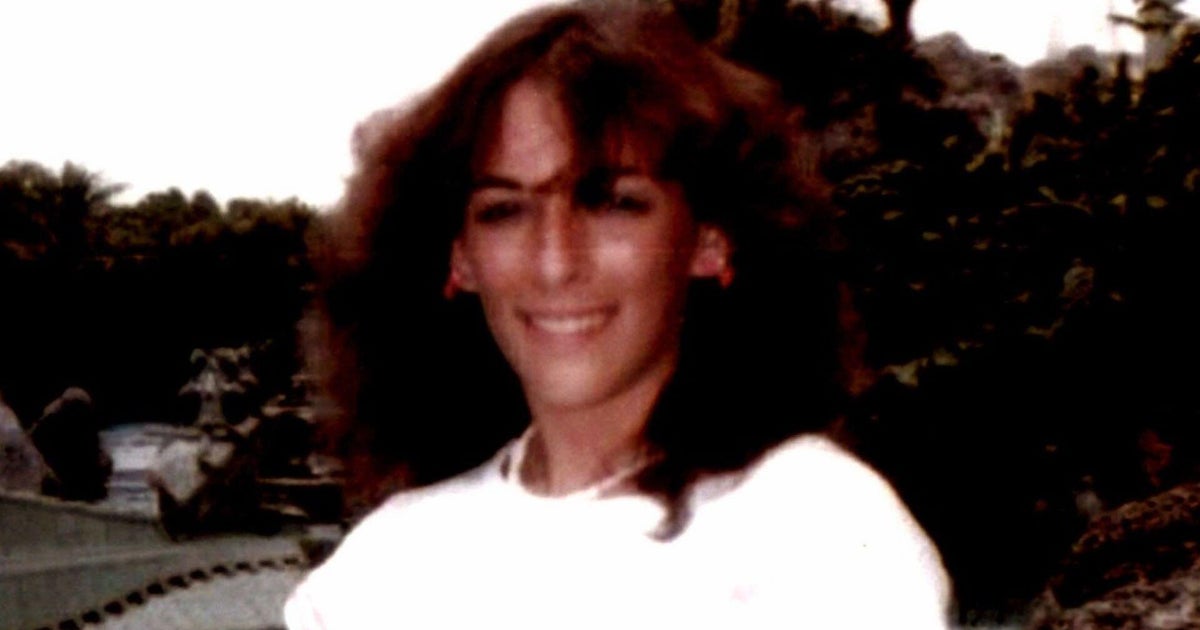
It was an ordinary evening in June 1984 when fifteen-year-old Kelly Morrissey walked out her front door after dinner, promising her mother she’d be home by 9:30. In the bustling household she shared with seven siblings in Massapequa, Long Island, comings and goings were constant—doors opening and closing, voices calling out “I’m home.” Her mother, Iris Olmstead, thought nothing of it when she heard someone in the kitchen that night. It wasn’t until the next morning, when Kelly didn’t come down for school and her bed remained unmade, that the horrifying reality set in: Kelly had never come home. When Iris called the police in a panic, she received a response that seems unthinkable today—they told her they couldn’t take a report until Kelly had been missing for 24 hours. In 1984, this was standard procedure, and runaways were common. But Kelly’s childhood friend Vikki Papagno knew immediately something was terribly wrong. “At 15 years old, she wouldn’t know how to do life unless somebody was there to help her,” she recalled. “I knew it was serious from day one.”
Five months later, the nightmare deepened when Kelly’s friend, sixteen-year-old Theresa Fusco, disappeared after leaving her job at Hot Skates, the popular roller rink where local teenagers gathered. When Theresa failed to show up for a planned sleepover with her best friend Lisa Johnson, concern slowly mounted. By Monday morning, when Theresa wasn’t ready for their daily walk to school, Lisa knew something was deeply wrong. Nearly a month passed before Theresa’s body was discovered near the Long Island Rail Road tracks, not far from Hot Skates—beaten, raped, strangled, and buried under leaves and wooden pallets. The discovery devastated the tight-knit community and shattered the sense of safety that had defined suburban Long Island life. As Lisa Johnson remembers, “I never heard the word homicide” before detectives arrived at her house. At sixteen, learning her best friend had been murdered was “life shattering.”
Growing Up in a Different Time
To understand how these tragedies unfolded requires understanding how different life was in 1984. Ronald Reagan was president, “Ghostbusters” and “Footloose” dominated movie theaters, and Madonna was climbing the charts. Steve Jobs had just introduced the revolutionary Macintosh computer, but teenagers like Kelly and Theresa lived in a world without cell phones, social media, or constant connectivity. When Vikki moved away from Kelly, they became pen pals, carefully choosing stationery and writing letters back and forth—their primary means of staying in touch. When Vikki visited, she’d sometimes hang out with Theresa too, and the three girls would write to each other. One letter from Theresa in 1982 captured the innocent concerns of teenage life: “Dear Vikki, Hi, what’s up? Nothing much here. When are you going to visit Kelly again? When you do, call me. Okay? How’s all the boys there? They cute?”
Hot Skates was the social center of their universe. “We would just go there and hang out with our friends and listen to music,” remembered Lisa Johnson, who became Theresa’s closest friend. The two girls were inseparable, buying the same clothes, wearing their makeup the same way, and confiding “literally everything” to each other. It was a time when kids roamed freely, when nobody gave safety a second thought. “You could walk absolutely anywhere and not be afraid of anything in the dark, during the day, alone, with friends,” Lisa recalled. This freedom, so normal then, would become unthinkable after what happened. Parents couldn’t track their children’s locations in real-time. Police couldn’t trace digital footprints. In 1984, trying to find someone who disappeared meant looking for actual footprints, and it was remarkably easy to vanish without a trace. This was the world Kelly Morrissey stepped into when she left her house that June evening, and it was the world Theresa Fusco walked through on her way home from Hot Skates five months later.
The Investigation and a Troubling Confession
As months passed with no sign of Kelly, Iris Olmstead lived in agony. “Everywhere I went, every child from the back looked like Kelly,” she remembered. “I’d stop to look to see if it was Kelly. It was horrible.” But when Theresa Fusco’s body was found, investigators took a fresh look at Kelly’s disappearance. Theresa’s father Thomas and brother John remember an enormous community search effort—”everyone and then some,” searching everywhere. The devastating discovery that they had unknowingly walked over the very spot where Theresa’s body lay hidden under pallets still haunts them. “I’m glad I didn’t find her,” John said. “That would’ve killed me.” The shock rippled far beyond Lynbrook. Anne Donnelly, now Nassau County’s District Attorney but then a college student who herself had hung out at Hot Skates as a kid, remembers how it “changed the way we saw the world back in the 80s, and not for the better.”
With very little physical evidence—no fingerprints, no murder weapon, and DNA testing not yet advanced enough to identify whose DNA was present—investigators focused on connections between the cases. They zeroed in on twenty-one-year-old landscaper John Kogut, who had briefly dated Kelly. He also knew Dennis Halstead, who had an apartment adjacent to where Kelly was last seen and where she reportedly hung out frequently. After Kogut took a polygraph test, police told him he’d failed (though he’d actually passed). What followed was a marathon interrogation—nearly twelve hours of questioning after Kogut had been awake for almost thirty hours. His denials eventually transformed into a detailed confession, videotaped at the District Attorney’s office. In chilling detail, Kogut described how he, Halstead, and Halstead’s friend John Restivo had picked up Theresa in a van, how she was raped twice, and how they decided she had to die because she threatened to tell. “I wrapped it around her neck twice and then I tightened it,” Kogut said on camera, demonstrating with his hands how he’d strangled Theresa with a rope.
Another Victim and a Case Built on Shifting Ground
On the very same day Kogut gave his videotaped confession, another young woman vanished. Nineteen-year-old Jackie Martarella didn’t show up for her shift at Burger King in nearby Oceanside. Her brother Martin knew immediately something was wrong—Jackie was dependable, prompt, someone who wouldn’t just not show up. She’d been walking the familiar route down Long Beach Road to work, saving money from her part-time job for a car while taking accounting classes. Her bedroom walls were covered with posters of teen heartthrobs like Leif Garrett; she loved dance, was particular about her clothes, and was “very girly,” as Martin recalled. Twenty-six agonizing days later, her body was discovered at a golf course in Woodmere—she’d been raped and strangled, her body left in the same manner as Theresa’s. The timing threw investigators’ theory into chaos. How could Kogut be the killer if he was in police custody when Jackie disappeared? The heightened fear in the community was palpable, as retired Detective Freddy Goldman remembered: “There’s somebody out there that’s going after young girls.”
Despite the questions raised by Jackie’s murder and the lack of evidence connecting the suspects to Kelly’s disappearance, prosecutors moved forward with charges in Theresa’s case. The key evidence included Kogut’s detailed confession, which seemed damning on its face, and two hairs belonging to Theresa that police said they’d recovered from John Restivo’s van. By February 1987, all three men—Kogut, Halstead, and Restivo—had been convicted and sentenced to over thirty years to life. Theresa’s father Thomas and the rest of her family tried to find closure, attending Parents of Murdered Children support groups and attempting to move forward. But that closure would prove illusory. In 2003, nearly nineteen years after Theresa’s murder, more sophisticated DNA testing became available, and it told a dramatically different story. The DNA evidence didn’t match Kogut, Halstead, or Restivo—it pointed to an entirely different, unknown male. All three convictions were overturned, and the men walked out of prison after seventeen years behind bars. Lisa Johnson was stunned: “We trusted the detectives. We trusted the police to do the right thing. How could they do this to us?”
A Confession Unravels and Justice Remains Elusive
Despite the DNA evidence clearing them, Nassau County District Attorney Denis Dillon decided to retry all three men, starting with Kogut. At the 2005 retrial, the videotaped confession remained the prosecution’s centerpiece, but Kogut’s defense attorney Paul Casteleiro argued it was coerced and misleading. What viewers didn’t see, he explained, was the coaching from off-camera. Kogut struggled with basic details—couldn’t remember names, asked for help, and showed signs of someone being fed information rather than recalling events. “It’s like a play,” Casteleiro said. Police had lied to Kogut about failing the polygraph, then convinced the vulnerable young man with a tenth-grade education and substance abuse problems that he must have blacked out and forgotten committing the murder. After being awake for nearly thirty hours and interrogated for twelve hours, “you want out, you give in,” Casteleiro explained. Kogut would later recant everything, insisting the confession was false.
The prosecution also had to contend with the unknown male’s DNA, so they suggested Theresa must have had a consensual sexual encounter before being abducted—a theory that outraged Lisa Johnson. When prosecutors argued Theresa “went from being a virgin to someone who had a quickie in a skating rink where she worked,” Lisa found it both preposterous and demeaning. “That’s not something she would have done ever,” she testified. “And I will go to my grave saying that Theresa was not having sex with anybody.” The physical evidence from the original trial also fell apart under scrutiny. Those two hairs from Theresa allegedly found in Restivo’s van showed signs of decomposition consistent only with hairs attached to a deceased person’s head—meaning they couldn’t have been left in the van while Theresa was alive. Casteleiro argued they were planted, taken from the medical examiner’s office. After three months of testimony, the judge delivered his verdict: he would not accept the confession, finding it not credible. John Kogut was acquitted. Days later, charges against Restivo and Halstead were dismissed. For Thomas and John Fusco, it felt like being “hit in the face with a friggin’ shovel.” Lisa Johnson felt “as if the life had been sucked out of me.” If these men didn’t kill Theresa, then who did?
Forty-One Years Later: DNA Finally Speaks
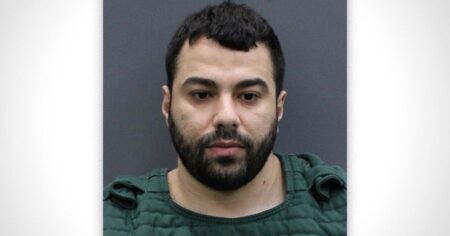
For two decades, Theresa Fusco’s case went cold while Kelly Morrissey and Jackie Martarella’s murders remained unsolved. Then, in October 2025—nearly forty-one years after Theresa’s death—Nassau County DA Anne Donnelly made a stunning announcement. Using genetic genealogy, the FBI had matched the unknown DNA to sixty-three-year-old Richard Bilodeau. Surveillance began, and a straw from a discarded smoothie cup confirmed the match. Bilodeau, who worked stocking shelves at Walmart, was arrested and charged with Theresa’s murder. At the time of the killing, he’d been twenty-three and living with his grandparents about a mile from both Hot Skates and the Fusco residence. He was a man who’d lived below the radar—never married, few close relationships beyond a brother, spending his time working and gambling on sports. Most remarkably, no one who knew Theresa recognized him or remembered him being associated with her in any way.
Bilodeau has denied the charges, and his defense attorneys, William Kephart and Daniel Russo, point out that the only evidence connecting him to the crime is DNA—the same DNA evidence the Nassau County DA’s office had once argued was meaningless when they pushed to retry Kogut, Halstead, and Restivo. “This DA’s office, this police department, in 1985 stood before a court and said these three men did this,” Russo noted. “So I don’t know how now in 2025, because you were able to put a name to that DNA, suddenly none of that matters anymore.” The painful irony isn’t lost on Paul Casteleiro, who fears the defense will try to shift blame back onto the three exonerated men. “What Nassau County did to them has no ending to it,” he said. While two of the men received $18 million settlements each, a jury found no wrongdoing in Kogut’s case and awarded him nothing. When asked if she would apologize to the three men if Bilodeau is convicted, DA Donnelly declined: “I don’t owe them an apology. I wasn’t even in the office at the time.” Casteleiro finds this stance “outrageous.”
As Richard Bilodeau awaits trial for Theresa Fusco’s murder, Kelly Morrissey and Jackie Martarella’s cases remain unsolved, leaving two families without answers. Martin Martarella still grieves for his sister who “didn’t have a bad bone in her body” and “missed out on just living a simple life.” Iris Olmstead looks at women in their fifties and thinks, “that could be Kelly.” When Bilodeau goes to trial, Thomas Fusco and Lisa Johnson will return to court, hoping for true closure after forty-one years. “Closure to me is that if this is the individual, then justice will be done,” Thomas says. “It’s just completely over. Beginning and end.” Lisa, once skeptical after the betrayal of the first convictions, now puts her faith in science: “I trust in the DNA this time. I am so hopeful that there will be a conviction and we can finally put this to rest.” After forty-one years—a lifetime of waiting, wondering, and grieving—three families still seek answers about what happened to their daughters on those ordinary evenings when they walked out into a world that seemed safe but wasn’t. Their stories stand as haunting reminders of both how far forensic science has come and how easily justice can go astray, leaving devastation in its wake for decades.