



Bitcoin ETFs Continue Strong Rally While Ethereum Takes a Breather: A Market Analysis
Bitcoin Maintains Momentum with Eight Consecutive Days of Growth
The cryptocurrency exchange-traded fund (ETF) market is showing interesting dynamics as we move deeper into 2025, with bitcoin continuing to demonstrate remarkable resilience while ethereum experiences its first setback in nearly two weeks. Bitcoin ETFs have now achieved an impressive eighth consecutive day of inflows, bringing in $223 million on Thursday, April 23rd. This sustained momentum represents more than just numbers on a spreadsheet—it signals growing institutional confidence in bitcoin as a legitimate investment vehicle. Over these eight days, bitcoin ETFs have collectively attracted over $2.1 billion in new investment capital, a figure that underscores the cryptocurrency’s enduring appeal among both institutional and retail investors.
Leading the charge once again was BlackRock’s IBIT (iShares Bitcoin Trust), which single-handedly accounted for $167.49 million of the day’s inflows. BlackRock’s dominance in this space continues to be a defining characteristic of the bitcoin ETF landscape, reflecting both the asset manager’s reputation and the trust investors place in established financial institutions when entering the cryptocurrency market. Ark & 21Shares’ ARKB followed with a respectable $71.22 million in inflows, demonstrating that multiple products are benefiting from the current bullish sentiment. Morgan Stanley’s MSBT contributed $9.36 million, while Grayscale’s Bitcoin Mini Trust added another $5.16 million to the mix. These figures paint a picture of broad-based demand across multiple providers, though BlackRock’s outsized influence remains undeniable.
However, the day wasn’t without its challenges for bitcoin ETFs. Several products experienced outflows that, while not enough to derail the overall positive trend, suggest that some investors are taking profits or repositioning their portfolios. Fidelity’s FBTC saw $16.93 million leave the fund, Bitwise’s BITB lost $7.60 million, and VanEck’s HODL recorded a $5.50 million outflow. These redemptions are a natural part of any market and don’t necessarily indicate weakening conviction in bitcoin itself—rather, they reflect the diverse strategies and timeframes of different investors. Some may be rebalancing, others taking profits after bitcoin’s recent gains, and still others might be rotating into different assets. Despite these outflows, the net positive flow remained substantial, and trading volume reached an impressive $2.36 billion for the day. The total net assets under management for bitcoin ETFs climbed to $102.79 billion, cementing these products as major players in both the cryptocurrency and broader financial markets.
Ethereum’s Ten-Day Winning Streak Comes to an End
After ten consecutive days of inflows that had market observers wondering if ethereum might be staging a comeback relative to bitcoin’s dominance, ether ETFs experienced their first day of net outflows, losing $75.94 million. This reversal doesn’t necessarily signal a crisis, but it does highlight the different dynamics at play between bitcoin and ethereum in the institutional investment space. Ethereum, despite being the second-largest cryptocurrency by market capitalization and the backbone of much of the decentralized finance (DeFi) ecosystem, has historically struggled to capture the same level of institutional enthusiasm as bitcoin when it comes to ETF products.
Fidelity’s FETH led the outflows with $51.30 million in redemptions, a significant figure that represented the bulk of the day’s losses for ethereum ETF products. BlackRock’s ETHA followed with $20.95 million in outflows, and Grayscale’s ETHE saw $10.90 million leave the fund. These numbers from major institutional players suggest that the selling pressure wasn’t coming from any single source but represented a broader reassessment of ethereum positions across multiple investor bases. Additional outflows from 21Shares’ TETH ($9.24 million) and Bitwise’s ETHW ($3.31 million) reinforced this trend, creating a challenging day for ethereum ETF providers.
That said, the picture wasn’t entirely bleak for ethereum. Grayscale’s Ether Mini Trust managed to attract $19.76 million in new investments, demonstrating that demand for ethereum exposure hasn’t disappeared—it’s just become more selective. This inflow, while insufficient to offset the broader selling pressure, suggests that certain products and price points continue to appeal to investors who believe in ethereum’s long-term value proposition. Trading volume for ethereum ETFs stood at $747.11 million, and net assets eased to $13.71 billion. While the single-day reversal is notable, it’s important to remember that it follows an extended period of sustained inflows, and one day’s data doesn’t make a trend. The question now is whether this represents a brief pause for profit-taking or the beginning of a more sustained period of outflows as investors rotate back toward bitcoin or other assets.
Alternative Cryptocurrencies Show Steady, Selective Growth
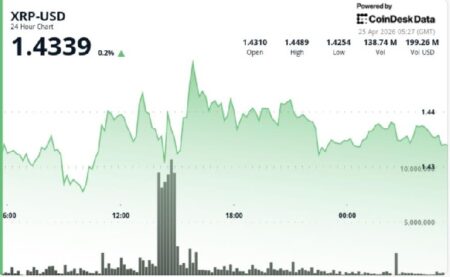
Beyond the bitcoin and ethereum headlines, the emerging ETF products for alternative cryptocurrencies—often called “altcoins”—are quietly building their own narratives. XRP ETFs recorded a modest but meaningful $3.89 million inflow, driven primarily by Franklin’s XRPZ product. While this figure pales in comparison to the hundreds of millions flowing into bitcoin products, it’s significant in demonstrating that investor appetite extends beyond the two largest cryptocurrencies. XRP, which has had a tumultuous history due to regulatory challenges and its association with Ripple Labs, appears to be finding a place in diversified cryptocurrency portfolios as investors seek exposure to different use cases and technologies within the blockchain space. Trading activity for XRP ETFs remained relatively light at $7.69 million, with net assets closing at $1.08 billion—a respectable total for a newer entrant in the ETF market.
Solana ETFs posted an even stronger relative performance, attracting $7.33 million in inflows and demonstrating the growing interest in this high-performance blockchain platform. Bitwise’s BSOL led the way with $6.20 million in inflows, while VanEck’s VSOL added $1.13 million. Solana has been one of the cryptocurrency market’s success stories over the past year, with its fast transaction speeds, lower fees compared to Ethereum, and growing ecosystem of decentralized applications attracting both developers and investors. The fact that Solana ETFs are seeing consistent, if modest, inflows suggests that institutional investors are beginning to look beyond bitcoin and ethereum to explore opportunities in what some call “ethereum competitors” or next-generation blockchain platforms. Trading volume for Solana ETFs reached $47.38 million, with net assets standing at $874.13 million—impressive figures for a relatively new ETF category that didn’t exist until recently.
These altcoin ETF products serve an important function in the maturing cryptocurrency investment landscape. They provide investors with regulated, accessible ways to gain exposure to specific blockchain ecosystems without the technical challenges and security concerns of directly holding these assets. For institutional investors in particular, who may face restrictions on directly purchasing cryptocurrencies or concerns about custody solutions, these ETFs offer a familiar investment vehicle wrapped around innovative digital assets. The steady, if unspectacular, inflows into XRP and Solana ETFs suggest that a growing segment of the investment community views cryptocurrency portfolios as requiring diversification beyond just bitcoin and ethereum.
Understanding the Growing Divergence in Cryptocurrency ETF Performance
The increasingly pronounced divergence between bitcoin’s sustained inflows and ethereum’s volatility, combined with the steady growth of smaller altcoin ETFs, tells us something important about where the cryptocurrency ETF market is heading. We’re moving beyond the early phase where all cryptocurrency investments rose and fell together, driven primarily by bitcoin’s price movements and overall market sentiment. Instead, we’re entering a more mature phase where investors are making more nuanced decisions based on the specific characteristics, use cases, and risk-return profiles of different cryptocurrencies.
Bitcoin’s continued dominance in attracting institutional capital reflects its established position as “digital gold”—a store of value that’s increasingly viewed as a hedge against inflation and currency debasement. Its limited supply, first-mover advantage, and growing acceptance among mainstream financial institutions make it the safest entry point for conservative investors dipping their toes into cryptocurrency exposure. The fact that bitcoin ETFs can sustain eight consecutive days of inflows totaling over $2 billion demonstrates that this narrative remains compelling, particularly in uncertain economic times or when traditional markets show volatility.
Ethereum’s more volatile ETF flows reflect its different value proposition and the more complex assessment required to evaluate its investment merits. Unlike bitcoin, which primarily functions as a store of value and medium of exchange, ethereum is a platform—the foundation for thousands of decentralized applications, smart contracts, and an entire ecosystem of innovation in decentralized finance, non-fungible tokens (NFTs), and Web3 development. This makes ethereum’s value more difficult to assess and potentially more sensitive to technological developments, competition from other platforms, and the overall health of the DeFi and NFT markets. When ethereum ETFs experience outflows after ten days of inflows, it might reflect profit-taking after a good run, concerns about competition from platforms like Solana, or simply the reality that ethereum appeals to a somewhat different (and perhaps more risk-tolerant) investor base than bitcoin.
What These Trends Mean for the Future of Cryptocurrency Investment
The current state of cryptocurrency ETF flows provides valuable insights into how institutional adoption of digital assets is evolving. The total net assets under management across these products—over $102 billion in bitcoin ETFs alone—represents a massive vote of confidence in cryptocurrencies as a legitimate asset class. This isn’t speculative retail money chasing the next moonshot; these are pension funds, wealth managers, family offices, and individual investors working with financial advisors, all gaining exposure to cryptocurrencies through regulated, transparent investment vehicles.
The fact that this capital is flowing unevenly—strongly toward bitcoin, more tentatively toward ethereum, and selectively toward promising altcoins—suggests that the market is maturing and differentiating between different types of cryptocurrency investments. This is ultimately healthy for the ecosystem. It means that each cryptocurrency will increasingly need to stand on its own merits rather than simply riding bitcoin’s coattails. For ethereum, this means demonstrating the value of its platform through growing transaction volumes, successful Layer 2 scaling solutions, and continued innovation in DeFi and other applications. For altcoins like Solana and XRP, it means carving out distinctive niches and proving that they offer something genuinely different from the market leaders.
Looking ahead, we can expect this differentiation to continue and potentially accelerate. As more cryptocurrency ETF products come to market—and as existing products build longer track records—investors will become more sophisticated in their allocation decisions. We might see periods where ethereum outperforms bitcoin as DeFi activity increases, or times when altcoins surge as investors seek higher growth potential. The key takeaway from the current data is that cryptocurrency investment is moving beyond the simple “are you in or out?” binary choice toward a more nuanced landscape where different cryptocurrencies serve different portfolio functions and appeal to different investment theses. The uniformity that characterized early cryptocurrency markets is fading, replaced by a more complex, mature, and ultimately more robust investment ecosystem.