

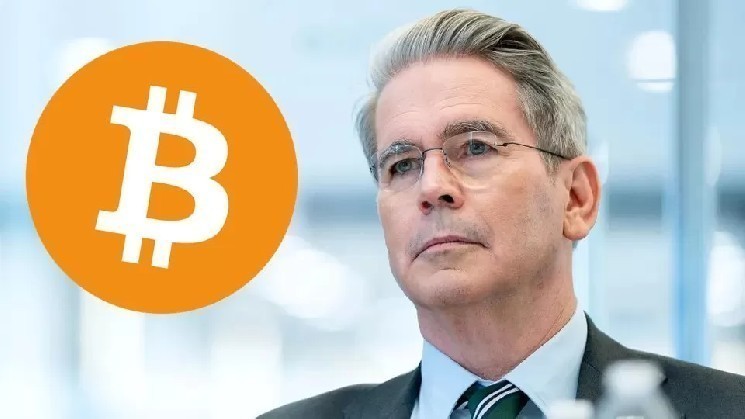

Treasury Secretary Bessent Reaffirms Dollar Strength and Addresses Bitcoin Questions in Congressional Hearing
Strong Dollar Policy Remains a Top Priority
In a significant appearance before the House of Representatives, U.S. Treasury Secretary Scott Bessent made it abundantly clear that the United States remains committed to maintaining a strong dollar policy. This reassurance comes at a critical time when global financial markets are watching closely for any shifts in American economic policy. Bessent’s testimony underscored the administration’s dedication to preserving the dollar’s status as the world’s primary reserve currency, a position that has underpinned American economic power for decades. “We have always supported a strong dollar policy,” Bessent declared, leaving little room for interpretation about the Treasury’s stance on this fundamental economic principle. Interestingly, despite the weight of this statement, the dollar index showed no significant movement following his remarks, suggesting that markets had already priced in this continuation of traditional U.S. monetary policy. The Secretary’s comments serve as a reminder that regardless of political changes or emerging financial technologies, the fundamental strength of the American dollar remains a cornerstone of the nation’s economic strategy and global financial leadership.
No Federal Bailout for Bitcoin: Drawing Clear Lines
Perhaps the most newsworthy aspect of Bessent’s testimony centered on questions about cryptocurrency, specifically whether the federal government might intervene to support Bitcoin prices during market downturns. The Treasury Secretary’s response was unequivocal and direct: the Treasury does not possess the authority to purchase Bitcoin using taxpayer funds. This statement effectively shut down speculation that had been circulating in some circles about potential government intervention in cryptocurrency markets. The question itself arose from suggestions by certain Republican lawmakers that the United States should consider selling portions of its gold reserves to acquire Bitcoin. Bessent’s clear rejection of this idea demonstrates that despite growing interest in digital currencies, the federal government maintains strict boundaries between traditional reserve assets and cryptocurrencies. This position reflects a pragmatic approach that recognizes the volatile nature of digital assets and the responsibility to protect taxpayer money from speculative investments. While Bessent did criticize what he characterized as the “destruction” wrought by cryptocurrency policies under the previous Biden administration, his comments indicate that supporting cryptocurrency doesn’t mean treating it the same as traditional reserve currencies or using public funds to prop up its market value.
Federal Reserve Independence and the Question of Accountability
Navigating the delicate balance between Federal Reserve independence and governmental accountability proved to be another significant topic during the hearing. Secretary Bessent expressed support for the Fed’s independence, a principle that has long been considered essential for sound monetary policy free from political pressure. However, he added an important caveat by emphasizing that “accountability” must also be part of the equation. This nuanced position reflects the ongoing tension in American governance between allowing expert institutions the freedom to operate independently while ensuring they remain answerable to elected officials and ultimately to the American people. When pressed on whether he would oppose a scenario where the President might dismiss a Federal Reserve official over policy disagreements, Bessent declined to take a definitive legal stance. Instead, he acknowledged that he is not a lawyer and suggested that such constitutional questions should be resolved by the United States Supreme Court. This careful response demonstrates the complexity of the relationship between the executive branch and independent agencies, particularly in an era where traditional norms are frequently questioned and tested. Bessent’s position appears designed to respect institutional boundaries while leaving open questions of ultimate authority to judicial interpretation.
A Contentious Political Atmosphere Pervades the Session
The hearing itself was marked by significant political tension, reflecting the deep partisan divisions that currently characterize American politics. The session opened on a particularly contentious note when Maxine Waters, the ranking Democrat on the committee, reportedly told Bessent to “shut up” at one point during the proceedings. This extraordinary breach of congressional decorum signals just how heated discussions around economic policy have become. The tension escalated further when New York Democratic Representative Gregory Meeks accused Secretary Bessent of acting like a “lackey” of President Donald Trump, a harsh characterization that suggests Democrats view the Treasury Secretary as lacking independence from presidential influence. These confrontations go beyond typical policy disagreements and reflect deeper concerns about the relationship between political leadership and supposedly independent economic policymaking. The hostile atmosphere during the hearing makes it challenging to have productive discussions about complex economic issues, as partisan considerations overshadow technical policy debates. Such tensions also raise questions about whether congressional oversight can effectively function when political animosity reaches such levels that personal attacks replace substantive policy analysis.
Defending Pro-Growth Economic Vision and Deregulation
Despite the hostile questioning, Secretary Bessent mounted a spirited defense of the Trump administration’s economic approach, articulating a vision he described as “parallel prosperity where Wall Street and Main Street grow together.” This framing attempts to counter criticisms that Republican economic policies primarily benefit wealthy investors and large corporations at the expense of ordinary Americans. By emphasizing that growth should be shared across all economic sectors and social classes, Bessent is making the case that pro-business policies ultimately benefit everyone through job creation, wage growth, and broader economic opportunity. He also took aim at regulatory approaches from previous administrations, characterizing some past actions as “reflexive regulation rather than crisis prevention.” This criticism suggests that Bessent and the current administration believe previous regulators were too quick to impose new rules in response to problems without carefully considering whether such regulations would actually prevent future crises or merely create compliance burdens that stifle innovation and growth. The debate over appropriate regulation continues to be one of the fundamental dividing lines in American economic policy, with conservatives generally favoring lighter regulatory touch and progressives advocating for stronger oversight to prevent market failures and protect consumers.
Implications for Economic Policy and Market Direction
The testimony from Secretary Bessent provides important signals about the direction of U.S. economic policy in the coming months and years. His reaffirmation of the strong dollar policy suggests continuity with decades of American monetary tradition, which should provide stability and predictability for international markets and trading partners. The clear statement that taxpayer funds will not be used to purchase Bitcoin or bail out cryptocurrency investors establishes important boundaries for government involvement in digital asset markets, even as the administration appears more friendly to crypto innovation than its predecessor. The discussion of Federal Reserve independence and accountability suggests that tensions around monetary policy decision-making will continue, though likely within established institutional frameworks rather than through dramatic confrontations. The hostile political atmosphere during the hearing also reminds us that economic policymaking doesn’t happen in a vacuum but is deeply embedded in partisan political battles that can complicate even technical discussions. As the administration moves forward with its economic agenda, the principles articulated by Bessent—dollar strength, limited government intervention in speculative markets, balanced regulation, and broad-based prosperity—will likely guide Treasury Department actions. However, the actual implementation of these principles will continue to face scrutiny and opposition from lawmakers who question both the policies themselves and the independence with which they’re being developed and executed.
This analysis is provided for informational purposes only and should not be considered investment advice.