


The Hidden Drag on Crypto: Why Bitcoin, Ethereum, Solana, and XRP May Be Holding Back the Market
A Bold Assessment from Industry Leadership
In a thought-provoking analysis that’s sure to ruffle feathers across the cryptocurrency community, Jeff Dorman, the Chief Investment Officer at Arca, a prominent crypto asset management firm, has put forward a controversial thesis: the very cryptocurrencies that dominate the market—Bitcoin, Ethereum, Solana, and XRP—might actually be preventing the industry from reaching its full potential. This isn’t just another hot take from a social media influencer; Dorman’s position carries weight given his institutional role and comprehensive understanding of digital asset markets. His central argument revolves around a puzzling disconnect that anyone following crypto has likely noticed: while blockchain technology adoption and real-world usage continue to accelerate at impressive rates, the price performance of major cryptocurrencies hasn’t kept pace with this growth. It’s like watching a successful company with booming sales whose stock price mysteriously stagnates—something doesn’t quite add up. Dorman suggests this discrepancy isn’t temporary or coincidental but rather symptomatic of fundamental issues with how these assets create (or fail to create) value for the people who invest in them. This assessment forces us to confront an uncomfortable question: are we investing in the right aspects of the crypto revolution?
Short-Term Wins Don’t Hide Long-Term Structural Issues
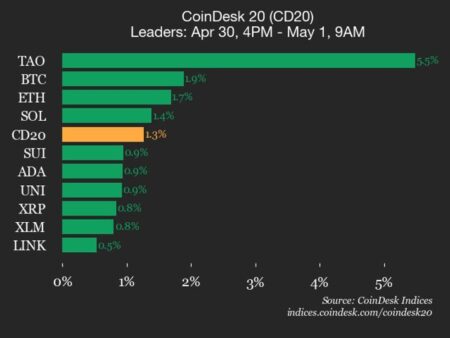
Looking at recent market performance, things might seem reasonably healthy on the surface. Dorman acknowledges that digital assets have actually outperformed traditional investment options like gold, stocks, and bonds over the past week—a point that crypto enthusiasts would be quick to celebrate. Bitcoin has enjoyed continued support from institutional investors, and the steady flow of capital into Bitcoin ETFs has provided a solid foundation of demand. Meanwhile, Ethereum’s recent outperformance compared to Bitcoin has injected some optimism into traders’ sentiment, suggesting that perhaps altcoins are finally having their moment. Projects like Hyperliquid and Bittensor have posted impressive double-digit gains that would make traditional investors envious. However, Dorman cautions against reading too much into these movements. When you’ve been around crypto for any length of time, you learn that double-digit swings—both up and down—are just Tuesday in this market. The historical volatility of cryptocurrencies makes these recent gains look relatively modest in comparison. More importantly, these short-term price movements don’t address the deeper structural concerns about whether these assets are genuinely capturing the value being created in the blockchain ecosystem. It’s entirely possible to have a few good weeks or even months while the underlying investment thesis slowly crumbles. Dorman’s point is that we shouldn’t let recent green candles distract us from asking harder questions about long-term value creation.
The Adoption-Valuation Gap: Growth Without Reward
Perhaps the most perplexing aspect of the current crypto market is what Dorman identifies as a fundamental disconnect between adoption metrics and token prices. By virtually any measure of actual usage—transaction volumes, wallet growth, developer activity, institutional integration—the cryptocurrency ecosystem is experiencing record-breaking adoption. More people and businesses are using blockchain technology than ever before. Yet somehow, this explosion of real-world usage isn’t translating into proportional price appreciation for the major tokens. Dorman offers two possible explanations for this phenomenon, neither particularly comforting for long-term holders. The first possibility is simply that prices are lagging indicators—that the market hasn’t yet recognized or priced in the value of this adoption, but eventually will. This is the optimistic interpretation that would suggest patience will be rewarded. The second, more troubling explanation is that much of this adoption simply doesn’t translate into value for token holders. In other words, blockchain networks might be getting more useful and more widely used without that increased utility flowing back to the people who own the underlying tokens. According to Dorman, the root cause is that some of the largest cryptocurrencies by market capitalization simply don’t offer compelling, sustainable investment theses. They may have historical significance or name recognition, but that doesn’t necessarily mean they’re structured to deliver returns that match their adoption growth. It’s like owning stock in a company that provides essential infrastructure everyone uses, but which has given away its services for free with no clear plan to monetize that usage.
Bitcoin’s Lost Narrative: From Digital Gold to Digital Question Mark
Dorman’s critique of Bitcoin specifically centers on what he sees as a gradual erosion of the narratives that originally justified its value proposition. When Bitcoin emerged, it positioned itself as “digital gold”—a scarce, decentralized store of value that could serve as a hedge against inflation and government monetary policy. Over time, however, Dorman argues that Bitcoin has failed to live up to several of these promises. Its correlation with traditional risk assets has increased, undermining the “digital gold” comparison. Its performance as an inflation hedge has been inconsistent at best, with Bitcoin often declining during periods of high inflation rather than rising to protect purchasing power. When it comes to payments and everyday transactions, stablecoins have essentially taken over, offering the speed and convenience that Bitcoin promised but couldn’t consistently deliver. Even Bitcoin’s famous 21 million supply cap—often cited as its most powerful feature—has seen its impact diluted by the proliferation of derivative products that create synthetic exposure without the same scarcity constraints. Dorman does acknowledge that Bitcoin has made progress in one area: regulatory acceptance. It’s become more mainstream, more institutionalized, and more legitimate in the eyes of traditional finance. But he questions whether regulatory acceptance alone provides a sufficient foundation for long-term value appreciation. Without a clear, compelling story about why Bitcoin should increase in value over time—beyond simply “more people might buy it”—the asset struggles to attract the kind of patient, fundamentally-driven capital that sustains long-term bull markets.
Smart Contract Platforms: Technically Impressive, Economically Questionable
Dorman extends similar criticism to Ethereum and Solana, the leading smart contract platforms that enable decentralized applications, DeFi protocols, and NFT marketplaces. There’s no question these networks are technical achievements that have enabled innovation across the crypto ecosystem. Ethereum pioneered programmable blockchains and hosts the majority of DeFi activity, while Solana has impressed with its speed and low transaction costs. The problem, according to Dorman, isn’t what these networks do—it’s how poorly they capture value for token holders. Both networks face what he identifies as critical economic weaknesses: high inflation rates that continuously dilute existing holders, the increasing commodification of block space (meaning it’s becoming cheaper and less profitable to provide), and mechanisms that fail to efficiently channel value creation back to token holders. These platforms may be succeeding as technology infrastructure, but infrastructure that doesn’t generate returns for its owners isn’t a great investment, no matter how technically impressive it might be. Dorman argues that for Ethereum and Solana to justify their current valuations—which remain in the tens or hundreds of billions of dollars—they would need to achieve adoption on a scale far beyond what they’ve accomplished to date. The harsh reality is that being useful and being a good investment aren’t necessarily the same thing. His critique of XRP is even sharper, questioning whether there’s any meaningful connection between the token and Ripple’s actual business operations. With limited use cases, an economic model that doesn’t favor investors, and regular token sales by Ripple that create selling pressure, Dorman sees XRP as particularly problematic for serious investors looking for fundamental value rather than speculation.
Where Real Growth Is Happening and What It Means for Investors
Despite his skepticism about major crypto assets, Dorman isn’t pessimistic about blockchain technology itself. In fact, he identifies several areas where genuine, sustainable growth is occurring: stablecoins and payment systems that offer real utility for moving money globally, decentralized finance protocols that provide actual financial services, and the tokenization of real-world assets like property, securities, and commodities. These applications represent blockchain technology fulfilling practical purposes and solving real problems—exactly the kind of adoption that should theoretically drive long-term value. The catch, however, is that this growth doesn’t necessarily benefit Bitcoin, Ethereum, Solana, or XRP holders in proportion to its significance. A thriving stablecoin economy might generate transaction fees for networks, but those fees may not accrue meaningfully to token holders. Success in asset tokenization might validate blockchain technology without driving demand for the underlying cryptocurrencies. Dorman argues that this disconnect has created an unhealthy market environment dominated by short-term traders and speculators rather than long-term, fundamentally-focused investors. When the assets with the largest market caps don’t offer clear value capture mechanisms, patient capital naturally moves elsewhere, leaving the market to those looking for quick trades rather than sustained appreciation. The solution, according to Dorman, would be for the market to reallocate attention and capital toward the areas where real growth is happening. If investment flowed more directly to stablecoins, DeFi protocols, and tokenization platforms—and if these projects were structured to reward token holders—prices might finally align with adoption. Until that happens, we’re left with a crypto market where the biggest names might actually be the biggest obstacles to realizing the sector’s full potential. For investors, this analysis suggests a need to look beyond brand recognition and market cap rankings to find opportunities that offer genuine alignment between technological success and investment returns.