

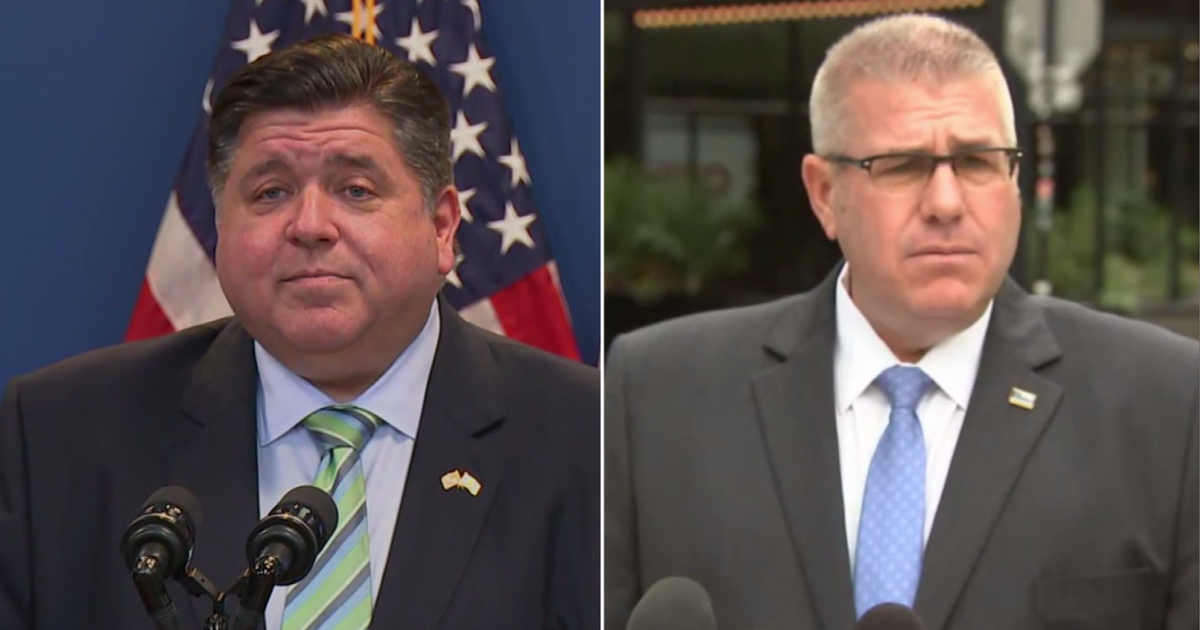

Illinois Primary 2026: Pritzker and Bailey Set for Governor Rematch
A Familiar Face-Off Returns to Illinois Politics
Illinois voters are heading toward a political déjà vu moment as the 2026 governor’s race shapes up to be a rematch between two familiar rivals. Governor JB Pritzker, the Democratic incumbent, will once again face off against Republican challenger Darren Bailey, according to CBS News projections following Bailey’s victory in the GOP primary. This repeat matchup comes four years after their first encounter in 2022, when Pritzker secured a decisive victory over Bailey by a comfortable 13-point margin. For Pritzker, this election represents his bid for a third term leading the state of Illinois, though this time he’ll be running with a new lieutenant governor candidate, Christian Mitchell. The change in running mates came after former Lt. Gov. Juliana Stratton decided to launch her own campaign for Dick Durbin’s U.S. Senate seat, opening up a new chapter in Illinois Democratic politics. Pritzker faced no opposition in the Democratic primary, allowing him to coast to the nomination and focus his energies on the general election battle ahead.
Pritzker’s Evolution as Trump’s Leading Antagonist
Since his initial election, Governor Pritzker has significantly expanded his presence on the national political stage, largely by positioning himself as one of the most outspoken critics of President Trump and his administration’s policies. This confrontational stance has become a central feature of Pritzker’s political identity and messaging strategy. In March, the governor released a campaign advertisement that specifically highlighted his efforts to push back against what he characterized as the Trump Administration’s aggressive federal immigration enforcement operations in Chicago. The ad focused on “Operation Midway Blitz,” a controversial federal crackdown that took place in the city last fall and sparked considerable debate about federal overreach and state sovereignty. By framing himself as a bulwark against federal actions he views as harmful to Illinois residents, Pritzker has carved out a distinctive role among Democratic governors nationwide. This approach has resonated with the Democratic base in Illinois while simultaneously raising his profile among progressive activists across the country who are looking for elected officials willing to stand up to the current administration in Washington.
A Victory Speech Focused on Federal Overreach
Rather than using his primary victory speech on Tuesday night to focus primarily on his Republican opponent or his own accomplishments, Governor Pritzker devoted substantial time to criticizing President Trump and his administration’s policies. His remarks painted a dark picture of the current federal government, characterizing those in power as corrupt and divisive. “Right now, grifters of corruption and selfishness, purveyors of bigotry and hatred, have taken control of the White House and Congress,” Pritzker declared to his supporters. He didn’t hold back in his personal attacks on the president, referring to him mockingly as the “Carnival Barker in Chief” before correcting himself to call Trump the “Commander in Thief.” The governor highlighted what he sees as the administration’s misplaced priorities, pointing out the contradiction between cutting funding for healthcare and food assistance programs while finding “tens of millions of dollars to send masked troops with assault weapons onto the streets of Illinois to terrorize Americans.” Pritzker’s speech took a particularly emotional turn when he recounted specific incidents of what he characterized as federal violence against peaceful Illinois residents, including mothers, nurses, and teachers’ assistants who were shot during protests. He concluded this portion of his remarks by praising the courage of Illinois residents who, unlike citizens in states that “capitulated to Donald Trump,” stood firm against what he described as “the seemingly unstoppable force of Trump’s unrestrained power.”
Darren Bailey: The Persistent Challenger Returns
Darren Bailey, the Republican nominee, brings his own compelling political story to this rematch. A former Illinois state representative and state senator, Bailey first gained significant public attention and built his political brand during the COVID-19 pandemic, when he became a vocal opponent of state-mandated public health measures. He unsuccessfully challenged the state executive orders that required masks in most public settings, a stance that endeared him to conservative voters frustrated with pandemic restrictions but may have limited his appeal to moderate voters in the general election. Despite losing to Pritzker by 13 points in the 2022 general election, Bailey remained active in Illinois politics. In 2024, he mounted a primary challenge against U.S. Rep. Mike Bost, a fellow Republican, for his congressional seat, though this effort also ended in defeat. For the 2026 race, Bailey has partnered with Aaron Del Mar, the chairman of the Cook County Republican Party, as his running mate, in what appears to be a strategic move to strengthen his appeal in the Chicago area, where Republican candidates typically struggle. A farmer from southern Illinois, Bailey represents a stark contrast to the billionaire governor, both in terms of personal background and political philosophy.
Bailey’s Critique: Rising Costs and Elite Disconnect
Central to Darren Bailey’s campaign message is a sharp critique of Pritzker’s leadership and its impact on everyday Illinoisans. Bailey has focused his attacks on the rising cost of living that residents have experienced during Pritzker’s tenure, attempting to hold the governor personally accountable for economic challenges facing families across the state. Perhaps his most pointed criticism takes aim at Pritzker’s vast personal wealth and privileged background, with Bailey characterizing the governor as “just another billionaire who has never once felt the pain he’s inflicted.” This populist message attempts to paint Pritzker as out of touch with the economic struggles of ordinary Illinois residents, suggesting that his enormous personal fortune insulates him from understanding the real-world consequences of his policy decisions. The class-based argument represents Bailey’s attempt to turn one of Pritzker’s potential advantages—his ability to self-fund his campaign and avoid dependence on special interest donations—into a liability by questioning whether someone of such extraordinary wealth can truly understand and represent the interests of working-class and middle-class voters. This messaging strategy reflects a broader Republican approach of challenging wealthy Democratic candidates by questioning their connection to the economic concerns of average Americans.
The Road Ahead: A High-Stakes Rematch
As Illinois prepares for what promises to be a hard-fought general election campaign, both candidates enter with known quantities—strengths and weaknesses that voters have already evaluated once before. For Pritzker, his significant victory margin in 2022 provides confidence, but seeking a third term always presents challenges, as voters may be ready for change after eight years of the same leadership. His strategy of positioning himself as a national figure standing up to the Trump administration could energize Democratic base voters and appeal to moderate suburbanites concerned about federal overreach, but it also risks making the race more about national politics than state issues. For Bailey, the challenge is finding a way to expand his appeal beyond the conservative rural areas where his message resonates most strongly. His previous 13-point loss demonstrates that his brand of politics, while popular in certain regions of Illinois, has struggled to connect with the diverse, urban-dominated electorate that decides statewide races. The addition of Del Mar as his running mate suggests an awareness of this geographic challenge and an attempt to make inroads in the Chicago area. As the campaign progresses, Illinois voters will decide whether they want continuity with Pritzker’s leadership or whether Bailey’s critique of rising costs and elite governance will resonate enough to overcome the significant advantages that typically favor incumbents in state races.