

House Republicans Break Fundraising Records as 2026 Midterms Heat Up
A Historic Financial Start for the NRCC
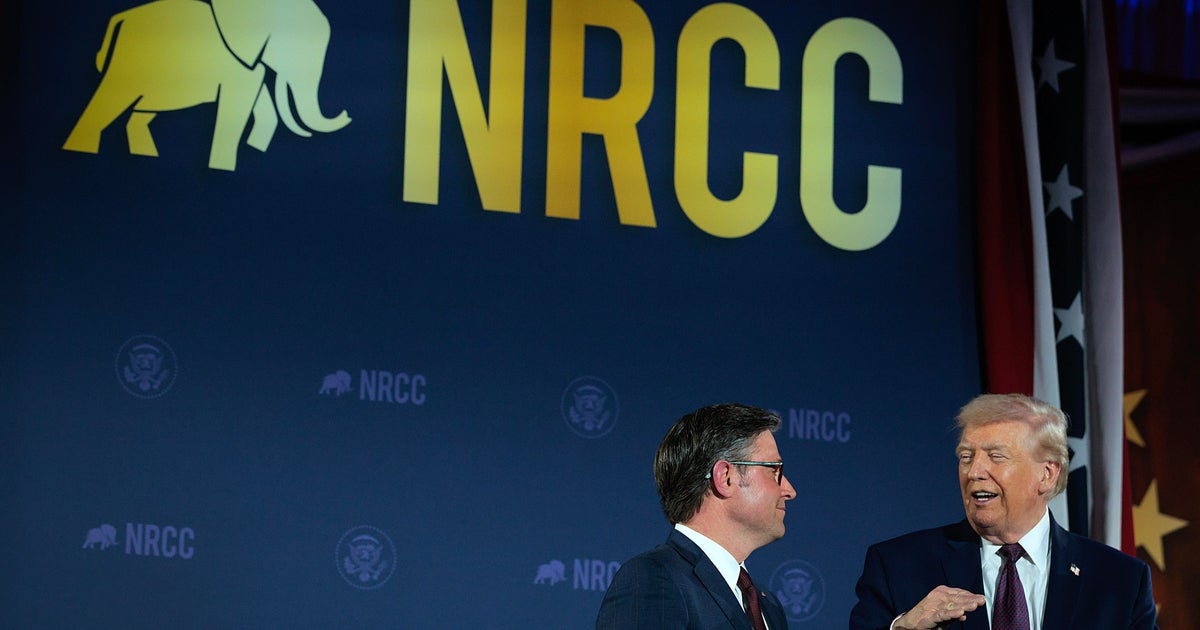
The battle for control of the House of Representatives is already well underway, and Republicans are coming out of the gate with impressive financial firepower. Representative Richard Hudson, who chairs the National Republican Congressional Committee (NRCC), recently shared some eye-opening numbers that have his party feeling optimistic about their chances of maintaining their majority. In just the first three months of 2026, the NRCC pulled in a remarkable $47.1 million—the largest first-quarter haul in the committee’s entire history. To put that in perspective, March alone brought in $28.1 million, marking the strongest single month of March the organization has ever seen. With $78.2 million in cash ready to deploy and a total of $164.4 million raised for the entire election cycle so far, Hudson is making it clear that Republican donors are opening their wallets because they see the House majority as essential protection against what they view as Democratic overreach. Hudson, who represents North Carolina’s 9th Congressional District, isn’t just celebrating these numbers—he’s using them as proof that Republicans have the momentum needed to buck the traditional midterm trends that typically hurt the party controlling the White House.
The Trump Factor and Republican Strategy
One person deserves special credit for this fundraising bonanza, according to Hudson: President Donald Trump. The former and current president has thrown his considerable political weight behind House Republicans’ efforts, most notably by headlining a major NRCC fundraising dinner in Washington that alone brought in nearly $37 million. Hudson meets with Trump in person roughly once a month to discuss the landscape of House races across the country, and he describes the president’s involvement as both hands-on and remarkably detailed. These meetings typically run over an hour because Trump wants to dive deep into the specifics of individual congressional contests, displaying what Hudson calls an “astonishing” level of knowledge about races nationwide. The president’s commitment extends beyond just fundraising dinners and strategy sessions—he’s been hitting the campaign trail hard, including a recent swing through the crucial battleground states of Arizona and Nevada to rally support for Republican candidates fighting to hold competitive seats. At a Turning Point USA event in Phoenix, Trump delivered his trademark confident message: “This November, we gotta win the midterms. We’re going to win and win like never before.” The broader Republican fundraising ecosystem is firing on all cylinders too, with outside groups aligned with House GOP leadership, including the Congressional Leadership Fund super PAC and the American Action Network, collectively raising nearly $193 million so far this cycle. Speaker Mike Johnson himself set a record with $34 million raised in the first quarter alone, bringing his total hard-dollar fundraising for House Republicans this cycle to more than $116 million.
The Challenging Political Landscape Republicans Face
Despite the impressive fundraising numbers, Republicans are facing some serious headwinds that make their optimism seem overly rosy to many political observers. History is not on their side—the party that holds the White House has lost seats in midterm elections with remarkable consistency over the past half-century, with only rare exceptions like 1998 under President Bill Clinton and 2002 under President George W. Bush. Current polling paints a troubling picture for Republicans as well. Roughly two-thirds of Americans believe the economy is in bad shape, and a clear majority disapprove of how Trump is handling economic issues. The numbers get even more specific and concerning: about 65% of Americans disapprove of his overall economic management, and nearly 70% disapprove of his handling of inflation specifically. Trump’s overall job approval rating has been hovering in the low 40s in recent CBS News polling, and it hit a particularly discouraging low of 39% earlier this month. These vulnerabilities are especially problematic because economic concerns—particularly the cost of living—remain the top issue for voters heading into the fall elections. Making matters worse for Republicans, the ongoing war in Iran continues to impact gas prices across the country, keeping energy costs at the forefront of voters’ minds. Hudson acknowledges that “people’s pocketbook issues are going to remain predominant issues,” but he’s betting that Republicans can successfully argue they’ve enacted policies that will make “people’s lives better” compared to the record inflation and high gas prices he associates with former President Joe Biden’s tenure.
Democrats See Their Own Path to Victory
Democrats aren’t sitting idle while Republicans celebrate their fundraising success, and they have their own compelling narrative about why they’ll flip the House in November. Hyma Moore, a former senior official with the Democratic National Committee, points to a string of recent Democratic victories across various types of elections—from special congressional elections to state legislature races, public service commissioner seats, and even state supreme court contests. Democrats aren’t just showing up in these elections; they’re overperforming expectations and actually winning, which Moore sees as evidence of genuine momentum heading into the midterms. The Democratic message focuses on what they see as Republican failures to deliver on pocketbook promises. “President Trump and the Republican Congress said they would lower costs on day one. Instead, they have focused on everything except lowering everyday costs,” Moore argues. “Americans are still hurting, but they are starting to trust Democrats again. That’s a good sign for November.” The Democratic Congressional Campaign Committee (DCCC) is also showing financial strength, having raised $13.7 million in February alone, with $139.1 million for the entire cycle and $57.3 million in cash on hand as of last month. While the NRCC’s numbers appear stronger, Democrats are pointing to specific battleground races where their candidates are actually outraising Republican incumbents—exactly the kind of contests they need to win to flip the House. In Pennsylvania, Democrat Janelle Stelson collected $2.2 million, double the $1.1 million raised by Republican Rep. Scott Perry. In Arizona, JoAnna Mendoza raised $2.4 million, more than twice Rep. Juan Ciscomani’s total. And in Wisconsin’s 3rd District, Rebecca Cooke brought in $2.4 million compared to $1.3 million for Rep. Derrick Van Orden.
The Battle for a Shrinking Number of Competitive Seats
Hudson offers an interesting counterargument to concerns about historical midterm patterns and unfavorable polling: the map of competitive House races has fundamentally changed. Out of the 435 seats in the House of Representatives, Hudson estimates that only somewhere between 30 and 40 seats are genuinely up for grabs, with the rest being safe seats for one party or the other. He attributes this shrinking battleground to both parties becoming increasingly sophisticated with redistricting efforts. In Hudson’s view, this dramatically smaller playing field changes the traditional dynamics that have governed midterm elections in the past. Rather than a broad national wave that can sweep dozens of seats from one party to the other, each of these competitive races becomes its own individual contest where candidate quality, local organizing, and targeted messaging matter more than national trends. “Democrats like to point to national polls, national generic ballot tests, to try to tell you what’s going to happen in these 30 or 40 congressional races, but the fact is, if you look race by race, every one is an individual race,” Hudson explains. He contends that Republicans have the advantage in candidate quality and that “there are more Democrat seats up for grabs than Republican seats.” Hudson’s closing argument for why Republicans will hold the House is straightforward: they’ve delivered on their promises. “As we go to the election this fall, we can tell the voters: we promised you that we would bring down your taxes, we promised you that we would unleash American energy, we promised you that we’d secure the border and make your neighborhood safer, and we delivered on those promises.”
The Broader Picture and What’s at Stake
As the 2026 midterms approach, both parties are making their cases with increasing urgency because the stakes are genuinely high. For Republicans, maintaining their slim House majority means being able to continue advancing Trump’s agenda and serving as a partner to the White House rather than a check on presidential power. For Democrats, flipping the House would give them the ability to investigate the administration, block Republican legislative priorities, and set themselves up for the 2028 presidential election. The DCCC’s Viet Shelton frames the choice clearly: “House Democrats have been on offense all cycle. While we are building momentum with a message focused on lowering costs, Republicans are stuck defending their out-of-control policies, driving prices up. The contrast couldn’t be clearer and our candidates are starting the election year with a formidable war chest.” The Senate picture adds another layer of complexity to the 2026 landscape. Many Democrats in competitive Senate races are outraising their Republican rivals, including some truly staggering numbers. In Texas, Democratic Senate nominee James Talarico raised $27 million in just the first quarter—the largest sum ever raised by any Senate candidate during that period. In Georgia, incumbent Democratic Sen. Jon Ossoff raised $14 million and has $31.7 million cash on hand for his re-election bid. These numbers suggest that while Republicans may have the advantage in House fundraising at the committee level, Democrats are showing significant grassroots energy in individual races across both chambers. The next several months will reveal whether Hudson’s optimism about Republican prospects is justified or whether the historical patterns, economic concerns, and Democratic enthusiasm will combine to flip control of the House.