


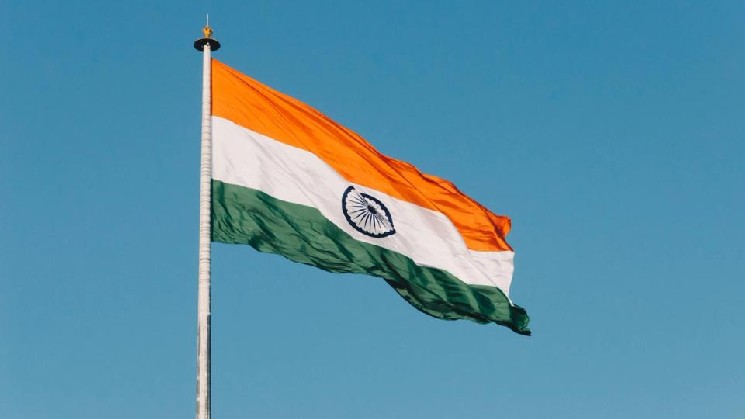

India Leverages Welfare Programs to Boost Digital Currency Adoption
A Strategic Pivot for the E-Rupee
India is embarking on an ambitious experiment that could reshape how the world’s most populous nation distributes welfare benefits while simultaneously breathing new life into its struggling central bank digital currency (CBDC). As the country prepares to host a major summit of BRICS nations—comprising Brazil, Russia, India, China, and South Africa—later this year, Indian policymakers are betting that routing welfare payments through the digital rupee, or e-rupee, will solve two problems at once: reducing corruption in subsidy distribution while finally giving people a compelling reason to actually use the digital currency. The Reserve Bank of India has launched approximately ten pilot programs that channel portions of the country’s massive $80 billion welfare system through the CBDC platform, marking a significant strategic shift in how the government approaches both social safety nets and financial innovation.
This approach represents more than just a technical upgrade to payment systems. It’s an acknowledgment that the e-rupee, despite being introduced with considerable fanfare in December 2022, has struggled to find its footing in a country where digital payments are already thriving through other platforms. By embedding the digital currency into essential government services that millions of Indians depend on, authorities are essentially creating a captive user base—people who must engage with the technology not out of preference but out of necessity. This strategy raises important questions about the nature of adoption in the digital currency space and whether compulsion can substitute for genuine utility and user enthusiasm.
Practical Applications on the Ground
The welfare-focused pilots offer a glimpse into how programmable money might function in everyday life. In Maharashtra’s Phulenagar village, farmers are experiencing firsthand what it means to receive “smart” subsidies. When they qualify for government assistance covering up to 80% of the cost of drip-irrigation systems—water-saving technology crucial for agriculture in drought-prone regions—the funds arrive as digital rupees that come with built-in restrictions. Unlike regular money that can be spent anywhere, these subsidized e-rupees can only be used at government-approved vendors who supply the irrigation equipment. This programmability is one of the signature features that distinguishes CBDCs from both physical cash and conventional digital payments.
Similarly, in Gujarat, another ambitious pilot program aims to bring all 7.5 million households eligible for subsidized food onto the e-rupee platform by June. This represents a massive scaling effort that would make the CBDC an integral part of the Public Distribution System, which provides grains and essential commodities at below-market prices to low-income families. The government’s rationale is compelling from an administrative standpoint: programmable digital currency could theoretically eliminate the notorious “leakage” that has plagued India’s welfare system for decades, where subsidized goods often end up being diverted and sold on the black market rather than reaching their intended recipients. By ensuring that welfare funds can only be spent at designated fair-price shops and only on approved items, the technology promises to create an auditable, tamper-resistant distribution system that could save billions in lost benefits.
The Usage Challenge and Engineered Growth
Despite these efforts and the government’s considerable push, the numbers tell a sobering story about the e-rupee’s actual traction in the marketplace. The user base has grown from approximately 7 million earlier this year to around 10 million currently—growth that might sound impressive in absolute terms but remains modest given India’s population of over 1.4 billion people. Even more telling is the transaction volume: since the digital currency’s launch in late 2022, cumulative transactions total just $3.6 billion. To put that in perspective, India’s Unified Payments Interface (UPI)—the wildly successful instant payment system that has become the backbone of digital transactions in the country—processes roughly $300 billion every single month. The contrast couldn’t be starker, and it underscores why policymakers are scrambling to find ways to make the CBDC relevant.
The struggle for genuine adoption has occasionally led to measures that look suspiciously like window-dressing. Reports emerged in 2024 revealing that several of India’s largest banks, including HDFC, Kotak Mahindra, and Axis Bank, had credited portions of employee salaries directly into CBDC wallets. This move helped the system briefly surpass the symbolically important milestone of 1 million daily transactions in December 2023—a figure that officials could point to as evidence of momentum. However, this achievement proved fleeting and did not represent sustained organic growth. The practice of essentially forcing employees to receive wages in a form they might not have chosen highlights a fundamental tension in the CBDC rollout: how do you build genuine utility and user preference when the technology doesn’t solve a problem that existing solutions haven’t already addressed more conveniently?
Geopolitical Ambitions and the BRICS Vision
India’s domestic experiments with the digital rupee are unfolding against a much larger geopolitical backdrop. The Reserve Bank of India isn’t just thinking about streamlining welfare payments—it’s positioning the technology as a potential cornerstone of a new financial architecture for the BRICS bloc. Indian policymakers have been actively urging the government to advance a proposal for linking the CBDCs of Brazil, Russia, India, China, and South Africa, with plans to present this vision at the bloc’s 2026 summit. The strategic goal is nothing less than creating an alternative payment rail for cross-border trade among these nations, reducing their collective dependence on the U.S. dollar and the Western-dominated financial infrastructure that currently handles the vast majority of international transactions.
This ambition reflects a growing desire among major non-Western economies to insulate themselves from what they perceive as the weaponization of the dollar-based system, particularly through sanctions. For countries like Russia, which has faced severe financial restrictions following its invasion of Ukraine, and China, which worries about potential future sanctions, alternative payment mechanisms aren’t just convenient—they’re strategic imperatives. India, while maintaining more complex relationships with Western powers, has its own reasons for supporting financial multipolarity, including its continued purchases of discounted Russian crude oil despite Western pressure to reduce such trade. A BRICS CBDC network could theoretically allow these nations to settle trade obligations in their own digital currencies, bypassing dollar conversion and the corresponding oversight that comes with it.
Navigating Political Headwinds
Yet this monetary ambition doesn’t exist in a vacuum, and India’s pursuit of dollar alternatives carries real political risks that could have concrete economic consequences. President Donald Trump has been explicit in threatening tariffs against BRICS countries that actively pursue alternatives to the U.S. dollar, framing such efforts as hostile to American economic interests. These aren’t empty threats—the Trump administration has already imposed duties on various Indian imports, with India’s purchases of Russian crude oil cited as part of the justification. The message is clear: countries that challenge dollar hegemony may face economic retaliation from the world’s largest economy and India’s crucial trading partner.
This puts Indian policymakers in a delicate balancing act. On one hand, there are genuine benefits to developing indigenous digital payment systems and fostering financial connections with other major emerging economies. India has legitimate interests in maintaining its strategic autonomy and not being entirely dependent on Western financial infrastructure. On the other hand, India’s economic relationship with the United States—encompassing not just trade but also technology transfer, investment flows, and diaspora connections—is far too valuable to jeopardize over monetary experimentation. How India navigates this tension will likely shape not just the future of the e-rupee but also the country’s broader geopolitical positioning in an increasingly polarized world. The welfare payment pilots happening in villages like Phulenagar may seem far removed from these high-stakes diplomatic considerations, but they’re ultimately part of the same story: India’s attempt to carve out technological and financial sovereignty while managing the inevitable pushback from established powers with vested interests in the status quo.
The Road Ahead: Questions and Implications
As India continues to expand its CBDC experiments through welfare programs, several fundamental questions remain unresolved. Will recipients of subsidies genuinely embrace the digital rupee, or will they treat it as an inconvenient intermediary to be converted to more familiar forms of money at the first opportunity? Can programmable money designed to prevent misuse strike the right balance without being overly restrictive or paternalistic toward beneficiaries? And perhaps most importantly, can compulsory adoption through government programs ever transition into voluntary adoption by the broader population? The answers to these questions will have implications far beyond India’s borders, as central banks worldwide watch these experiments closely, trying to determine whether CBDCs represent the future of money or an expensive solution in search of a problem. What’s clear is that India is committed to this path and willing to use its considerable welfare infrastructure as a testing ground—making millions of its most vulnerable citizens the unwitting pioneers of a technology that could eventually reshape global finance.