


The Wealth Behind Solana: Understanding Anatoly Yakovenko’s Fortune and the Network’s Distribution
The Man Behind the Blockchain Revolution
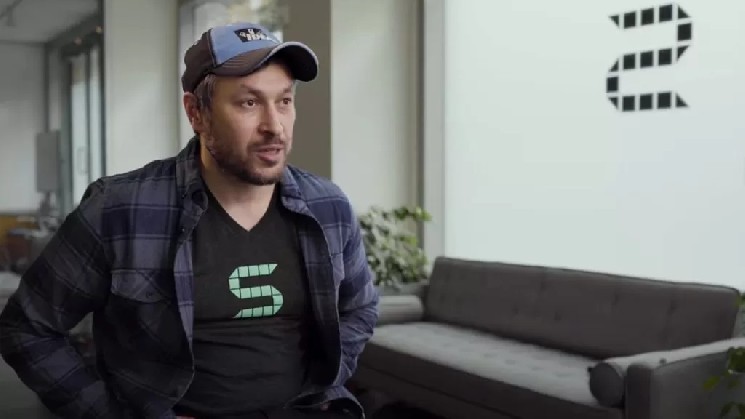
Anatoly Yakovenko, the visionary founder of Solana, has become one of cryptocurrency’s most prominent figures, with an estimated net worth ranging between $500 million and $1.2 billion. However, unlike traditional tech billionaires whose wealth might be diversified across various assets and investments, Yakovenko’s fortune tells a uniquely modern story—one that’s intrinsically tied to the digital currency he helped create. According to analysis from Arkham dated 2026, the bulk of his personal wealth consists of SOL tokens, Solana’s native cryptocurrency, along with his equity stake in Solana Labs, the development company behind the blockchain. This means Yakovenko’s financial standing rises and falls with the market value of Solana itself, creating a direct and transparent connection between his success and that of the network he built. It’s a testament to his confidence in the project and also represents the new paradigm of founder wealth in the cryptocurrency age, where personal fortune and project success are inseparably intertwined.
Tracking the Founder’s Digital Fortune
Understanding exactly how much cryptocurrency a founder holds can be challenging, but blockchain technology’s transparent nature provides some clues. When Solana first launched, the network created 500 million SOL tokens in total, with 12.5% of that allocation going to the founding team. Through careful analysis of blockchain data, researchers have identified an address labeled “9QgXq” that appears to be connected to Yakovenko personally, currently holding over 136,000 SOL—worth approximately $11 million at current valuations. But the story doesn’t end there. Between August and November 2024, this account underwent significant activity, with more than 3 million SOL being unstaked and transferred out. Intriguingly, over 1.5 million of these tokens were subsequently restaked to new addresses. If these new addresses also belong to Yakovenko, which analysts believe is likely, his total SOL holdings would be valued at roughly $122 million. Additionally, an address associated with the domain name “toly.sol” (with “Toly” being Yakovenko’s nickname) holds about $16,500 in liquid assets. This detective work demonstrates both the transparency of blockchain technology and the complexity of tracking wealth in the cryptocurrency ecosystem.
Beyond Tokens: The Solana Labs Stake
While Yakovenko’s cryptocurrency holdings are substantial, they represent only part of his total wealth picture. His ownership stake in Solana Labs, the company that continues to develop and support the Solana blockchain, potentially represents an even larger portion of his net worth. Estimates suggest Yakovenko owns between 5% and 10% of Solana Labs, a company that has attracted significant attention and investment from some of the most prestigious venture capital firms in the technology and cryptocurrency spaces. Among these institutional backers are Andreessen Horowitz (commonly known as a16z), one of Silicon Valley’s most influential venture firms; Polychain Capital, a blockchain-focused investment fund; and Multicoin Capital, another major player in the crypto investment world. The involvement of such heavyweight investors not only provided Solana Labs with crucial funding during its development phase but also serves as a validation of the project’s potential. Current valuations place Solana Labs somewhere between $5 billion and $8 billion, which would make Yakovenko’s equity stake worth approximately $250 million to $800 million. This equity represents a more traditional form of wealth compared to cryptocurrency holdings, though it’s equally tied to Solana’s success and market perception.
Strategic Investments Across the Ecosystem
Demonstrating both his commitment to Solana’s growth and his entrepreneurial instincts, Yakovenko has reportedly made angel investments in more than 40 projects building within the Solana ecosystem. This investment strategy serves multiple purposes: it helps promising projects get off the ground, strengthens the overall Solana network by expanding its capabilities and use cases, and potentially generates additional returns for Yakovenko himself. Among these investments are some of the most notable projects in the Solana space, including Jito Labs, which focuses on maximizing value extraction for validators and stakers; Drift Protocol, a decentralized trading platform; and Helius, which provides infrastructure services for Solana developers. By supporting these diverse projects, Yakovenko isn’t just passively holding his wealth—he’s actively working to build an entire ecosystem around Solana, creating network effects that could ultimately make the blockchain more valuable and useful. This approach mirrors strategies used by successful founders in traditional tech, who often become angel investors in companies that complement or enhance their primary ventures. For Yakovenko, these investments represent both a financial strategy and a commitment to realizing Solana’s potential as a comprehensive blockchain platform.
The Broader Picture: Who Really Holds Solana?
While Yakovenko’s holdings are significant, the distribution of Solana tokens extends far beyond the founder, creating a complex landscape of major stakeholders. The collapse of the cryptocurrency exchange FTX in 2022 created an unusual opportunity in the market when the bankruptcy trustee put 41 million SOL tokens up for auction to pay creditors. Among the largest purchasers were Galaxy Digital, which acquired approximately 25.5 million SOL, and Pantera Capital, which bought around 13.7 million SOL in locked tokens. As these tokens have gradually unlocked (with 60-70% now available), estimates suggest Galaxy Digital may still hold between 6 and 8 million SOL, while Pantera Capital likely holds between 3 and 5 million SOL. Both firms have continued to demonstrate their confidence in Solana by actively participating in funding for “Solana treasury companies”—businesses that aim to accumulate SOL as a strategic asset. This trend gained particular momentum in 2025, with Forward Industries emerging as the largest verified corporate holder with 6.9 million SOL (valued at approximately $583 million). Meanwhile, centralized cryptocurrency exchanges like Binance hold massive amounts of SOL on behalf of their users—Binance’s proof-of-reserve data shows over 24.2 million SOL in custody. On the institutional investment side, the Bitwise Solana Staking ETF (BSOL) leads the pack with over 5.5 million SOL, providing traditional investors with regulated exposure to the cryptocurrency.
Putting It All in Perspective
When we step back to look at the complete picture, Yakovenko emerges as one of the most significant individual holders of Solana, but the ecosystem he created has grown far beyond any single person’s control or ownership. This distribution is actually healthy for a decentralized network—concentration of tokens in too few hands can create centralization risks and reduce the democratic nature of blockchain governance. While Yakovenko’s estimated holdings of around $122 million in SOL tokens (if the linked addresses are indeed his) make him a major stakeholder, other co-founders and early team members of Solana Labs also received substantial allocations from that initial 12.5% founder pool. Additionally, some of the earliest private investors who believed in Solana before it became a top-tier blockchain may hold positions that rival or exceed those of individual founders. The reality is that Solana’s success has created wealth for a diverse group of stakeholders—from the visionary founder and early team members to institutional investors who saw its potential, to companies building on the platform, to individual investors who bought SOL and believed in the project. Yakovenko’s fortune, impressive as it is, represents just one piece of a much larger story about how blockchain technology is creating new forms of value and wealth distribution. His financial success is inseparable from Solana’s market performance, which means his interests remain aligned with those of every other SOL holder—a transparency and alignment that’s rare in traditional corporate structures and represents one of the most intriguing aspects of cryptocurrency economics.