



The Rise of the Agent Economy: How AI Systems Are Becoming Economic Players
Introduction: From Digital Assistants to Economic Participants
We’re witnessing a fundamental transformation in how artificial intelligence operates in our digital world. AI systems are no longer just passive tools waiting for human commands—they’re evolving into active participants in the economy. These autonomous agents are beginning to handle complex tasks like verifying identities, conducting transactions, tracking market movements, organizing workflows, and even communicating with other AI systems across different platforms. This isn’t science fiction or distant future speculation; it’s happening right now. Major players in the blockchain space, including companies like Coinbase, are actively working on initiatives that bring this vision to life. What was once purely theoretical discussion among developers has shifted into real-world implementation, with functional systems being tested and deployed. To truly grasp the significance of this shift, it’s helpful to think of the emerging agent economy as a multi-layered infrastructure, much like how the internet itself is built on different protocols and technologies that work together. Each layer serves a specific purpose, and when combined, they create an environment where AI agents can operate with increasing autonomy and effectiveness.
Building Trust: ERC-8004 and the Identity Foundation
One of the fundamental problems with early AI agents was their ephemeral nature. They were undeniably powerful and could perform impressive tasks, but they lacked permanence and verifiable identity. Without a persistent identity, these agents couldn’t build trust over time or maintain continuity when moving between different platforms or environments. Imagine trying to do business with someone who has no identification and disappears after each interaction—it simply doesn’t work for building reliable systems. This is where ERC-8004 enters the picture as a game-changing innovation. This new standard introduces the concept of programmable identity specifically designed for AI agents. The shift is subtle but profound: instead of digital wallets simply representing ownership of assets, identity now represents capability and permission. Under this framework, agents can operate with clearly defined boundaries and authorities, such as specific execution permissions, spending limits, and access rights to various systems and resources. This transformation elevates agents from being disposable tools that are discarded after use into persistent digital actors capable of participating in structured, ongoing systems. Just as human identity is the foundation of our social and economic systems, programmable identity for AI agents is the essential foundation upon which the entire agent economy must be built. Without this layer, nothing else can function reliably.
Enabling Commerce: X402 and Machine-Native Payments
Once agents possess verifiable identities, the next critical requirement is the ability to engage in economic interactions. This is where X402 comes into play, enabling machine-native payments that allow agents to transact dynamically and efficiently. The traditional economic models we’re familiar with—subscriptions, monthly fees, annual contracts—were all designed with human users in mind. They don’t work well for autonomous systems that might need to make thousands of micro-transactions per day. X402 changes this paradigm entirely by allowing agents to pay per query, per signal, or per decision input. Consider the implications: an AI agent monitoring financial markets could pay tiny amounts to access real-time data feeds, purchase analytical insights from other specialized agents, or compensate systems for processing power—all automatically, without human intervention. This introduces an entirely new economic model where intelligence itself becomes callable infrastructure, much like cloud computing resources today. Data, insights, and analytical capabilities can be accessed in real-time by autonomous systems without requiring a human to approve each transaction or manage payment logistics. This frictionless, granular payment system is essential for the agent economy to function at scale, enabling a marketplace where AI systems can trade services and information with the same ease that humans buy coffee.
Creating Operating Environments: OpenClaw and N8N
Having identity and payment capabilities isn’t enough—agents also need environments where they can actually function and persist over time. This is where runtime frameworks like OpenClaw become essential. OpenClaw provides a comprehensive framework for coordination, memory, and execution, allowing agents to interact both with various systems and with each other. Think of it as providing agents with a workspace and the tools they need to do their jobs effectively. Meanwhile, workflow automation platforms such as N8N are increasingly being used alongside OpenClaw to orchestrate the complex web of connections between APIs, messaging tools, and data sources that agents need to access. In practical deployments happening right now, OpenClaw typically defines the agent’s logic—essentially how it thinks and makes decisions—while N8N manages the execution of workflows, handling the nuts and bolts of connecting different services together. A typical setup might include Opus serving as the reasoning layer, providing the agent with decision-making capabilities, while Codex handles coding tasks and execution. What’s particularly interesting is that many development teams are running these sophisticated systems on standard VPS (Virtual Private Server) infrastructure, without requiring specialized or expensive hardware. Communication between agents is frequently routed through private Discord environments, which might seem surprisingly mundane but proves remarkably effective. In these Discord channels, agents share updates, trigger workflows, and coordinate tasks in a centralized setting that’s easy to monitor and manage. This pragmatic approach to infrastructure demonstrates how the agent economy is being built with accessible, existing technologies rather than requiring entirely new platforms.
Streamlining Actions: Tempo and Unified Execution
As agent systems have evolved, a clear need has emerged for execution environments that allow agents to request resources, pay for services, and execute tasks within a unified lifecycle. Previously, these functions were fragmented—an agent might need to use one system to make an API call, another to process payment, and yet another to complete the actual task. This fragmentation created inefficiencies and potential points of failure. New execution environments like Tempo are emerging to address this problem directly. These unified platforms reduce the fragmentation between API calls, payment flows, and task completion, creating a smoother, more reliable operational experience. Instead of operating through isolated, one-off instructions that require constant human intervention, agents can now operate in continuous loops, maintaining ongoing processes and responding to changing conditions in real-time. This shift toward continuous operation is crucial for enabling truly autonomous systems. Think of the difference between having to manually start your car every few minutes versus simply turning it on once and letting it run—the latter is obviously far more practical for any sustained activity. The same principle applies to AI agents; they become exponentially more useful when they can maintain continuous operation rather than requiring constant reinitialization.
Scaling Through Settlement: Base Layer and Ecosystem Development
High-frequency agent interaction, with potentially millions of micro-transactions occurring daily, requires infrastructure that can scale efficiently without becoming prohibitively expensive. This is where Layer 2 blockchain solutions like Base become critically important. Base is increasingly viewed as an ideal environment for agent economies due to its combination of low transaction costs and developer accessibility. When agents are conducting thousands of small transactions—paying for data, compensating other agents for services, settling accounts—the cost per transaction becomes paramount. High transaction fees would make the entire model economically unviable. Base’s low-cost structure positions it as a strong candidate for supporting machine-driven economic activity at scale. Additionally, there’s growing strategic interest around potential ecosystem incentives tied to participation on Base, making early exploration particularly relevant for developers and organizations positioning themselves in this space. Beyond the technical infrastructure, we’re also seeing the emergence of agent-specific ecosystems within crypto-native communities. These communities often surface new behavioral patterns early, serving as laboratories for experimentation. Within the Aavegotchi ecosystem, for example, discussions around agent participation quickly led to derivative experiments such as Aaigotchi. These developments illustrate a broader pattern: once identity becomes programmable and agents can operate autonomously, specialization naturally follows. We’re now seeing real operational examples, such as the Aavegotchi Baazaar Agent on ClawHub, which demonstrates how agents can already function effectively within crypto-native environments, performing tasks like monitoring marketplaces and executing trades.
The Complete Stack and Path Forward
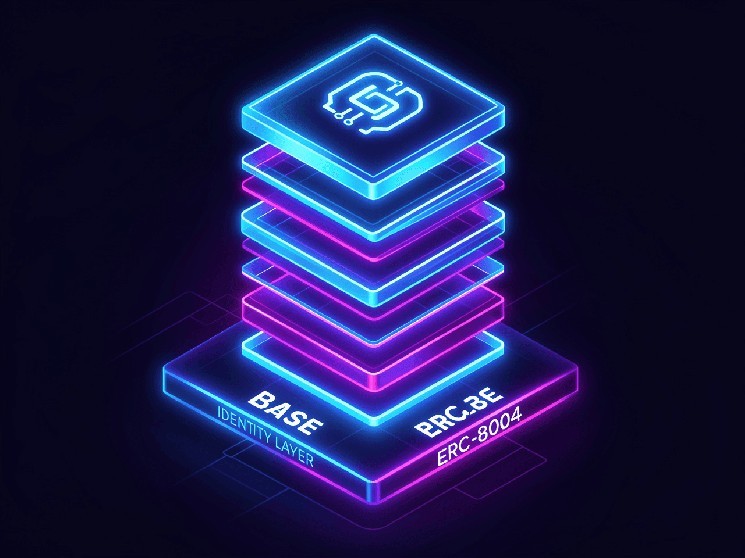
Agent-native systems are already capable of supporting genuinely useful operational workflows. These include portfolio monitoring across multiple assets, yield tracking in decentralized finance protocols, governance updates for DAOs and token holders, and market signal distribution to interested parties. Through integrations with familiar platforms like Discord or email systems, agents can continuously monitor conditions and deliver updates without requiring constant human oversight. This represents a fundamental transition from manual monitoring—where humans must constantly check dashboards and feeds—toward automated intelligence that works around the clock. The architecture that’s becoming visible through these various innovations includes several distinct layers working together: the Identity Layer provided by ERC-8004, the Payment Layer enabled by X402, the Operating Layer supported by OpenClaw and N8N, execution environments like Tempo, and settlement infrastructure through Base. Each of these layers has evolved somewhat independently, developed by different teams solving specific problems, but their convergence is forming the foundation for machine-driven coordination at a scale previously impossible. This is the time for builders, developers, and researchers to engage with this emerging frontier. The agent economy is still in its formation stage, which means there are significant opportunities for those who get involved early to shape its development and establish positions in this new landscape. The infrastructure is being laid now, and collaboration and knowledge exchange will be increasingly important as the ecosystem matures and becomes more complex. What we’re witnessing isn’t just an incremental improvement in AI capabilities—it’s the creation of an entirely new category of economic participants that will fundamentally change how value is created and exchanged in digital environments.