


AI Cryptocurrencies Surge Following Nvidia’s Vision for the Future of Artificial Intelligence
The Perfect Storm: When Tech Giants Meet Digital Assets
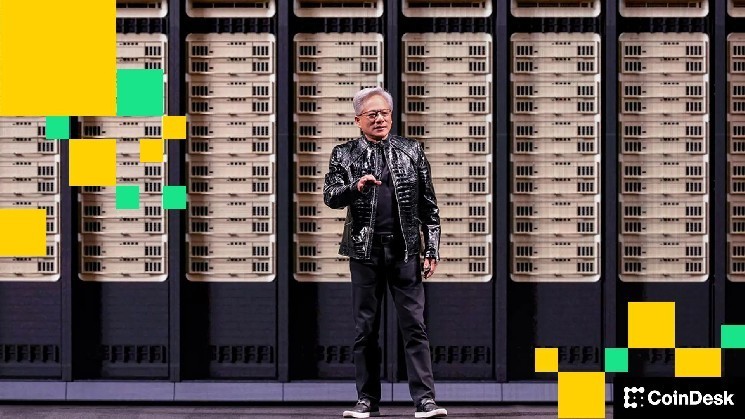
The cryptocurrency market experienced a significant ripple effect this Monday, with AI-related digital assets catching fire after Nvidia’s CEO Jensen Huang delivered a compelling vision for the future of artificial intelligence infrastructure. Speaking at Nvidia’s highly anticipated GTC developer conference, Huang’s keynote presentation sparked enthusiasm across the crypto sector, particularly among projects positioning themselves at the intersection of blockchain technology and artificial intelligence. This wasn’t just another tech conference moment—it represented a validation of the growing synergy between two of the most transformative technologies of our time. Investors and developers alike watched closely as Huang outlined plans that could fundamentally reshape how AI systems are built, deployed, and monetized, with blockchain-based projects standing ready to play a crucial role in this evolution.
The market response was immediate and decisive. AI-focused cryptocurrencies surged across the board, with several projects posting double-digit gains within hours of the keynote’s conclusion. NEAR, a blockchain platform designed to support decentralized applications with AI capabilities, climbed more than 10% over a 24-hour period, reaching price levels not seen since late January. The Artificial Superintelligence Alliance’s FET token experienced even more dramatic movement, surging as much as 20% during intraday trading before settling at more modest gains as profit-taking kicked in later in the session. These weren’t isolated incidents but part of a broader wave of enthusiasm sweeping through the AI-crypto sector, suggesting that investors see real potential in projects bridging these two technological frontiers.
Key Projects Leading the Charge
Among the standout performers was Worldcoin (WLD), the identity-focused cryptocurrency project co-founded by Sam Altman, who also serves as CEO of OpenAI. Worldcoin rose approximately 10%, trading near the $0.40 mark—its strongest showing since early March. The connection here is particularly intriguing: Altman’s dual role at both OpenAI and Worldcoin positions him uniquely at the convergence of AI development and blockchain-based identity solutions. His project aims to create a global identity and financial network, and the market’s positive response suggests investors believe AI advancement and digital identity verification will become increasingly intertwined.
Another impressive gainer was Grass (GRASS), a decentralized network with an innovative business model that allows users to monetize their unused internet bandwidth for AI model training. The token surged 13% to reach fresh 2025 highs, demonstrating investor appetite for projects that democratize access to AI infrastructure. The concept behind Grass addresses a real bottleneck in AI development: the enormous computational and data resources required to train sophisticated models. By creating a distributed network where ordinary internet users can contribute resources and earn rewards, projects like Grass are attempting to challenge the centralized control that major tech companies currently hold over AI development infrastructure.
Nvidia’s Trillion-Dollar Vision and Market Dominance
At the heart of Monday’s crypto surge was Jensen Huang’s presentation itself, which reinforced Nvidia’s absolutely central role in the ongoing global AI revolution. The CEO revealed staggering projections that captured the attention of both traditional tech investors and the crypto community: Nvidia expects roughly $1 trillion worth of chip demand backlog extending through 2027. This isn’t just corporate optimism—it’s a reflection of the insatiable appetite for the specialized hardware required to power AI applications. Huang noted that hyperscale cloud providers—the Amazons, Microsofts, and Googles of the world—account for approximately 60% of Nvidia’s business, underscoring how deeply embedded the company has become in the infrastructure layer supporting AI advancement.
Huang also spent considerable time discussing the rapid rise of agentic AI systems—autonomous agents capable of performing complex tasks with minimal human intervention. He specifically praised the OpenClaw project, a viral initiative that has gained significant traction among developers in recent weeks. More importantly, Huang announced that Nvidia had worked to adapt this system into NemoClaw, an enterprise-ready version designed to make autonomous AI agents safer and more practical for corporate deployment without exposing sensitive company data. This focus on AI agents is particularly relevant to the crypto sector, as many blockchain projects are building infrastructure specifically designed to support these autonomous systems, providing them with payment rails, identity solutions, and coordination mechanisms.
The Crypto-AI Thesis: Building the Decentralized Intelligence Economy
While Huang’s keynote made no direct mention of cryptocurrency or blockchain technology, the implications for the sector were clear to those paying attention. A growing number of blockchain projects have placed strategic bets on a fundamental thesis: that the next generation of AI agents will require crypto-based infrastructure to transact, coordinate, and operate autonomously. The logic is compelling—if AI agents are to function independently, making decisions and executing transactions without constant human oversight, they’ll need payment systems, identity frameworks, and coordination protocols that can operate at machine speed without traditional intermediaries.
This vision has sparked a race among blockchain projects to build the foundational infrastructure for what some are calling the “decentralized intelligence economy.” Some projects are focusing on creating distributed networks for computing power, challenging the centralized cloud providers that currently dominate AI training and deployment. Others are building specialized marketplaces where AI agents can buy and sell services, data, and computational resources using cryptocurrency. Still others are developing decentralized training networks, identity systems for AI agents, or governance frameworks for autonomous systems. These projects position blockchain not as a competitor to AI, but as the essential coordination layer that will allow AI systems to reach their full potential while avoiding the concentration of power in the hands of a few tech giants.
Market Dynamics and Investor Sentiment
The market’s response to Huang’s presentation extended beyond just cryptocurrency. Shares of Nvidia itself (NVDA), widely regarded as the bellwether stock for the entire AI sector, initially jumped approximately 2% during the keynote before experiencing some profit-taking. The stock ultimately closed about 1.5% higher on the day—a solid if not spectacular performance that nonetheless confirmed continued investor confidence in the company’s AI-driven growth trajectory. The fact that crypto assets with AI exposure outperformed Nvidia’s stock on a percentage basis suggests that investors may view these digital assets as offering more leveraged exposure to AI trends, albeit with correspondingly higher risk.
The enthusiasm in crypto markets reflects a broader maturation of the sector’s narrative. Rather than positioning themselves in opposition to traditional tech companies, many blockchain projects are now presenting themselves as complementary infrastructure that will enable AI systems to reach their full potential. This collaborative framing may prove more compelling to investors than the earlier, more adversarial positioning that characterized some crypto projects. The strong performance of tokens like NEAR, FET, WLD, and GRASS following Huang’s keynote suggests that investors are beginning to buy into this vision of AI and blockchain working in tandem. As artificial intelligence continues its rapid advancement and autonomous agents become more sophisticated, the intersection of these technologies may indeed represent one of the most significant investment themes of the coming years, with Monday’s market action offering just a preview of potential volatility and opportunity ahead.