




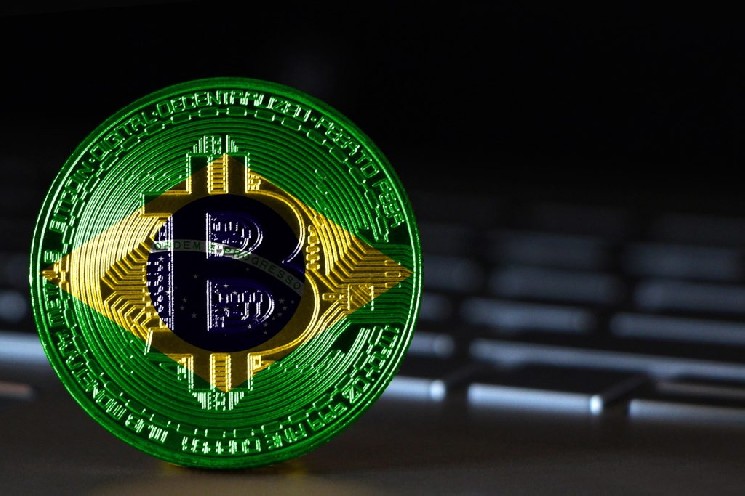

Brazil Puts the Brakes on Cryptocurrency in International Payments: What This Means for the Crypto World
A Surprising Turn in Brazil’s Crypto Journey
Brazil has long been viewed as one of the more progressive nations when it comes to embracing cryptocurrency innovation. The South American giant has made headlines for its forward-thinking approach, including recently approving the first Solana (SOL) exchange-traded funds (ETFs), signaling to the world that it was serious about integrating digital assets into its financial ecosystem. However, in a move that has caught many by surprise, Brazil has now pumped the brakes on cryptocurrency use in a significant way. The Central Bank of Brazil (BCB) has officially announced a ban on using cryptocurrencies for transactions on its official cross-border payment network, marking a notable shift in the country’s regulatory stance toward digital assets.
This decision represents a stark contrast to the progressive steps Brazil had been taking just months earlier. While the country hasn’t completely turned its back on cryptocurrencies—Brazilians can still trade, hold, and invest in digital assets domestically—this new restriction specifically targets the use of crypto in international money transfers and payments. The announcement has sent ripples through the cryptocurrency community, raising questions about what this means for the future of digital assets in Latin America’s largest economy and whether other nations might follow suit with similar restrictions. For a country that seemed to be warming up to the crypto revolution, this regulatory tightening feels like a cold shower for enthusiasts and investors who had hoped Brazil would continue leading the charge in South American crypto adoption.
Understanding What’s Actually Being Banned
To fully grasp the implications of this new policy, it’s important to understand exactly what Brazil is prohibiting. The ban doesn’t mean Brazilians can no longer own Bitcoin, Ethereum, or any other cryptocurrency. People in Brazil can still buy crypto on exchanges, hold it in their wallets, and trade it as they see fit within the country’s borders. What has changed is that regulated electronic currency providers—the financial institutions that facilitate foreign exchange and international money transfers—can no longer use cryptocurrency as a medium for cross-border transactions.
Previously, these providers had some flexibility in how they conducted international transfers, potentially including cryptocurrency as part of the process. Now, the central bank has drawn a clear line, mandating that only traditional foreign exchange transactions or Brazilian real-denominated accounts for non-residents can be used for international transfers. In practical terms, this means that if you’re in Brazil and want to send money to someone in another country, the financial institution handling that transfer cannot use Bitcoin, stablecoins, or any other crypto asset as part of that transaction process. The money must move through conventional banking channels using traditional currencies.
This distinction is crucial because it shows that Brazil isn’t outlawing cryptocurrency altogether—rather, it’s compartmentalizing where and how crypto can be used. The government is essentially saying that while crypto can exist as an investment asset or store of value within the country, it cannot serve as a bridge currency for international payments through regulated channels. This approach reflects a growing trend among governments worldwide: accepting that cryptocurrency isn’t going away, but attempting to control how it interfaces with the traditional financial system, particularly when it comes to money flowing across borders.
Why Brazil Made This Decision: The Official Reasoning
According to the Central Bank of Brazil’s official statement, this measure isn’t intended as a blanket condemnation of cryptocurrencies. Instead, the bank frames it as a targeted intervention designed to strengthen currency regulation and maintain control over the nation’s monetary policy. The central bank’s primary concern centers on stablecoins—cryptocurrencies designed to maintain a stable value by being pegged to traditional currencies like the U.S. dollar. While stablecoins might seem less volatile and therefore safer than other cryptocurrencies, they present unique regulatory challenges that have made central banks around the world nervous.
The Brazilian authorities provided some eye-opening statistics to justify their decision: approximately 90% of cross-border remittances involving cryptocurrency are linked to stablecoins. This heavy reliance on stablecoins for international transfers has raised red flags for regulators concerned about financial crimes. The central bank specifically cited increased risks of tax evasion and money laundering as major motivations behind the ban. When money moves across borders using stablecoins, it can be more difficult for authorities to track the origins, destinations, and purposes of those funds compared to traditional banking channels, which are subject to extensive reporting requirements and oversight mechanisms.
Beyond the immediate concerns about financial crimes, Brazil’s central bank also expressed worries about monetary sovereignty—the ability of a nation to control its own currency and monetary policy. Stablecoins issued by foreign entities without proper oversight could potentially undermine this sovereignty. If large portions of Brazil’s economy begin operating with dollar-pegged stablecoins issued by companies outside Brazil’s regulatory reach, it could diminish the effectiveness of the central bank’s monetary policy tools and weaken the real, Brazil’s national currency. The statement from the central bank hints that this ban might be just the beginning, suggesting that authorities may consider removing certain foreign-issued stablecoins from the domestic market entirely or imposing even stricter restrictions in the future if they perceive these assets as continuing threats to financial stability and monetary independence.
Reading Between the Lines: What Regulators Really Fear
While the official reasoning focuses on preventing financial crimes and maintaining monetary control, the underlying concerns reveal deeper anxieties that governments worldwide share about cryptocurrency’s disruptive potential. At its core, cryptocurrency represents a fundamental challenge to the traditional financial system that has existed for centuries—a system where central banks and governments maintain ultimate control over money creation, circulation, and cross-border movement. When people can send value across borders instantly using cryptocurrencies without going through traditional banking infrastructure, it threatens this established order.
The emphasis on stablecoins is particularly telling. Unlike Bitcoin or Ethereum, whose prices fluctuate wildly, stablecoins are actually functional as currencies for everyday transactions and transfers. A businessperson is far more likely to use a dollar-pegged stablecoin for an international payment than Bitcoin, whose value might change significantly between when a transaction is initiated and when it’s completed. This practical utility makes stablecoins a more immediate threat to central bank control than more volatile cryptocurrencies, which most people treat as speculative investments rather than actual currencies.
Brazil’s concerns about monetary sovereignty also reflect a broader struggle that many nations face, particularly in emerging markets. Throughout history, in times of economic instability, citizens of countries experiencing high inflation or currency devaluation have sought refuge in more stable foreign currencies, particularly the U.S. dollar. Stablecoins represent a digital evolution of this phenomenon, making it easier than ever for people to effectively “dollarize” their savings and transactions without physically obtaining foreign currency. For central banks trying to maintain confidence in their national currencies and execute effective monetary policy, this represents a serious challenge. If citizens can easily shift to stablecoins during times of economic uncertainty, it could accelerate currency crises and limit the central bank’s ability to respond effectively.
The Broader Context: Brazil’s Move in the Global Crypto Landscape
Brazil’s decision doesn’t exist in isolation—it’s part of a larger global pattern of governments grappling with how to regulate cryptocurrency and integrate (or isolate) it from traditional financial systems. Around the world, we’re seeing countries take vastly different approaches to crypto regulation, creating a complex patchwork of rules that varies dramatically depending on where you are. Some nations, like El Salvador, have embraced Bitcoin as legal tender, while others, like China, have implemented sweeping bans on cryptocurrency activities. Most countries, including the United States and members of the European Union, are somewhere in the middle, developing regulatory frameworks that attempt to harness the benefits of blockchain technology while mitigating risks.
What makes Brazil’s approach particularly interesting is its seeming contradiction—approving Solana ETFs while simultaneously banning crypto use in cross-border payments. This apparent inconsistency actually reflects a nuanced regulatory philosophy: allow crypto to exist as an investment vehicle within controlled, supervised markets (like ETFs), but prevent it from functioning as actual currency in the international payment system. This strategy lets citizens participate in the potential financial gains of cryptocurrency investment while maintaining government control over the actual movement of money across borders.
This decision may also influence other Latin American countries facing similar challenges. Nations throughout the region have seen increasing cryptocurrency adoption, driven partly by economic instability, inflation concerns, and large populations of people sending remittances to family members in other countries. If Brazil’s approach appears successful in maintaining monetary control without completely stifling the crypto industry, other countries might adopt similar frameworks. Conversely, if the ban proves difficult to enforce or drives crypto activity underground, it could serve as a cautionary tale for regulators elsewhere. The coming months will be crucial in determining whether Brazil’s middle-path approach—embracing certain crypto activities while restricting others—proves sustainable or whether the borderless nature of cryptocurrency makes such selective regulation ultimately futile.
What This Means for Everyday People and the Future of Crypto in Brazil
For ordinary Brazilians interested in cryptocurrency, this ban creates a more complicated landscape but doesn’t shut the door entirely on crypto participation. Brazilian crypto investors can still buy, sell, and hold digital assets through local and international exchanges. The approved Solana ETFs and other crypto investment products remain available for those wanting exposure to digital assets through more traditional investment vehicles. What has changed is specifically the ability to use crypto for practical purposes like sending money to family members abroad or receiving payments from international clients through regulated channels.
This restriction will likely be most felt by Brazilians who rely on remittances—people working abroad who send money back home or those receiving support from relatives in other countries. Previously, cryptocurrency offered a potentially cheaper and faster alternative to traditional remittance services, which often charge significant fees and can take days to process transfers. With crypto now prohibited in official cross-border payment channels, these individuals will need to revert to traditional money transfer services or find alternative methods, which may be more expensive and slower. There’s also the possibility that some people might turn to unregulated channels to send crypto-based remittances, which could ironically increase the very risks of money laundering and tax evasion that the central bank is trying to prevent.
Looking forward, the question remains whether this ban represents a temporary measure or the beginning of more restrictive policies. The Central Bank of Brazil’s statement hinting at possible future restrictions on foreign-issued stablecoins suggests that authorities are prepared to take additional steps if they deem necessary. Much will depend on how the crypto industry and users respond to these restrictions and whether the government believes the measures are achieving their intended goals. For the global cryptocurrency community, Brazil’s experiment with selective regulation will be watched closely as a potential model—or cautionary tale—for how governments can attempt to contain crypto’s disruptive potential while still allowing some forms of participation in the digital asset economy. It’s worth noting that this isn’t investment advice, but rather an exploration of how regulatory changes can reshape the crypto landscape in ways that affect real people’s financial options and freedoms.









