
Former FBI Director James Comey Faces Controversial Criminal Charges Over Social Media Post
The Seashell Post That Sparked a Federal Case
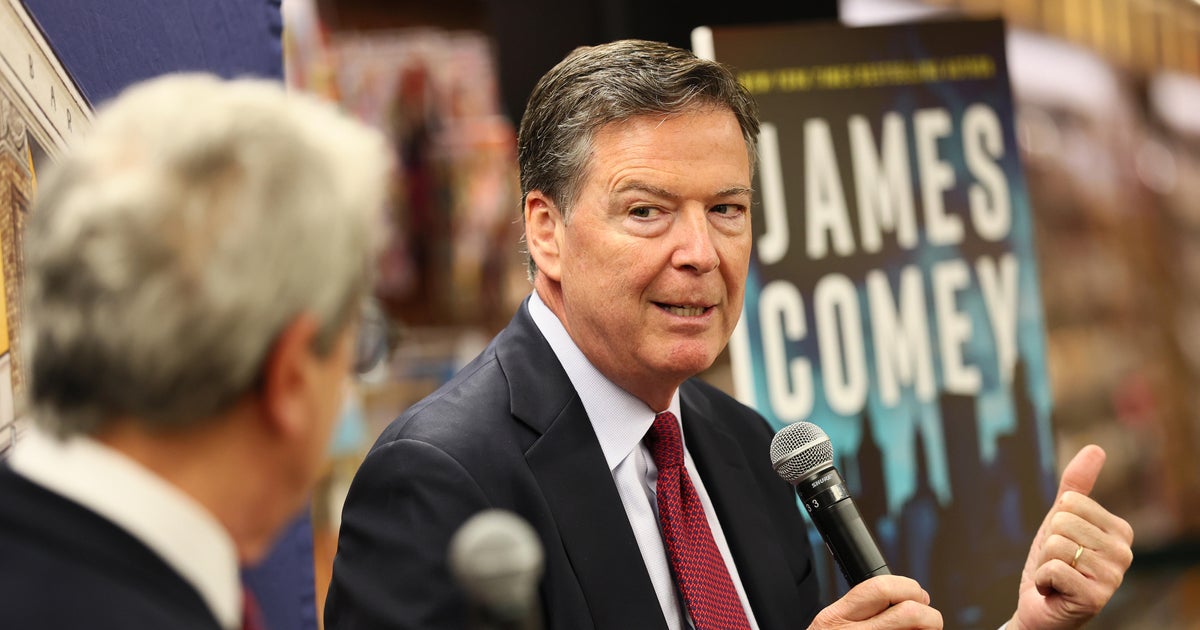
Former FBI Director James Comey is once again in the crosshairs of federal prosecutors after a grand jury voted to indict him this week on charges that he threatened President Trump through a now-deleted Instagram post. The post in question featured a photograph of seashells arranged in the sand to form the numbers “86 47.” According to the indictment, prosecutors believe this image could reasonably be interpreted as “a serious expression of intent to do harm” to the 47th president of the United States. President Trump himself weighed in on the matter via Truth Social, claiming that “’86’ is a mob term for ‘kill him.'” However, the Merriam-Webster dictionary defines “86” more benignly as slang meaning “to throw out” or “get rid of,” noting that the expression is commonly used in restaurant kitchens to indicate an item is no longer available. Comey appeared in federal court Wednesday but has not yet entered a plea. In a video posted to Substack, he maintained his innocence, declaring, “I’m still innocent.” Legal experts across the political spectrum are expressing serious doubts about whether this prosecution can survive constitutional scrutiny, with many believing it’s unlikely Comey will actually stand trial on these charges. This marks the second criminal case the Justice Department under Trump has brought against the former FBI director, raising questions about whether the prosecution represents legitimate law enforcement or political retribution.
Legal Experts Question the Foundation of the Charges
Constitutional law scholars and former federal prosecutors are raising alarm bells about the implications of charging someone for such an ambiguous message. Perry Carbone, a law professor at Pace University and former chief of the criminal division for the U.S. Attorney’s Office in Manhattan, put it bluntly: “If you can charge somebody for arranging seashells in the sand with an ambiguous message, if that’s a threat, if that’s criminal speech, then the First Amendment is in serious jeopardy.” Carissa Byrne Hessick, a law professor at the University of North Carolina who specializes in criminal law, told CBS News that “this case is going to prove, I think, to be a real challenge for the government.” She explained that beyond the claims Comey is expected to raise about selective and vindictive prosecution—similar to arguments he made when first indicted last year—there are also significant legal issues with the specific charges themselves. The context surrounding the image adds another layer of complexity to the case. Comey posted the photo last May but deleted it shortly afterward, explaining in a subsequent post that he encountered the shells, which had been arranged by someone else, while walking on a beach and assumed the phrase “86 47” was conveying a political message. He stated that he did not realize some people associate the numbers with violence. This explanation raises questions about whether prosecutors can prove the necessary criminal intent required for a conviction.
The History Behind This Prosecution
This isn’t the first time the Trump Justice Department has pursued criminal charges against Comey. He was initially indicted in September on two criminal counts alleging he lied to Congress. Comey sought to have those counts dismissed on numerous grounds, including arguments that the prosecution was vindictive and selective—essentially claiming he was being targeted for political reasons rather than legitimate law enforcement purposes. A judge ultimately did dismiss that case, but not on the grounds Comey’s team had argued. Instead, the court found that Lindsey Halligan, the prosecutor handling the case, was unlawfully appointed to her position. Because the case was thrown out on these procedural grounds, the court never ruled on Comey’s substantive arguments that the prosecution was vindictive and selective. Now, in this second prosecution, Comey is expected to resurrect those arguments. During Wednesday’s court appearance, Comey’s lawyer, Pat Fitzgerald, told the court that the defense plans to file a motion to dismiss the case on the grounds that the prosecution is both vindictive and selective. The argument is essentially that Comey is being unlawfully targeted for prosecution because of his protected speech criticizing the president and because of Trump’s well-documented hostility toward him. Trump has publicly and repeatedly expressed anger at Comey since firing him as FBI director, often calling him names on social media and suggesting he should face criminal charges.
What Constitutes a “True Threat” Under the First Amendment?
The legal question at the heart of this case revolves around what the Supreme Court has defined as a “true threat”—a category of speech not protected by the First Amendment. The indictment alleges that Comey “knowingly and willfully” made a threat to kill or harm Trump through his Instagram post. However, the Supreme Court has set an extremely high bar for what qualifies as a true threat, and legal experts believe the government will struggle to meet that standard in Comey’s case. Len Niehoff, a law professor at the University of Michigan, explained the constitutional framework: “Speech needs breathing room, and the First Amendment doesn’t allow the state to assign to speech the most sinister possible meaning that it might convey out of the most paranoiac reading of its content. We read speech generously and give it plenty of room to work. Prosecuting speech because it’s ambiguous is exactly the opposite approach that the First Amendment dictates.” At least three Supreme Court cases provide relevant precedent. In the 1969 case Watts v. United States, a protester named Robert Watts said at a rally about police brutality, “If they ever make me carry a rifle the first man I want to get in my sights is LBJ,” referring to then-President Lyndon B. Johnson. The Supreme Court ruled this was crude political hyperbole, not a true threat. More recently, in the 2023 case Counterman v. Colorado, the Court ruled that to prove a true threat falls outside First Amendment protection, the government must demonstrate that a defendant had at least a subjective understanding of his statement’s threatening nature—that the person “consciously disregarded a substantial risk” that his statements would be viewed as threatening. Another relevant case, the 2015 Elonis v. U.S. decision, established that prosecutors must show a defendant transmitted a communication “for the purpose of issuing a threat or with knowledge that the communication will be viewed as a threat.” Given that Comey deleted the post and explained he didn’t realize the potential violent interpretation, proving this element may be particularly challenging for prosecutors.
The Selective Prosecution Problem
One of the most damaging aspects of this case for the government may be the question of selective prosecution. Since Acting Attorney General Todd Blanche announced the indictment, commentators have pointed out that prominent conservatives have also used the term “86” in reference to politicians without facing any legal consequences. In 2024, former Republican Congressman Matt Gaetz of Florida wrote on X (formerly Twitter), “we’ve now 86’d: McCarthy, McDaniel, McConnell” after former House GOP Leader Kevin McCarthy, former Republican National Committee Chair Ronna McDaniel, and former Senate Republican Leader Mitch McConnell announced they were stepping down from their leadership positions. In 2022, right-wing influencer Jack Posobiec posted “86 46,” a clear reference to then-President Joe Biden. When asked whether the Justice Department would pursue charges against others who have used the phrase, Blanche gave a vague response, saying it would depend on an investigation and “all kinds of factors.” This response is unlikely to satisfy critics who see a double standard in prosecuting Comey while ignoring similar or identical speech from Trump allies. Perry Carbone, the former federal prosecutor, argued that Comey’s post “falls clearly within the ambit of protected political speech. The Supreme Court has made clear that even hyperbolic or what some might consider intemperate political expression, it’s protected unless it crosses the line into a real threat, a true threat. And it requires in order to prove a true threat more than just provocative language. It requires a serious expression of an intent to commit unlawful violence, and I don’t see that you have that here.”
The Broader Implications for Free Speech and Democracy
Beyond the specific facts of Comey’s case, legal experts and civil liberties advocates are warning about the broader chilling effect this prosecution could have on political speech in America. Aaron Terr, director of public advocacy at the Foundation for Individual Rights and Expression, explained the danger: “It sends a message not just to Comey but to everyone else that they better watch what they say about the government or they could be next. Many people may rationally choose to self-censor rather than risk the government making an example out of them and taking away their liberty.” The concern is that if the government can prosecute someone for posting a photo of seashells with an ambiguous numerical message, what other forms of political expression might be deemed criminal? Could wearing a T-shirt with a political slogan result in charges? What about sharing a meme that someone might interpret as threatening? The vagueness of the standard being applied in Comey’s case could open the door to widespread prosecution of political speech that the government finds objectionable. Terr also noted that Comey, as a former FBI director, deputy attorney general, and federal prosecutor, has access to elite lawyers who have argued before the Supreme Court and the financial resources to mount a vigorous defense—advantages that the average American does not have. “Our democracy is based on the idea that everybody is able to openly express their political views and their opinions about the government,” Terr said. “Nobody should have to fear the full weight of the federal government coming down on them just for expressing criticism of the president. That’s antithetical to everything our democracy stands for.” As this case moves forward, it will test not only the specific question of what Comey intended with his Instagram post but also the broader question of how much breathing room political speech has in America today and whether criticism of those in power can be criminalized when the government chooses to interpret ambiguous statements in the most sinister possible light.