
Trump Declares End to Iran Hostilities as War Powers Deadline Looms
Presidential Notification Marks Critical Constitutional Moment
In a significant development that highlights the ongoing tension between presidential authority and congressional oversight, President Trump formally notified congressional leaders on Friday that military “hostilities” with Iran have officially ended. This announcement came precisely as a critical 60-day deadline under the War Powers Resolution arrived, a Vietnam-era law designed to prevent presidents from engaging in prolonged military conflicts without congressional approval. In nearly identical letters sent to House Speaker Mike Johnson and Senate President pro tempore Chuck Grassley, Trump stated that no military exchanges between U.S. and Iranian forces have occurred since April 7, 2026, and that the hostilities that began on February 28, 2026, have now terminated. This declaration arrives at a constitutionally sensitive moment, as lawmakers and legal experts debate whether the administration has complied with a law that has rarely been successfully enforced throughout its five-decade history.
The Constitutional Clash Over War-Making Authority
The current situation with Iran has reignited one of America’s oldest constitutional debates: who has the ultimate authority to commit the nation to war? While the Constitution’s framers explicitly granted Congress the power to declare war, the reality of modern military operations has complicated this seemingly straightforward division of powers. The War Powers Resolution, passed in 1973 over President Nixon’s veto in the aftermath of the Vietnam War, attempted to reassert congressional authority by establishing clear parameters for presidential military action. Under this law, presidents may initiate military operations without prior congressional authorization but must notify Congress within 48 hours and must terminate those operations within 60 days unless lawmakers grant an extension or formally authorize the conflict. The Iran situation has brought these requirements into sharp focus, with the 60-day clock having been triggered by Trump’s March 2 notification to Congress following the February 28 strikes launched jointly with Israel against Iranian targets. This large-scale military action sparked a broader regional confrontation that has disrupted global energy markets and placed enormous pressure on the Republican-controlled Congress to fulfill its constitutional responsibilities—a duty many lawmakers have been reluctant to embrace.
Administration’s Legal Theory: The Ceasefire Pause Argument
The Trump administration has advanced a novel legal interpretation to address the War Powers Resolution deadline: that the ceasefire brokered in early April effectively “paused” or “stopped” the 60-day countdown because active hostilities had ceased. Defense Secretary Pete Hegseth articulated this position during testimony before the Senate Armed Services Committee on Thursday, stating that the administration’s understanding is that a ceasefire interrupts the legal timeline for obtaining congressional authorization. This interpretation represents a creative approach to the War Powers Resolution’s requirements, suggesting that the clock measuring unauthorized military action can be stopped and started based on the intensity of ongoing operations rather than running continuously from the initial notification. President Trump’s Friday letter to congressional leaders made this argument explicit, emphasizing that no exchanges of fire have occurred since early April as evidence that the original hostilities have concluded. However, this legal theory has not found universal acceptance, even as it provides the administration with a potential pathway to avoid directly confronting the congressional authorization question that the War Powers Resolution was designed to force.
Congressional Skepticism and Constitutional Concerns
Not all lawmakers are convinced by the administration’s ceasefire argument, with critics pointing out significant inconsistencies between the claim that hostilities have ended and the ongoing military posture in the region. Democratic Senator Tim Kaine of Virginia, a longtime advocate for congressional war powers, directly challenged the administration’s interpretation, stating he does not believe the statute supports the notion that a ceasefire pauses the 60-day deadline. Kaine warned that allowing this interpretation would create “additional statutory concerns” on top of already “serious constitutional concerns” about the Iran operation. The skepticism is well-founded when considering the facts on the ground: the United States continues to enforce a naval blockade on Iranian ports, an action that is traditionally considered an act of war under international law; more than 50,000 American service members remain deployed throughout the Middle East; and administration officials have repeatedly threatened to resume strikes at any moment. Just days after the ceasefire was announced, Secretary Hegseth stated that military operations could restart “at the push of a button,” and he issued a stark warning to Iran that U.S. forces remained “locked and loaded” to strike critical infrastructure, power generation facilities, and energy industry targets. These circumstances paint a picture of a conflict that remains very much active, even if direct exchanges of fire have temporarily ceased. Meanwhile, some Republican lawmakers have expressed that the administration should begin winding down the Iran campaign, while others are reportedly working on legislation that would formally authorize the use of military force against Iran—a move that would resolve the War Powers Resolution debate by providing the congressional approval the law requires.
Historical Pattern of Presidential Workarounds
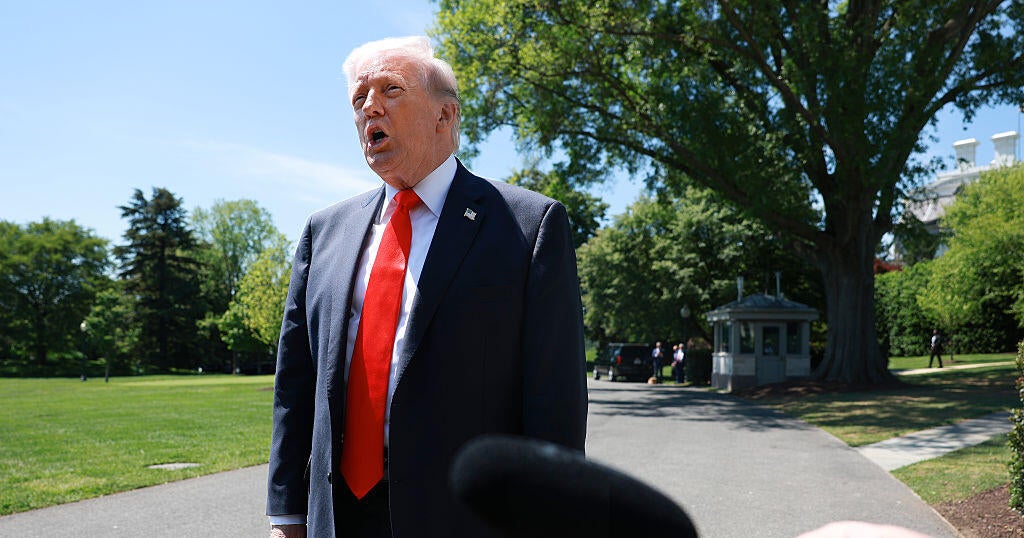
The current situation is far from unprecedented; rather, it continues a decades-long pattern of presidents from both parties finding ways to circumvent the War Powers Resolution’s restrictions. President Trump himself acknowledged this history when speaking to reporters at the White House on Friday, noting that “so many presidents have gone and exceeded it” and that the resolution has “never been used” and “never been adhered to.” Trump added that “every other president considered it totally unconstitutional,” a view his administration shares. This track record includes several notable examples: the Obama administration argued in 2011 that its air strikes against Libya did not require congressional approval beyond the 60-day mark because the operations did not constitute “hostilities” under the law’s meaning; President Bill Clinton’s administration claimed that military actions in Somalia in 1993 didn’t need authorization because they weren’t “sustained”; and later, Clinton continued bombing Kosovo past the 60-day deadline, arguing that congressional funding approval constituted authorization for the operations. Trump himself has previous experience with War Powers controversies—in 2019, he vetoed a bipartisan resolution that sought to end U.S. military involvement in Yemen, and Congress lacked the votes to override that veto. This historical pattern reveals a fundamental truth: Congress has never successfully used the War Powers Resolution to end a military campaign, and administrations of both parties have consistently found interpretive pathways around its requirements.
Unresolved Questions and the Future of War Powers
As the immediate deadline passes, larger questions about American democracy, presidential power, and congressional responsibility remain unresolved. President Trump’s Friday letter acknowledged that despite claims of operational success against Iran, “the threat posed by Iran to the United States and our Armed Forces remains significant,” and noted that the Department of Defense continues updating force posture throughout the region to address Iranian and proxy threats. This admission reveals the tension at the heart of the administration’s position: how can hostilities be considered “terminated” when tens of thousands of troops remain deployed in a threatening environment, when economic warfare through blockades continues, and when military leaders promise renewed strikes at a moment’s notice? The situation underscores the War Powers Resolution’s fundamental weakness—it depends on either congressional assertiveness or presidential compliance, neither of which is guaranteed. The Republican-controlled Congress has shown limited appetite for confronting a president from their own party, even as some members express discomfort with the constitutional implications. Meanwhile, the administration advances legal interpretations that, while creative, appear designed more to avoid congressional accountability than to genuinely respect the law’s intent. As this constitutional drama continues to unfold, the Iran conflict serves as yet another reminder that the question the framers debated in 1787—who should have the power to take America to war—remains contentious and unresolved in 2026, with real consequences for service members deployed in harm’s way and for the constitutional balance of powers that is supposed to govern such momentous decisions.