


Bitcoin Rises Amid Middle East Tensions: What It Means for Crypto Investors
Geopolitical Turmoil Drives Weekend Market Movements
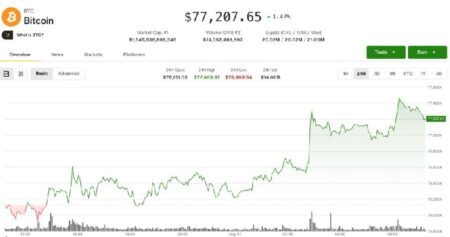
The cryptocurrency market experienced notable movement over the weekend as global investors reacted to escalating tensions in the Middle East. Bitcoin, the world’s leading digital currency, climbed to approximately $72,950 by Sunday, representing a solid 2.5% increase over the previous 24 hours according to data from CoinGecko. This upward trajectory came after a roller-coaster weekend that saw the cryptocurrency briefly dip toward the $70,500 mark before staging an impressive recovery. The volatility reflected the broader uncertainty gripping global markets as traders and investors attempted to make sense of rapidly developing geopolitical events. What makes this movement particularly interesting is how it demonstrates the growing interconnection between traditional geopolitical events and the cryptocurrency market, suggesting that digital assets are no longer operating in isolation from world affairs but are increasingly viewed through the same lens as conventional investment vehicles.
Oil Price Surge Creates Ripple Effects Across Markets
The catalyst for much of the weekend’s market activity was a significant spike in oil prices, with crude oil jumping approximately 3% on Sunday night to reach around $100 per barrel—a level not seen since July 2022. This dramatic increase came as the conflict involving Iran entered its third week following U.S. military strikes on Kharg Island, a critically important hub for Iranian oil exports. The significance of Kharg Island cannot be overstated; it handles roughly 90% of Iran’s oil exports, making it one of the most strategically vital pieces of energy infrastructure not just in the region but globally. The targeting of such a facility has sent shockwaves through energy markets, with traders now laser-focused on the possibility of disruptions to oil flows through the Strait of Hormuz. This narrow waterway serves as a critical chokepoint for global energy supplies, carrying approximately one-fifth of the world’s oil. Any disruption here would have immediate and severe consequences for energy markets worldwide, which explains why investors across all asset classes are monitoring the situation with heightened concern.
Presidential Statements Add Another Layer of Uncertainty
Adding to the market tension were statements from President Donald Trump, who took to his Truth Social platform on Saturday to describe the military action. According to Trump, U.S. Central Command had conducted “one of the most powerful bombing raids in the history of the Middle East,” specifically targeting military installations on Kharg Island. However, in an attempt to provide some reassurance to nervous markets, Trump emphasized that the U.S. had deliberately avoided striking Iran’s oil infrastructure directly. Yet this reassurance came with a significant caveat—a warning that American strategy could shift if Iran attempts to interfere with shipping operations through the Strait of Hormuz. This conditional threat has left markets in a state of anxious anticipation, as traders try to calculate the likelihood of further escalation and what that might mean for global oil supplies and, by extension, the broader economy. The delicate balance between military objectives and economic considerations has rarely been more apparent, and investors are now forced to factor geopolitical chess moves into their financial calculations.
The Complex Relationship Between Oil Prices and Bitcoin
Understanding why oil prices matter for Bitcoin requires looking at the broader macroeconomic picture. When energy prices surge, it typically triggers inflationary pressures throughout the economy. Everything from transportation costs to manufacturing expenses increases, potentially causing consumer prices to rise across the board. This inflationary environment complicates the Federal Reserve’s monetary policy decisions, particularly regarding interest rate cuts. The Fed has been carefully managing interest rates to balance economic growth with inflation control, and a spike in oil prices could force them to maintain higher rates for a longer period—what market watchers call a “higher-for-longer” regime. This matters enormously for Bitcoin and other cryptocurrencies because higher interest rates generally mean tighter global liquidity, as borrowing becomes more expensive and investors become more risk-averse. When liquidity is tight, speculative assets like cryptocurrencies often face headwinds as capital flows toward safer, yield-producing investments. This connection illustrates how seemingly distant events—military strikes in the Middle East—can work their way through the economic system to affect digital asset prices.
Crypto Market Shows Resilience Despite Broader Concerns
Despite the turbulence in commodity markets, what’s particularly noteworthy is how relatively steady broader risk assets have remained, at least as of late Sunday evening. U.S. equity futures showed modest gains, with Dow Jones futures rising 0.15%, S&P 500 futures gaining 0.15%, and Nasdaq-100 futures climbing 0.14% to reach 24,640. This stability suggests that while investors are certainly paying attention to developments in Iran, there hasn’t yet been a panic-driven flight to safety. Bitcoin’s weekend price movements reflected this mixed sentiment, with the cryptocurrency demonstrating what many analysts are calling resilience. Since the conflict began on February 28, Bitcoin has held up remarkably well, with some market observers suggesting that crypto-specific demand is supporting prices rather than broader macroeconomic factors. Prices briefly touched above $73,475 late Friday before pulling back when news of the strikes first broke, then stabilized through the weekend before gradually recovering above the $72,000 level. This pattern of initial reaction followed by recovery suggests that cryptocurrency traders are actively weighing geopolitical risks against ongoing demand for digital assets.
Looking Ahead: Uncertainty and Opportunity in Equal Measure
The current situation presents both challenges and potential opportunities for cryptocurrency investors. On one hand, the resilience Bitcoin has shown suggests that the asset class may be maturing, with a more diversified investor base that doesn’t panic at every headline. The fact that the cryptocurrency has maintained relatively strong levels despite significant geopolitical uncertainty could be interpreted as a sign of growing confidence in digital assets as a legitimate component of diversified portfolios. However, cautionary voices in the market warn that prolonged conflict could eventually take its toll on the global economy, which would inevitably affect cryptocurrencies as well. The key questions facing investors now include whether the Middle East situation will escalate further, how high oil prices might climb if it does, and what implications that would have for Federal Reserve policy and global liquidity conditions. As we move forward, the interplay between geopolitical events, traditional commodities like oil, central bank policies, and cryptocurrency prices will likely remain complex and closely watched. For now, Bitcoin’s weekend performance suggests that digital asset markets are finding their footing even in uncertain times, though investors would be wise to remain vigilant as this situation continues to unfold in the days and weeks ahead.