
Amtrak’s Controversial Gun Storage Plan: A Security Debate in the Wake of Violence
The Proposed Policy Change Sparks National Concern
Amtrak, America’s national passenger railroad service, is navigating turbulent waters as it considers a significant policy shift that would dramatically expand gun access on its trains. The railroad company has been working on a proposal to install lockboxes on most of its trains, allowing passengers to store firearms during their journeys. This proposed change would represent a massive expansion from current policies, potentially affecting more than 1,500 trains daily and impacting approximately 750,000 passengers who travel the Northeast Corridor alone each day. The timing of this consideration has raised eyebrows across the country, particularly because it comes on the heels of a terrifying incident at the White House Correspondents’ Association dinner that highlighted the very real dangers of firearms being transported on rail systems.
The proposal reportedly originated earlier this year following pressure from Trump administration officials who wanted to see fewer restrictions on weapon transportation across various modes of travel. Currently, Amtrak only permits firearms on a couple dozen trains—primarily long-distance routes that have dedicated locked baggage cars where guns can be safely stored away from passengers. Under the new plan, passengers would be able to bring guns aboard nearly any Amtrak train, with the weapons stored in special lockboxes accessible only to conductors who would hold the keys. However, critics argue that this expansion would fundamentally weaken security measures at a time when they should be strengthened, not relaxed. The debate has intensified following recent events that demonstrated how rail systems can be used to transport weapons with potentially deadly intent.
A Wake-Up Call: The White House Correspondents’ Dinner Incident
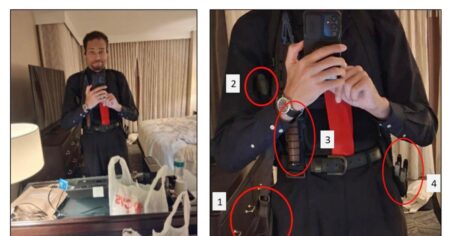
The urgency surrounding this debate was dramatically underscored by events that unfolded at last weekend’s White House Correspondents’ Association dinner in Washington, D.C. Cole Tomas Allen, a man from Torrance, California, was arrested after allegedly attempting to breach security barriers near the hotel ballroom hosting the prestigious event. According to authorities, Allen had traveled from California to the nation’s capital specifically with the intent to kill President Trump and other administration officials. The situation escalated into an exchange of gunfire with Secret Service agents, during which an officer wearing a bullet-resistant vest was shot in the vest but fortunately survived the encounter.
What makes this incident particularly relevant to the Amtrak gun policy debate is how Allen allegedly transported his weapons across the country. Prosecutors say that on April 21, Allen purchased a one-way Amtrak ticket from Los Angeles to Washington, D.C., with a connection through Chicago. He reportedly used a ride-share service to travel from his home in Torrance to Los Angeles Union Station, where he boarded the train carrying a shotgun and a semiautomatic pistol. Amtrak has declined to comment on whether Allen followed the company’s existing rules, which would have required him to declare his firearms and allow railroad staff to secure them with his checked baggage. Allen’s lawyer has stated that he has no criminal record and maintains the presumption of innocence. Nevertheless, the incident has become a focal point in arguments about rail security, with gun safety advocates pointing to it as evidence that current measures need strengthening rather than relaxation.
Current Rules Versus Proposed Changes
Under Amtrak’s existing policies, passengers are required to follow strict procedures when traveling with firearms. They must declare that they’re bringing weapons aboard and secure them unloaded in a hard-sided case. The guns must also meet certain size and weight requirements, and they can only be transported in checked baggage—a system similar to how commercial airlines handle firearms. Most importantly, these weapons are currently only permitted on trains equipped with locked baggage cars, which significantly limits the routes on which guns can be transported. This restriction means that the vast majority of Amtrak’s daily service, particularly in heavily traveled corridors like the Northeast, remains gun-free under official policy.
The proposed changes would maintain the requirement that guns be locked up aboard trains, with only conductors having access to the keys. However, the critical difference would be the addition of lockboxes to every train in the Amtrak fleet, effectively opening up the entire rail network to passengers traveling with firearms. This raises numerous practical questions that remain unanswered. For instance, it’s unclear how Amtrak would verify who is legally permitted to carry a gun, especially given the patchwork of state and local laws across the country. New York City, for example, has strict regulations requiring permits for gun possession, while other jurisdictions have far more permissive rules. Furthermore, despite current policies, there’s a real possibility that some passengers already carry guns on trains without declaring them. Unlike airports, train stations don’t screen passengers or run their names through criminal databases, creating potential security gaps that the new policy might inadvertently widen.
The Reality of Rail Security: Challenges and Limitations
One of the most striking differences between air and rail travel in America is the level of security screening passengers undergo. At airports, every traveler passes through metal detectors or body scanners, and all luggage is x-rayed before being loaded onto planes. The Transportation Security Administration maintains a visible presence, and passengers must arrive early to allow time for these security procedures. Rail travel, by contrast, operates on an entirely different model. Whether at major hubs like Washington’s Union Station or tiny unstaffed stations in rural America where trains stop in the middle of the night, passengers typically board without any screening whatsoever. In many cases, particularly at small stations, passengers can board and the train can be moving again before a conductor even makes contact or scans their tickets. This means there could be several minutes under the proposed policy before a gun could be secured in a lockbox—a window of vulnerability that concerns safety advocates.
Security expert Sheldon Jacobson, whose research helped design the TSA PreCheck system used in aviation, suggests that railroads should enhance security by collecting more passenger information during ticket purchases and conducting background checks. However, he also acknowledges the practical reality that with nearly 400 million guns in America, it’s virtually impossible to create a completely gun-free environment on trains when there’s no enforcement mechanism to guarantee compliance. Jacobson argues that rail travel inherently poses fewer risks than air travel, making it difficult to justify the massive investment that would be required to implement airport-style security at every train station across the country. That cost-benefit calculation could change, he notes, if a major tragedy were to occur on a passenger train, but for now, the question remains: where should limited resources be allocated to achieve the greatest risk reduction with the least inconvenience to travelers?
Voices of Opposition: Safety Advocates and Rail Workers Speak Out
The proposed policy change has drawn sharp criticism from gun safety organizations and labor unions representing rail workers. John Feinblatt, president of Everytown for Gun Safety, expressed outrage at the timing and nature of the proposal. “Just days after a man took an Amtrak train to Washington with a shotgun and pistol and tried to assassinate the president and other federal officials, the Trump administration is trying to open the floodgates for firearms on every Amtrak route,” he said, adding that the administration is simultaneously working to reduce enforcement of existing gun laws. Feinblatt argues that these policy changes will make Americans less safe and has called on Congress to intervene before another tragedy occurs. The organization’s concerns reflect broader worries that expanding gun access on trains without corresponding security enhancements creates unnecessary risks for millions of passengers.
Rail workers and their unions have been fighting for nearly a decade to strengthen protections for passenger rail employees, particularly following violent incidents like the 2017 shooting of a conductor by an enraged passenger at the Naperville, Illinois, train station. These workers, who would be on the front lines of implementing any new gun storage policy, have been advocating for federal protections similar to those afforded to airline crews. Two bills currently in Congress would make it a federal crime to interfere with or assault rail workers performing their duties. While unions have achieved some success at the state level in passing protective legislation, they continue to push for comprehensive federal action. The intersection of these worker safety concerns with the proposed gun policy creates a complex situation where those responsible for securing firearms in lockboxes would potentially face increased risks without adequate legal protections or enforcement mechanisms.
Looking Forward: Balancing Rights, Safety, and Practicality
The debate over Amtrak’s proposed gun storage policy ultimately reflects larger tensions in American society about gun rights, public safety, and the role of government regulation. After the September 11, 2001 terrorist attacks, Amtrak and many other ground transportation companies banned weapons on trains and buses entirely. However, no corresponding security measures were implemented to actually detect or screen every passenger for firearms, creating a policy-enforcement gap that persists today. In 2010, Congress passed legislation requiring Amtrak and other companies to allow firearms to be transported as checked items, establishing the framework within which current policies operate. The proposed expansion would represent another shift in this evolving landscape, one that supporters might argue respects Second Amendment rights while critics contend prioritizes ideology over safety.
As this proposal moves forward—or potentially stalls in the wake of recent events—several key questions demand answers. How will Amtrak train conductors and other staff to safely manage firearms and respond to related incidents? What protocols will be established for the critical minutes between when passengers board and when guns can be secured? How will the patchwork of state and local gun laws be navigated to ensure legal compliance at every destination? And perhaps most fundamentally, does expanding gun access on trains without enhancing security screening truly serve the public interest, or does it create unnecessary risks for the millions of Americans who rely on rail transportation? As officials at Amtrak and the Transportation Department consider these questions—they have not yet responded to media inquiries about the policy—the nation watches to see whether lessons from recent violence will inform future decisions, or whether the momentum toward expanded gun access will continue regardless of security concerns.