

South Korea’s Kimchi Premium Surges as Bitcoin Breaks Through $80,000 Barrier
Bitcoin’s Price Premium Reaches Multi-Month High in Korean Markets
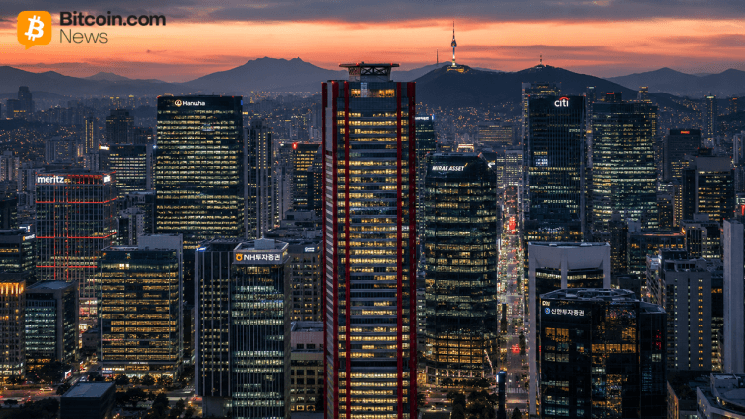
The cryptocurrency landscape has witnessed a significant development as Bitcoin prices in South Korea have climbed to carry premiums approaching 2%, marking the highest levels observed since late February 2026. This surge coincides with Bitcoin trading above the critical $80,000 threshold across global markets, signaling renewed interest and demand from South Korean investors. The phenomenon, commonly referred to as the “Kimchi Premium,” represents the price difference between Bitcoin traded on South Korean exchanges compared to the global volume-weighted average price (VWAP). This premium has historically served as an important indicator of local market sentiment and regional demand dynamics within one of Asia’s most active cryptocurrency trading hubs.
The journey to this elevated premium level has been anything but smooth. Over the past nine weeks, South Korean Bitcoin markets have experienced considerable volatility, swinging between notable discounts and elevated premiums. This turbulent period reflects the broader uncertainty affecting global financial markets, particularly following geopolitical tensions stemming from the U.S.-Iran conflict that began earlier in 2026. According to data tracked by Cryptoquant, the Korea Premium Index (KPI) reached 1.98% on May 7, coinciding with Bitcoin’s climb above the $80,000 mark across major South Korean exchanges including Upbit and Bithumb. This represented a dramatic turnaround from earlier in the year when these same exchanges experienced discounts as steep as -2.27%, highlighting the remarkable shift in market sentiment and trading dynamics within this isolated yet influential cryptocurrency ecosystem.
Understanding the Kimchi Premium and Its Market Significance
The Kimchi Premium phenomenon exists primarily due to South Korea’s unique regulatory environment and market structure, which effectively creates a semi-isolated trading ecosystem. Strict capital controls and residency-based Know Your Customer (KYC) requirements prevent seamless arbitrage opportunities that would typically eliminate price discrepancies across global markets. This regulatory framework means that Bitcoin prices in South Korea can diverge significantly from global averages, responding more directly to local demand dynamics rather than being immediately corrected through international arbitrage trading. When South Korean investors exhibit strong buying pressure, prices on local exchanges rise above the global average, creating a positive premium. Conversely, when local demand weakens or selling pressure increases, prices can fall below the global benchmark, resulting in a discount.
The volatility observed in the Korea Premium Index throughout 2025 and 2026 tells a compelling story about changing investor sentiment in the region. Throughout most of 2025, Cryptoquant’s data reveals that Bitcoin traded at a premium in South Korea for the majority of the year, with only occasional brief periods showing discounts. The premium reached particularly impressive heights in October 2025, climbing as high as 8.27% shortly after Bitcoin pushed beyond its all-time high of $126,000. This sustained premium throughout 2025 reflected the strong appetite for cryptocurrency investments among South Korean retail and institutional investors during a period of generally positive market sentiment and rising asset prices. However, the narrative shifted dramatically as 2026 unfolded, particularly following the outbreak of the Middle East conflict, which introduced significant uncertainty into global financial markets and dramatically altered risk appetite across all asset classes.
Geopolitical Tensions and Market Volatility Impact Trading Patterns
The outbreak of conflict in the Middle East has proven to be a watershed moment for cryptocurrency markets in South Korea, fundamentally altering trading patterns and premium dynamics. In January 2026, before the conflict escalated, Bitcoin traded at premiums exceeding 4% on major South Korean exchanges such as Bithumb and Upbit, indicating robust local demand and positive investor sentiment. Even in the initial days following the outbreak of hostilities, Bitcoin maintained a modest premium in South Korean markets. However, as the conflict’s potential economic implications became clearer and uncertainty gripped global markets, sentiment shifted rapidly. By the first week of March, the Korea Premium Index had fallen dramatically to a discount of -2.27%, representing a swing of more than six percentage points from the January highs. This shift indicated that South Korean investors had become net sellers of Bitcoin, or at minimum, that buying pressure had diminished significantly relative to the global market.
Throughout the remainder of March 2026, pronounced discounts became the defining characteristic of South Korean Bitcoin trading. This period likely reflected heightened risk aversion among local investors responding to both the geopolitical situation and its potential economic ramifications. However, toward the end of March, specifically on the 27th and 28th, the premium staged a modest yet meaningful recovery, climbing roughly a percentage point before slipping once again. April brought somewhat more stability and optimism, with the month predominantly showing premiums rather than discounts, though occasional dips continued to occur. This gradual improvement suggested that South Korean investors were beginning to regain confidence and return to accumulation mode, possibly viewing the conflict-driven price weakness as a buying opportunity or becoming desensitized to the ongoing geopolitical tensions.
Technology Sector Dynamics Influence Cryptocurrency Market Behavior
An intriguing dimension to South Korea’s cryptocurrency market volatility in recent months involves the complex interplay between traditional equity markets and digital asset trading. The Korean Stock Price Index (KOSPI), which tracks the performance of all common stocks traded on the Korea Exchange, has experienced its own set of sharp swings during the conflict period. While the war initially delivered a substantial shock to markets in February and March, creating downward pressure across asset classes, the fluctuations observed in May reflect a more nuanced dynamic. Specifically, there appears to be a tug-of-war between ongoing instability concerns related to Middle East tensions and the accelerating artificial intelligence hardware cycle that has benefited major South Korean technology companies such as Samsung Electronics and SK Hynix.
These technology giants have become central players in the global AI infrastructure buildout, supplying critical components such as memory chips and processors that power artificial intelligence applications. The surging demand for AI hardware has created significant optimism about South Korean tech companies’ growth prospects, potentially creating a wealth effect that spills over into cryptocurrency markets. When investors feel confident about their traditional investment portfolios due to strong performance in technology stocks, they may be more willing to allocate capital to riskier assets like Bitcoin. Conversely, when geopolitical concerns dominate sentiment, even positive technology sector developments may be insufficient to maintain elevated risk appetite. This dynamic has almost certainly contributed to the Korea Premium Index’s uneven and highly volatile behavior throughout 2026, as local investors navigate conflicting signals from geopolitical developments and sectoral growth opportunities.
Current Market Status and Future Outlook
As of May 9, 2026, the Korea Premium Index has moderated somewhat from its May 7 peak, sitting at a more modest 0.77% premium when comparing current VWAP metrics against Bitcoin prices on Upbit, one of South Korea’s largest cryptocurrency exchanges. This slight pullback suggests that the initial enthusiasm that drove the premium to its highest level since late February may have cooled somewhat, though the persistent positive premium indicates that South Korean demand remains relatively robust compared to global averages. The question facing market observers and participants is how long the current turbulence will persist and what factors will ultimately determine the direction of the Kimchi Premium in coming weeks and months.
Several considerations will likely influence South Korean Bitcoin market dynamics going forward. First, the evolution of geopolitical tensions, particularly any escalation or resolution of the Middle East conflict, will continue to play a significant role in shaping risk appetite among local investors. Second, the trajectory of the technology sector, especially AI-related stocks that have become increasingly important to South Korea’s economy, may influence overall investor sentiment and wealth effects that flow into cryptocurrency markets. Third, regulatory developments within South Korea’s cryptocurrency industry could impact trading dynamics, particularly any changes to capital controls or KYC requirements that currently maintain the market’s relative isolation. Finally, global Bitcoin price movements and macroeconomic conditions will continue to provide the broader context within which local premium dynamics play out. For now, South Korea’s crypto market remains one of the clearest real-time gauges of how regional demand can diverge sharply from the broader global market, offering valuable insights into investor psychology and market segmentation in the cryptocurrency ecosystem. The return of the Kimchi Premium to multi-month highs suggests that despite recent volatility and ongoing uncertainties, South Korean investors maintain their appetite for Bitcoin as it trades above the psychologically significant $80,000 level.