

Bank of America Predicts Extended Pause in Federal Reserve Rate Cuts Until 2027
A Dramatic Shift in Economic Forecasting
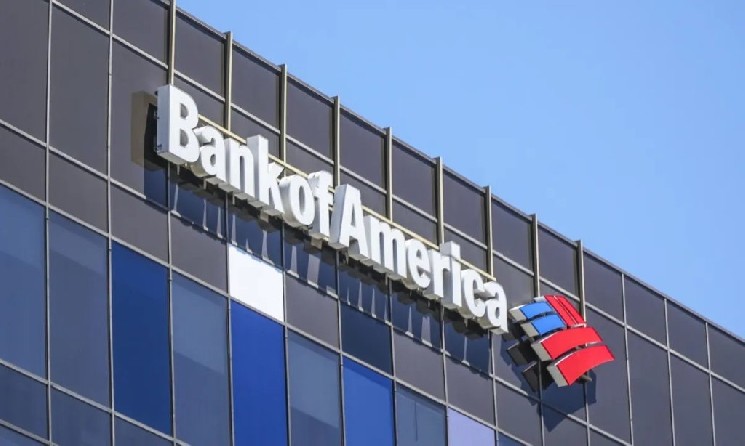
In a significant reversal that has caught the attention of financial markets and economic observers worldwide, Bank of America has fundamentally altered its outlook on the Federal Reserve’s monetary policy trajectory. The banking giant, which previously anticipated two interest rate reductions in the current year, has now completely eliminated rate cuts from its forecast for 2025. More striking still, the institution suggests that Americans and businesses shouldn’t expect meaningful relief from current borrowing costs until potentially the second half of 2027. This dramatic reassessment reflects the complex and often unpredictable nature of economic policymaking in an era marked by persistent inflation, geopolitical tensions, and technological transformation. The revision serves as a sobering reminder that even the most sophisticated financial institutions must regularly recalibrate their expectations as economic conditions evolve in unexpected ways.
The bank’s previous optimism about rate cuts this September and October was based on a specific set of assumptions that have since been overtaken by economic realities. Analysts had anticipated that President Donald Trump would nominate Kevin Warsh to succeed Jerome Powell as Federal Reserve Chairman, with expectations that Warsh would favor more accommodative monetary policies that would bring interest rates down more quickly. However, the economic landscape has shifted considerably, with inflation proving more stubborn than many experts anticipated and the job market demonstrating unexpected resilience. These factors have combined to create an environment where the Federal Reserve feels compelled to maintain its cautious stance, keeping interest rates elevated to ensure that inflationary pressures don’t reignite and undermine the progress made over the past several years.
The Perfect Storm of Economic Uncertainties
Bank of America’s economists have identified what they describe as a convergence of unprecedented challenges that are making traditional economic forecasting extraordinarily difficult. The report specifically highlights three major disruptive forces currently reshaping the economic landscape: ongoing conflicts involving Iran that threaten global stability and energy markets, the implementation of tariffs that are restructuring international trade relationships, and the transformative impact of artificial intelligence on productivity and employment patterns. Each of these factors alone would complicate monetary policy decisions, but their simultaneous occurrence creates a uniquely challenging environment for policymakers who must balance competing risks and uncertain outcomes.
The Iran conflict represents a significant wildcard in global economic calculations, with potential implications for oil prices, supply chains, and international financial stability. Tariff policies, meanwhile, introduce inflationary pressures while simultaneously threatening economic growth—creating the dreaded scenario where policymakers must choose between combating inflation and supporting economic expansion. Perhaps most profound in its long-term implications is the artificial intelligence revolution, which promises to fundamentally alter productivity dynamics, employment structures, and economic relationships in ways that historical economic models may struggle to predict accurately. Together, these shocks create what economists call a “fog of uncertainty” that makes the Federal Reserve understandably hesitant to commit to any particular policy path until clearer signals emerge from the economic data.
Growing Division Within the Federal Reserve
Adding another layer of complexity to the monetary policy outlook is the increasing discord among Federal Reserve policymakers themselves. The April 2026 Federal Open Market Committee meeting produced an 8-to-4 decision split—the most significant disagreement among Fed officials since 1992, a time when the American economy was navigating very different challenges. This level of division is highly unusual for an institution that traditionally values consensus and speaks with a unified voice to avoid sending confusing signals to financial markets. The split reflects genuine disagreement among intelligent, well-informed economists about the appropriate path forward, with some officials evidently concerned about inflation risks while others worry more about potential economic weakness.
This internal disagreement has important practical implications beyond just academic debate. When policymakers are deeply divided about the correct course of action, the institution naturally gravitates toward a “wait-and-see” approach that favors maintaining the status quo until additional evidence tips the balance decisively in one direction or another. This cautious stance means that interest rates are likely to remain at current elevated levels for an extended period while officials gather more data, assess emerging trends, and hopefully reach greater agreement about economic conditions and appropriate responses. For consumers and businesses planning major financial decisions, this suggests that the era of low borrowing costs that characterized much of the past decade is unlikely to return anytime soon.
What This Means for Everyday Americans
For millions of Americans, the prospect of interest rates remaining elevated through 2026 and potentially into 2027 carries significant practical implications that will affect daily financial decisions and long-term planning. Prospective homebuyers who have been waiting for mortgage rates to decline before entering the market may need to reconsider their timelines or adjust their expectations about affordable price ranges. Current homeowners considering refinancing their mortgages to lower rates will likely need to continue waiting, potentially for years longer than they had hoped. Similarly, those carrying credit card debt or planning major purchases that require financing should prepare for continued high borrowing costs that make debt more expensive and savings more valuable.
On the positive side, savers and retirees who depend on interest income from certificates of deposit, money market accounts, and similar instruments will continue to benefit from relatively attractive yields that have been absent from the financial landscape for over a decade. The extended period of higher rates also provides an opportunity for households to rebuild emergency funds, pay down high-interest debt, and generally strengthen their financial positions before the next economic downturn inevitably arrives. Businesses, meanwhile, must continue factoring elevated capital costs into their investment decisions, potentially slowing expansion plans while focusing on operational efficiency and productivity improvements that don’t require extensive borrowing.
The Broader Economic Context
Understanding Bank of America’s revised forecast requires appreciating the broader economic context in which the Federal Reserve operates. After years of historically low interest rates following the 2008 financial crisis and the COVID-19 pandemic, the Fed raised rates aggressively beginning in 2022 to combat inflation that had reached forty-year highs. This tightening campaign represented one of the most rapid increases in borrowing costs in modern history, taking the federal funds rate from near zero to over 5% in a matter of months. The strategy has achieved partial success—inflation has declined from its peak but remains above the Fed’s 2% target—while the economy has demonstrated surprising resilience, with unemployment remaining low and consumer spending continuing at healthy levels.
This resilience, while welcomed by workers and businesses, actually complicates the Fed’s calculus about when to cut rates. Traditional economic theory suggests that high interest rates should slow economic activity and reduce inflationary pressure, but the expected slowdown has been milder than many predicted. This has led some Fed officials to question whether rates are actually as restrictive as the numerical level suggests, or whether fundamental changes in the economy—possibly related to demographic shifts, technological advancement, or changes in business and consumer behavior—have altered the relationship between interest rates and economic activity. Until these questions are resolved with greater confidence, policymakers understandably prefer to move cautiously rather than risk cutting rates prematurely and allowing inflation to accelerate again.
Looking Ahead to an Uncertain Future
Bank of America’s forecast should be understood not as a definitive prediction of the future but rather as an informed assessment based on current conditions and trends—conditions that could certainly change in ways that alter the outlook. Economic forecasting is notoriously difficult even in stable times, and the current environment of geopolitical tensions, technological disruption, and policy uncertainty makes predictions particularly challenging. Other financial institutions and economists may reach different conclusions based on their own analyses and assumptions, and the Federal Reserve’s ultimate decisions will depend on how incoming economic data evolves in the months ahead.
For individuals and businesses navigating this uncertain environment, the wisest approach is probably to avoid betting too heavily on any particular interest rate scenario. Building financial flexibility through manageable debt levels, adequate emergency savings, and diversified income sources provides resilience regardless of whether rates fall quickly, remain elevated, or even rise further. Staying informed about economic developments while avoiding reactive decision-making based on short-term forecasts allows for thoughtful planning that accounts for multiple possible futures. While the prospect of elevated rates continuing for several more years may be disappointing to borrowers, the reality is that today’s rates, while higher than the emergency lows of recent years, remain reasonable by longer historical standards. Adapting expectations to this reality, rather than waiting indefinitely for a return to artificially low rates, may be the most practical path forward for most Americans as we navigate this complex and evolving economic landscape together.