

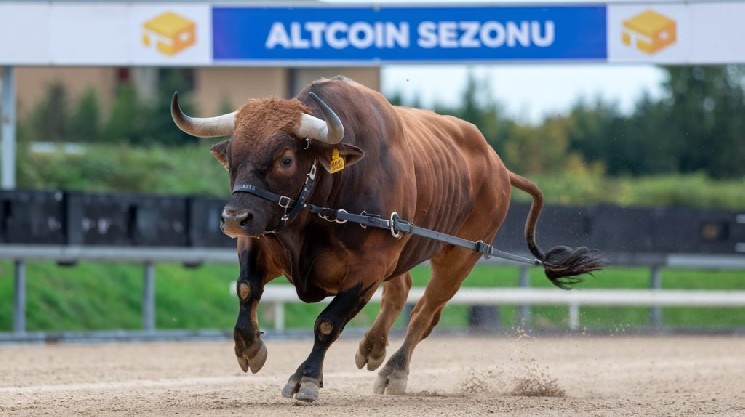

The Return of Altcoin Season: What the Latest Market Trends Tell Us
A Promising Comeback for Alternative Cryptocurrencies
After what seemed like an extended period of Bitcoin dominance in the cryptocurrency market, alternative cryptocurrencies—commonly known as altcoins—are showing clear signs of a strong comeback. The altcoin season index, which serves as a barometer for measuring the performance of alternative cryptocurrencies against Bitcoin, has climbed to an impressive 48 on its quarterly reading. This figure tells us something significant: nearly half of the top 100 altcoins by market capitalization have managed to outperform Bitcoin over the past three months. For anyone watching the crypto space, this represents a notable shift in market sentiment and capital flows. The recovery didn’t happen overnight—it’s been a steady climb that reflects growing investor confidence in the altcoin sector. Just last month, the index stood at 35, then improved to 40 the following week, and now sits at 48. This upward trajectory suggests that we’re witnessing more than just a temporary blip; it appears to be the beginning of a genuine market rotation where investors are diversifying beyond Bitcoin into other promising cryptocurrency projects.
Understanding the Bigger Picture Through Historical Context
To truly appreciate what’s happening right now in the altcoin market, we need to look at the broader timeline. The altcoin season index reached its annual peak at 78 on September 20, 2025, which represented a period when altcoins were significantly outperforming Bitcoin and investor enthusiasm for alternative projects was at its highest. However, the market didn’t stay at those elevated levels. By December 19, 2025, the index had plummeted to its annual low of just 14, indicating that Bitcoin had reasserted its dominance and altcoins were struggling to gain traction. This dramatic swing from 78 down to 14 and now back up to 48 illustrates the volatile and cyclical nature of cryptocurrency markets. These movements aren’t random—they reflect changing investor sentiment, market conditions, technological developments, and broader economic factors. The current reading of 48 places us in a neutral-to-bullish zone for altcoins, suggesting that while Bitcoin still maintains considerable strength, altcoins are increasingly competitive and attracting fresh capital. For market participants, this pattern reinforces an important lesson: cryptocurrency markets move in cycles, and understanding where we are in those cycles can help inform better investment decisions.
Bitcoin Dominance Decline Signals Market Rotation
One of the most telling indicators that something fundamental is shifting in the cryptocurrency market is the recent decline in Bitcoin dominance. Bitcoin’s share of the total cryptocurrency market capitalization, commonly referred to as Bitcoin dominance or BTC.D, has dropped from 61.2% to 60.6% in recent trading sessions. While this might seem like a small numerical change, in the context of a multi-trillion-dollar market, it represents billions of dollars flowing out of Bitcoin and into alternative cryptocurrencies. Market analysts and seasoned traders view declining Bitcoin dominance as a classic early signal of altcoin season—a period when alternative cryptocurrencies tend to outperform Bitcoin, sometimes dramatically. The logic is straightforward: when Bitcoin dominance falls, it means that the collective market capitalization of all other cryptocurrencies is growing faster than Bitcoin’s, which can only happen when money is actively flowing into altcoin projects. This capital rotation often begins when Bitcoin reaches a period of consolidation or when traders who have profited from Bitcoin gains decide to take some risk and explore higher-potential (though often higher-risk) altcoin opportunities. The current decline from 61.2% to 60.6% might be just the beginning of a more sustained trend if historical patterns hold true.
Standout Performers Leading the Altcoin Rally
The recent altcoin rally isn’t a rising-tide-lifts-all-boats situation—certain cryptocurrencies have distinguished themselves with particularly impressive performances. ONDO has surged by an eye-catching 34.5%, bringing its price to $0.4695, while Internet Computer (ICP) has climbed 32.8% to reach $3.97. STRK has shown resilience with a 21.2% increase to $0.0558, and PLUME has gained 21.03% to reach $0.01554. Meanwhile, DYM has risen 19.9% to $0.0241. These substantial percentage gains reflect more than just speculative trading—they often indicate growing adoption, technological milestones, partnership announcements, or ecosystem developments that give investors confidence in the long-term viability of these projects. Each of these tokens represents different sectors within the broader cryptocurrency landscape, from decentralized finance (DeFi) to infrastructure projects, and their strong performance suggests that the current altcoin rally has breadth rather than being concentrated in just one or two sectors. For investors, this diversity of strong performers offers multiple avenues for participation in the altcoin resurgence, though it’s important to remember that past performance doesn’t guarantee future results and that cryptocurrency investments carry substantial risk.
Solana Ecosystem Tokens Gain Significant Traction
Among the various blockchain ecosystems, Solana-based tokens have been particularly noteworthy during this latest market rally. Jupiter (JUP), a popular decentralized exchange aggregator on Solana, has risen 18.7% to $0.245, while Pyth Network (PYTH), which provides real-time market data to blockchain applications, has increased by 17.5% to $0.061. These gains reflect the broader narrative around Solana’s continued development as a high-performance blockchain platform that’s attracting developers, users, and capital. Solana has positioned itself as a faster and cheaper alternative to Ethereum for many applications, and the strong performance of its ecosystem tokens suggests that this value proposition is resonating with the market. The success of JUP and PYTH specifically highlights the importance of infrastructure projects within blockchain ecosystems—these aren’t just speculative tokens but represent actual utility services that power decentralized applications. As more users interact with Solana-based applications, tokens that provide essential services within that ecosystem naturally benefit from increased demand and usage. This creates a virtuous cycle where ecosystem growth drives token value, which in turn attracts more development and users to the platform.
SUI Ecosystem Emerges as Another High-Growth Area
Not to be outdone by Solana, the SUI ecosystem has also demonstrated remarkable strength during this altcoin rally. The native SUI token itself has climbed 14.7% to $1.09, showing solid foundational growth for the network. However, several tokens within the SUI ecosystem have posted even more impressive gains. DeepBook (DEEP) has surged by an outstanding 30.2% to $0.04, making it one of the top performers across all altcoins during this period. Walrus (WAL) has increased by 11.6% to $0.086, while Cetus Protocol (CETUS) has gained 12.9% to reach $0.031. These gains are particularly interesting because SUI is a relatively newer blockchain platform compared to established networks like Ethereum or Solana, yet it’s already developing a robust ecosystem of applications and services. The strong performance of SUI ecosystem tokens suggests that investors are betting on the long-term potential of this platform and believe it can capture meaningful market share in the increasingly competitive smart contract platform space. For market observers, the simultaneous strength in both Solana and SUI ecosystems indicates that the current altcoin season isn’t just about one or two blockchains dominating—rather, we’re seeing a more distributed pattern of growth where multiple ecosystems can thrive simultaneously, each potentially serving different use cases or user preferences within the broader cryptocurrency landscape. As always, while these gains are exciting, potential investors should conduct thorough research and never invest more than they can afford to lose in these volatile markets.