


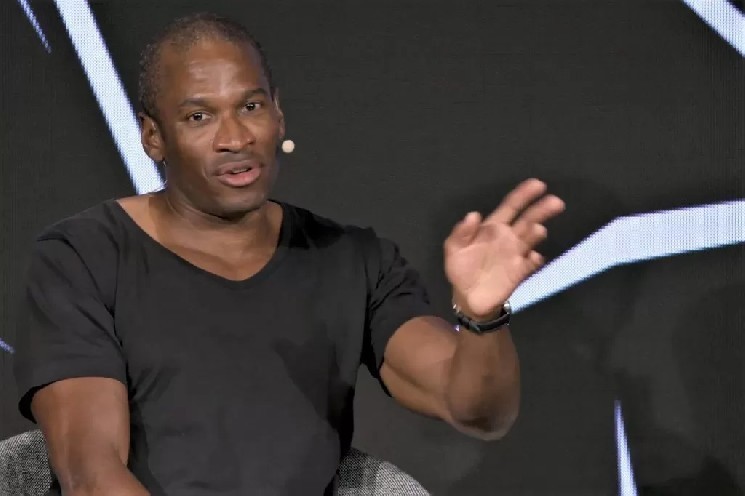

Arthur Hayes’ Bold Crypto Predictions: Understanding the $HYPE Token Forecast and Economic Warnings
The $150 HYPE Token Prediction That’s Turning Heads
Arthur Hayes, the high-profile founder of cryptocurrency exchange BitMEX, has recently made waves in the digital asset community with a remarkably bullish prediction for the $HYPE token. Speaking candidly about his investment outlook, Hayes suggested that this particular cryptocurrency could surge to an impressive $150 by July of this year. To put this forecast into perspective, such a price point would represent approximately a fivefold increase from the token’s current valuation – a substantial gain that, if realized, would deliver exceptional returns for early investors and believers in the project.
Hayes isn’t known for making casual predictions, and his track record in the cryptocurrency space has earned him both respect and scrutiny from investors worldwide. His position as a prominent figure in digital asset markets means that when he speaks, people listen. This latest prediction regarding $HYPE has naturally attracted significant attention from traders and investors looking for the next major opportunity in an increasingly crowded altcoin landscape. However, what makes Hayes’ recent commentary particularly interesting isn’t just his price target for a single token, but rather the broader economic context within which he frames this prediction – a context that includes serious warnings about traditional financial markets and the global economic system.
Global Market Alarm Bells: The Bitcoin-Nasdaq Disconnect
Beyond his specific token predictions, Hayes has been sounding alarm bells about troubling developments in traditional financial markets that he believes could have far-reaching consequences for both conventional and crypto investors. At the heart of his concerns is an unusual phenomenon he’s been monitoring closely: the weakening correlation between Bitcoin and the Nasdaq 100 index. Historically, these two assets have often moved in tandem, particularly in recent years as institutional investors have increasingly treated Bitcoin as a risk asset similar to growth stocks. When this relationship begins to break down, Hayes views it as more than just a statistical anomaly – he sees it as a warning signal for something more fundamental.
According to Hayes’ analysis, this divergence between Bitcoin and the tech-heavy Nasdaq index serves as what he describes as an “alarm for global fiat currency liquidity.” In simpler terms, he’s suggesting that the traditional financial system may be experiencing stress related to the availability of money and credit. When correlations that normally exist between different asset classes begin to break down, it often indicates that market participants are reassessing risk in fundamental ways, and that the normal flow of capital through the system is being disrupted. Hayes believes this particular disconnection could be signaling the onset of a major credit crunch – a situation where banks and other lenders become significantly more conservative about extending credit, which can have cascading effects throughout the economy. This type of credit market stress has historically preceded some of the most challenging periods for financial markets, making Hayes’ observation particularly noteworthy for anyone trying to navigate the current investment landscape.
The AI Employment Crisis: A Looming Threat to Financial Stability
Hayes’ economic concerns extend well beyond abstract market indicators to include what he sees as concrete threats to employment and consumer financial health. Perhaps most provocatively, he’s warned about the potentially devastating impact that artificial intelligence could have on the workforce in the near term. Specifically, Hayes has suggested that the rapid advancement and deployment of AI technologies could render approximately 20% of white-collar knowledge workers unemployed. This isn’t a distant, theoretical concern in Hayes’ mind – he appears to believe this disruption could materialize relatively quickly as companies increasingly turn to AI solutions to handle tasks previously performed by educated professionals.
The implications of such widespread displacement in the knowledge worker sector would be profound and far-reaching. Unlike previous technological disruptions that primarily affected manufacturing and blue-collar employment, an AI-driven employment crisis would hit a demographic that has traditionally enjoyed greater job security and higher incomes. Hayes connects this potential employment shock directly to the financial system, warning that it could trigger a significant increase in default rates on consumer loans and mortgages throughout the United States. When people lose their jobs, they struggle to meet their financial obligations, and if this happens on a large enough scale, it creates serious problems for the banks and financial institutions that have extended credit to these consumers. Hayes has even put a specific number on the potential damage, suggesting that American commercial banks could face losses of approximately $557 billion as a result of this AI-induced employment crisis and the subsequent wave of defaults it would trigger. This kind of loss would represent a serious threat to financial stability and would likely force policy makers and central banks to respond with extraordinary measures.
The Bitcoin Price Trajectory and Fed Intervention Scenario
Even as Hayes maintains bullish long-term views on certain cryptocurrencies, he’s not blind to the potential for significant downside volatility in the near term. The veteran investor has stated quite clearly that he wouldn’t be surprised to see Bitcoin, which recently traded around $126,000, potentially fall as low as $60,000 – a decline of more than 50% from recent highs. For those new to cryptocurrency markets, such dramatic price swings might seem catastrophic, but experienced crypto investors understand that Bitcoin has weathered similar drawdowns multiple times throughout its history. What’s particularly interesting about Hayes’ perspective isn’t just that he acknowledges this downside possibility, but rather how he frames what would happen in such a scenario.
According to Hayes, even if Bitcoin does experience this dramatic decline, the downward pressure on financial markets more broadly would continue relentlessly unless the U.S. Federal Reserve takes decisive action by restarting quantitative easing. Quantitative easing, often abbreviated as QE, is the policy tool central banks use to inject liquidity into the financial system by purchasing assets (typically government bonds) and thereby expanding the money supply. The Fed employed massive QE programs during the 2008 financial crisis and again during the COVID-19 pandemic, and Hayes appears to believe that another such intervention may be necessary to prevent a full-blown financial crisis. His view essentially suggests that the structural problems in the financial system are serious enough that market forces alone won’t be sufficient to resolve them – that only direct central bank intervention through monetary expansion can prevent a cascading failure across asset classes.
Hayes’ Investment Strategy: Positioning for Crisis and Opportunity
What makes Hayes’ analysis particularly credible to many observers is that he’s willing to put his money where his mouth is. He’s not simply making predictions from the sidelines; he’s actively positioning his investment fund, Maelstrom, based on these views. Hayes has stated explicitly that if his crisis scenario plays out and the Federal Reserve is indeed forced to intervene with renewed quantitative easing, he plans to redirect his fund’s excess stablecoin positions toward specific cryptocurrency investments. Stablecoins, for those unfamiliar, are cryptocurrencies designed to maintain a stable value (typically pegged to the U.S. dollar), and they serve as a sort of dry powder that investors can quickly deploy when opportunities arise.
The two assets Hayes has specifically mentioned as targets for deployment are ZEC (Zcash, a privacy-focused cryptocurrency) and the previously mentioned $HYPE token. This strategy reveals Hayes’ belief that a Fed intervention through quantitative easing, while potentially necessary to prevent financial collapse, would ultimately be bullish for cryptocurrencies. His reasoning likely follows a familiar argument among crypto advocates: that central bank money printing devalues fiat currencies and drives investors toward alternative stores of value and speculative assets, including cryptocurrencies. By holding stablecoins now, Hayes maintains flexibility to move quickly into these targeted crypto assets when he believes the timing is optimal. His specific mention of privacy coins like Zcash alongside $HYPE suggests he’s looking for assets that offer either technological differentiation or significant upside potential rather than simply betting on the largest, most established cryptocurrencies.
The Broader Market Implications: Navigating Speculation and Reality
Hayes’ public statements are creating ripples throughout the cryptocurrency community, and analysts are watching carefully to see whether his predictions might become self-fulfilling prophecies, particularly in the altcoin markets. When a figure of Hayes’ stature and influence makes specific price predictions, it can trigger what’s known as speculation-driven price movements, where traders and investors pile into an asset not necessarily because of its fundamental value, but because they believe others will do the same. This type of market psychology has played out countless times in cryptocurrency markets, sometimes creating tremendous opportunities for those who time their entries and exits well, and devastating losses for those who arrive late to the party or misjudge market sentiment.
It’s worth emphasizing, as the original disclaimer noted, that none of this constitutes investment advice, and anyone considering cryptocurrency investments based on Hayes’ predictions should conduct their own thorough research and carefully consider their risk tolerance. Hayes himself is a sophisticated investor with resources, expertise, and risk capacity that far exceed those of typical retail investors. The economic scenarios he’s painting – involving credit crunches, AI-driven employment crises, and potential Federal Reserve interventions – are complex and uncertain. While Hayes has a notable track record in cryptocurrency markets, he’s also been wrong before, as all investors inevitably are at times. The cryptocurrency market remains highly volatile, largely unregulated, and subject to risks that traditional assets don’t face. For those intrigued by Hayes’ analysis, the prudent approach is to view it as one informed perspective among many, to understand the reasoning behind his views, but ultimately to make investment decisions based on one’s own research, financial situation, and ability to withstand potential losses. The coming months will reveal whether Hayes’ predictions about $HYPE, Bitcoin, and the broader economic landscape prove accurate, providing a fascinating test case for his analytical framework.